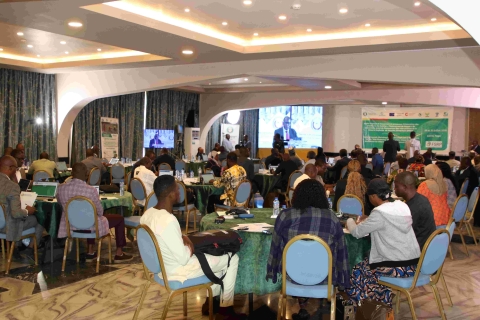
On the sidelines of the Africa Food System Forum held from 2 to 6 September in Kigali, a meeting was held between the ECOWAS Director of Agriculture and Rural Development, Alain Sy Traoré, and the Executive Chairperson of AKADEMIYA 2063, Dr Ousmane Badiane. Accompanied by Konlani Kanfitin, Head of the Technical Operations Division of ARAA (Regional Agency for Agriculture and Food), Alain Sy Traoré engaged in strategic discussions on the collaboration between ECOWAS and AKADEMIYA 2063, with a particular focus on the implementation of the SCORECARD tool within the framework of the West Africa Food System Resilience Program (FSRP).
The SCORECARD tool, which has already been deployed in seven countries in West Africa and the Sahel, is a crucial instrument for facilitating intra-regional trade in agricultural products, thereby strengthening regional food security. “This tool enables countries to better monitor and evaluate their progress in terms of agricultural policies, while facilitating greater regional integration”, emphasised Alain Sy Traoré.
Discussions also focused on the possibility of formalising this collaboration through a memorandum of understanding between ECOWAS and AKADEMIYA 2063. This agreement would aim to strengthen the capacities of Member States in the development of the new ECOWAS agricultural policy 2025-2035, a strategic project for the future of agriculture in West Africa.
AKADEMIYA 2063, based in Kigali, has set itself the mission of supporting the efforts of African Union member states to achieve Agenda 2063. The aim is to transform African economies to stimulate growth and prosperity. The institution provides cutting-edge data and analyses, which are essential for guiding the public policies of African countries, while promoting mutual learning between states.
Strengthening collaboration between ECOWAS and AKADEMIYA 2063 is a strategic move for West Africa, a region in search of robust agricultural policies adapted to the challenges of today. By joining forces, these two institutions aim to promote better governance of agricultural policies, based on up-to-date data and relevant analyses, both at Member State and regional level.