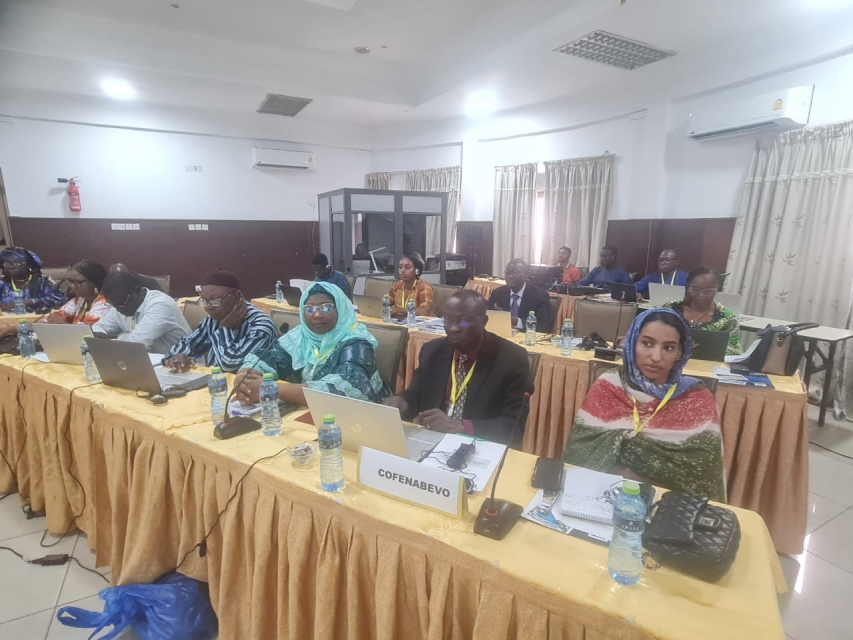
The regional coordination of the West African Food System Resilience Programme (FSRP) organised a training workshop on gender for inter-professions of regional agri-food value chains from 07 to 09 May 2024 in Accra, Ghana. The overall objective of this workshop is to equip cross-border agri-food inter-professional organisations to take gender and youth dimensions into account in the sustainable development policies, projects and programmes of regional inter-professional organisations, with a view to fostering the emergence of more inclusive regional trade.
Focusing on the specific needs of women and young people, participants highlighted the obstacles encountered in agricultural practice and the main trade facilitation problems encountered at borders, particularly in agri-food trade. They also shared strategic ideas on intra-regional trade, free trade policies and agreements, including operational protocols/instruments; ECOWAS-AfCFTA relations of the AU; women's trade in AfCFTA in relation to market access opportunities and challenges and solutions for a gender-sensitive AfCFTA/protocol on women and youth in AfCFTA).
Participants included the main partners of the inter-professional organisations identified by ECOWAS at regional level, in particular CORAF, gender experts from the FAO, the International Trade Centre (ITC), the ECOWAS Directorate of Agriculture and Rural Development (DADR) and representatives of the regional coordination of the PRSF.
Dr Mariame Maiga, CORAF's regional gender adviser, principal trainer and moderator, developed the two concepts of gender and sex, and highlighted the difference between gender and sex. She summarised the concept of SEX as being a biological factor and GENDER as being a sociological factor. The moderator encouraged question-and-answer exchanges to produce a clear explanation of gender concepts with relevant examples from the participants.
Francesca Distefano, gender and policy expert at the FAO's Africa office (online participant), gave members an overview of the scope of the regional roadmap that was consensually drawn up during the meeting. As a reminder, women play a key role in regional trade and in the development of commercial potential, as producers, processors, traders in various products, cross-border traders, managers and business owners. However, their contribution to agricultural trade and the challenges they face are not always recognised and taken into account in policies, projects and programmes. Most of their specific difficulties are: access to finance, loan opportunities, know-how in drawing up business plans, non-tariff barriers, including road harassment, multiple checkpoints, long delays on the roads and illicit collections, as well as technical barriers, including food safety standards, quality and hygiene, sanitary and phytosanitary measures, sexual harassment, rape and blackmail.
In the light of these factors, the PRSF has drawn up a regional gender action plan with concrete actions to be implemented under component 3 (market and trade) to facilitate access for disadvantaged women and young people to goods, facilities and commercial services.
In order to monitor and evaluate the extent to which gender has been taken into account in the implementation of activities, it has been proposed that the inter-professions of the regional agri-food value chains should finalise their action plans and submit them to the regional authorities.