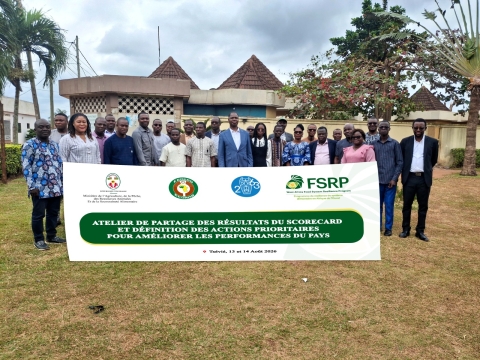
Around forty representatives from ECOWAS member states, CILSS, UEMOA and experts on agricultural and legal issues and their technical and development partners met in Lomé from 10 to 12 November 2025 to examine and approve draft reports and regulations on administrative and technical measures to facilitate trade of agricultural, forestry, pastoral and fishery products in West Africa and the Sahel.
This regional meeting, organized by the ECOWAS Commission, was an opportunity to review the contents of the consultants' reports on obstacles to the free movement of agricultural products at borders, as well as some inconsistencies in existing regulations.
Intra-community trade of agricultural products, cereals, roots, livestock, horticultural products and processed agri-food products plays a key role in stabilising prices, enhancing regional value chains and promoting food sovereignty. It is the main source of income for most rural households and a pillar of regional food security.
Despite its importance, the smooth flow of regional trade faces a series of persistent challenges, including tariff and non-tariff barriers, local restrictions and other export and import bans, which hinder the free movement of goods. These obstacles are compounded by administrative delays resulting from complex customs procedures. In addition, there is a lack of awareness of the regional rules governing intraregional trade, mainly the provisions of the ECOWAS Trade Liberalisation Scheme (TLS). These structural difficulties are exacerbated by inadequate logistics and storage infrastructure and a lack of coordination between States, the latter manifested in the poor implementation of reforms that have been adopted.
To help remove the above-mentioned constraints, the ECOWAS Commission conducted in 2019 a study to identify administrative and technical measures promoting the free movement of agricultural, forestry, pastoral and fishery products in West Africa. Five years on, in view of regulatory developments, it was deemed necessary not only to update the draft reports of this study, but also to propose draft regulations aimed at harmonising the administrative and technical measures identified by the study to facilitate intraregional agricultural trade.
In working groups and plenary sessions, participants reviewed the documents submitted for their consideration and made the necessary corrections and updates.
Over three days, participants shared their experiences and ideas and made suggestions for improving the draft regulations proposed by the consultants. The aim of the work was to make the TLS operational by providing the region with high-quality documents, thereby helping to build a more prosperous and sustainable future for the sub-region.
The draft regulations, enriched by the amendments made at the Lomé meeting, will shortly be submitted to the ECOWAS Commission's directorates for amendment before being forwarded to the States for consultation with key players in cross-border trade. The documents will then be submitted to the relevant experts for approval by the Council of Ministers. This extensive consultation aims to ensure ownership of the content of the texts and, consequently, their implementation once adopted by the regional authorities.