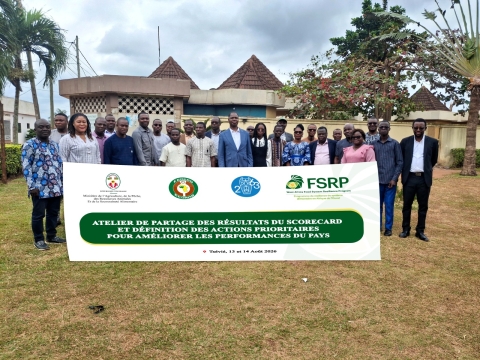
On 10 July 2025, more than fifty stakeholders and partners specialising in agricultural trade and markets from Ghana, Niger, Senegal, Sierra Leone, Chad, Togo, as well as ECOWAS institutions and partners took part in an online session to present the main findings and recommendations of the regional report on the operationalisation of the ECOWAS Agricultural Trade and Market Scorecard (ECOWAS Agricultural Trade and Market Scorecard), with a view to its validation.
This meeting enabled AKADEMIYA2063 experts to share their analysis of countries' performance and shortcomings in the agri-food trade sector, while reviewing the progress made in implementing trade policies and strengthening existing regulatory frameworks at the national level.
Indeed, the West African region, with its rich economic potential, represents a vast market with the potential to stimulate growth and prosperity, provided that intra-regional trade barriers are removed and trade is facilitated. The liberalisation of regional agricultural trade would enable producers to sell their products at better prices and improve their competitiveness and productivity, in particular through easier access to lower-cost production inputs.
However, despite this strategic importance, West Africa continues to face significant challenges in collecting and analysing data on trade and agricultural markets, limiting the ability of states and ECOWAS to make informed decisions, formulate appropriate policies and promote sustainable economic development.
To address these challenges, ECOWAS, with support from the World Bank and technical expertise from AKADEMIYA2063, has developed an analytical tool: the Agricultural Trade and Market Dashboard. This tool aims to better document intra-African trade flows of agri-food products, identify gaps in existing trade policies and strengthen the implementation of regional frameworks such as the ECOWAS Trade Liberalisation Scheme (ETLS), the Common External Tariff (CET), ECOWAP, CAADP and the AfCFTA.
"By facilitating rigorous monitoring and a better understanding of trade dynamics, the Scorecard provides ECOWAS with an essential lever to promote more effective regional economic integration and support the transformation of agri-food systems in West Africa," emphasised Mr Alain SY Traoré, Director of Agriculture and Rural Development at ECOWAS.
The rollout of the Scorecard began in February 2024 in Abuja, Nigeria, with regional training for trainers, followed by technical support sessions in each of the countries benefiting from the West Africa Food System Resilience Programme (PRSA/FSRP), in order to set up technical teams responsible for its operationalisation in the field.
These activities led to the collection, analysis and validation of data in five (05) countries (Ghana, Niger, Sierra Leone, Chad and Togo), resulting in the preparation of national reports, before the results were consolidated in a regional report presented for validation during this session.
This report is the result of a collective and collaborative process involving national and regional stakeholders, who were mobilised at all stages: from the development of the dashboard methodology to the collection, validation and analysis of data, to the drafting of reports on the status of implementation of regional trade policies and regulations in the five (05) beneficiary countries — Chad, Ghana, Niger, Sierra Leone and Togo.
"The results of this pilot phase indicate that ECOWAS countries do not trade sufficiently with each other. Reducing dependence on food imports requires concerted efforts by all countries to fully implement community policies and regulations to facilitate cross-border trade and promote regional market integration," said Dr Ousmane Badiane, President of AKADEMIYA2063.
According to him, "the roll-out of the ECOWAS Trade and Agricultural Market Dashboard will help fill data, knowledge and policy gaps, strengthen mutual accountability and further incentivise countries to effectively and consistently implement existing regional strategies."
In the medium and long term, the recommendations made in this regional report should contribute to improving the trade environment and strengthening intra-regional trade in agri-food products, with the aim of enhancing the resilience of food systems in West Africa.
Following this regional validation, the final report will be submitted to the ECOWAS Council of Ministers of Trade before being presented for adoption at the ECOWAS Summit of Heads of State and Government, scheduled for December 2025.