The onion sector is enjoying remarkable growth in Burkina Faso. In recent years, national onion production has grown significantly, propelling this market garden crop to the top of the country’s agricultural production list. This expansion has made Burkina Faso the second-largest onion exporter in West Africa, behind Niger.
Between 2011 and 2012, Burkina Faso exported around 36,100 tonnes of onions, with growth in value of 24% between 2009 and 2013. Onion cultivation currently covers more than 11,000 hectares, involving some 15,000 growers and generating substantial income for those involved in the sector.
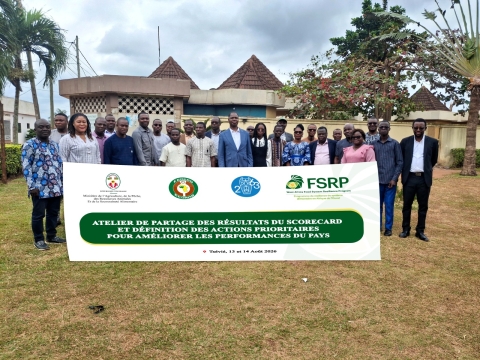
In this context, the Food System Resilience Program (FSRP-BF) is positioning itself as a key player in strengthening this dynamic. Recently, the FSRP’s National Coordination in Burkina Faso organised a regional consultation workshop for players in the bulb onion sector in the Centre-South region. The event brought together nearly 70 participants, including producers, traders and technical and financial partners, to discuss the vision and strategies to be put in place. The main objectives of the workshop were (i) to present the Centre-Sud bulb onion innovation platform; (ii) to share the content of the platform’s three-year action plan; (iii) to advocate for funding of the plan from partners; (iv) to present the platform’s vision and strategies.
With the support of the FSRP-BF, the platform aims to triple onion production in the region, from 14,607 to 43,821 tonnes by 2027. This ambitious objective is focused on producing competitive onions, both in terms of quantity and quality, for the national and sub-regional markets.
Despite challenges such as the lack of inputs, storage infrastructure and marketing difficulties, the sector continues to grow. The FSRP-BF’s support, through its structuring initiatives and accompanying actions, is strengthening the capacity of producers and all stakeholders to deal with these obstacles.
With better organisation and structuring, the onion sector in Burkina Faso is well positioned to play a decisive role in the local and regional economy, while contributing to food security and improving farmers’ living conditions.