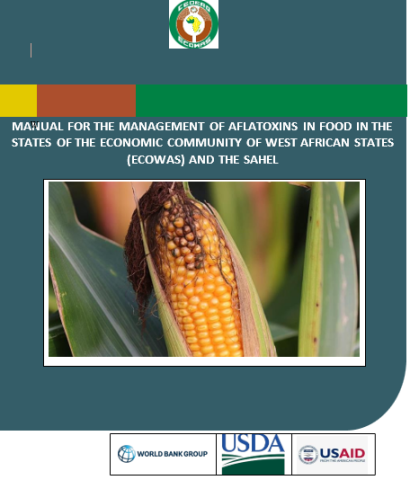
On 21 and 22 September 2026, the ECOWAS Commission brought together representatives of ECOWAS Member States, the Alliance of Sahelian States (AES), Chad and their technical partners to carry out the final review of the Regional Training Guide on Aflatoxin Control, with a view to its adoption.
The proceedings were facilitated by the Directorate of Agriculture and Rural Development and the ECOWAS Regional Agency for Agriculture and Food, and chaired by the representative of Senegal, the country currently holding the rotating Presidency of the ECOWAS Conference of Heads of State and Government. The meeting provided an opportunity for an in-depth examination of the manual’s content, and the comments and recommendations made by the participants were incorporated into the document, which was adopted by consensus at the end of the meeting.
Around twenty participants from national authorities responsible for food safety thus collectively endorsed this tool, which is designed to strengthen regional coordination in the prevention and control of aflatoxins.
Aflatoxins are toxic substances naturally produced by certain moulds of the genus Aspergillus. Highly toxic and carcinogenic, they contaminate many foodstuffs, particularly cereals, pulses and nuts, with significant consequences for human health, food security and regional and international trade.
Recognising the scale of this problem, the ECOWAS Commission has, as part of the implementation of the West African Food System Resilience Programme (FSRP) funded by the World Bank, initiated the development of a regional training guide on aflatoxin control.
This document builds on the achievements of the African Union Commission’s Partnership for Aflatoxin Control in Africa (PACA), whilst adapting them to the realities of West Africa and the Sahel. It also incorporates recent developments in international best practices regarding the production, storage, processing and marketing of agricultural products.
The aim of the handbook is to provide Member States, technical services, training institutions, producer organisations and other stakeholders in agricultural value chains with a harmonised, practical and context-specific regional reference framework. It aims to strengthen capacities for the prevention, detection, monitoring and management of risks associated with aflatoxins.
The adoption of this manual therefore represents a major step forward in ECOWAS’s efforts to improve food safety and strengthen the resilience of regional food systems. It reflects the Member States’ commitment to promoting a common approach based on harmonised standards and shared practices.