In the specific context of climate change, characterised by drought, irregular rainfall, the proliferation of plant pests and the development of harmful bacteria leading to the impoverishment of arable land, the adoption of agro-ecological practices is the best strategy for achieving food and nutritional security, combating poverty and creating jobs in rural areas through the sustainable use of developed areas.
To this end, the West African Food System Resilience Programme (FSRP) is supporting the Togolese Coordination of Farmers' and Agricultural Producers' Organisations (CTOP) to train 3,000 farmers operating the ZAAPs in southern Togo through its agro-ecological farm school scheme.
This first training course, which covers the Maritime, Eastern Plateau and Western Plateau regions, aims to strengthen the sustainability of the production systems practised in the ZAAPs and the resilience of the beneficiary households. A total of 3,000 farmers will be trained in several stages, the first of which consists of training 300 relay farmers identified in 60 ZAAPs, who will in turn be responsible for relaying and training farmers in their respective ZAAPs in the agro-ecological practices learned during the training.
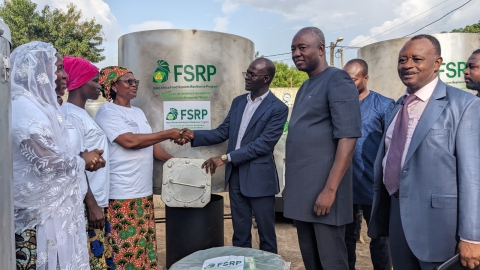
The launch ceremony for this series of training courses was marked by the handing over of kits consisting of boots, waistcoats and learner's manuals donated by the project to the participants.
About ZAAPs
The Zones d'Aménagement Agricole Planifiées (ZAAP) are production blocks of at least 100 ha of monoculture on which producers are concentrated for supervised production. They ensure large-scale production and a regular supply of raw materials for processing units.
To date, the development of the sites has enabled the ZAAP strategy to be outlined, based on principles derived from the government's "Togo 2025 strategic vision".