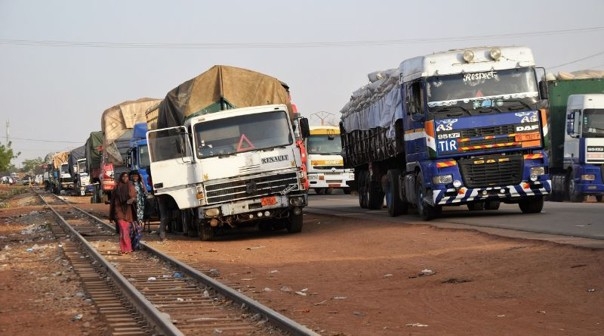
At dawn, as the first lorries leave the bustling markets of Maradi, in Niger, the road to neighbouring countries stretches out like a promise. In the back of the trailers, sacks of onions, tiger nuts, cowpeas and groundnuts, carefully stacked, await crossing the borders to reach the market stalls of Ghana or Togo. Under the Sahel sun, the lorries laden with produce move slowly, as if carrying with them the hopes of thousands of producers.
 But for a long time, this journey has been anything but a simple crossing. For traders, hauliers and farmers in the region, transporting agricultural produce from one country to another often feels like a journey fraught with obstacles.
Here, borders are not just lines drawn on a map. They consist of forms to fill in, checks to pass through and procedures to follow.
For Abdou Magagi, a Nigerien haulier for over fifteen (15) years, every journey is an uncertain adventure. “We can spend hours, sometimes a whole day, at a single checkpoint,” he points out. “The lorries queue up, and the paperwork is checked for several hours. Meanwhile, the goods lose value and we lose money.”
In Makeni, Sierra Leone, rice farmer Mariama Kamara observes with resignation the limitations of the trade system between West African countries. “We produce a lot of rice here,” she explains. “But selling across the border is complicated. The procedures are lengthy and costly. Many farmers prefer to sell locally, even at a lower price. ”
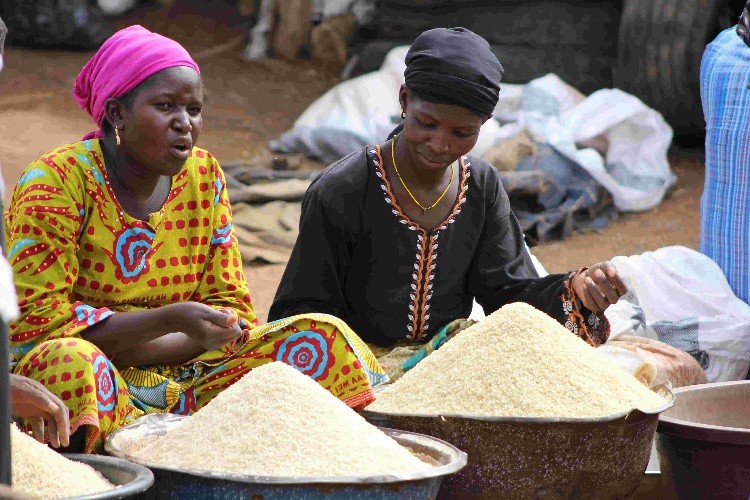 As a result, intra-regional trade in West Africa remains limited despite the dynamism of the region’s agriculture, accounting for only around 12 per cent of total exports – far behind Asia (59 per cent) or Europe (69 per cent).
These realities are now documented with figures through the Scorecard
Faced with these challenges, the Economic Community of West African States (ECOWAS), with the support of the West African Food System Resilience Programme (FSRP/PRSA) funded by the World Bank, has decided to take action.
To better understand the barriers and guide reforms, a new tool has been introduced. This is the ECOWAS Agricultural Trade and Markets Scorecard, known as the Scorecard.
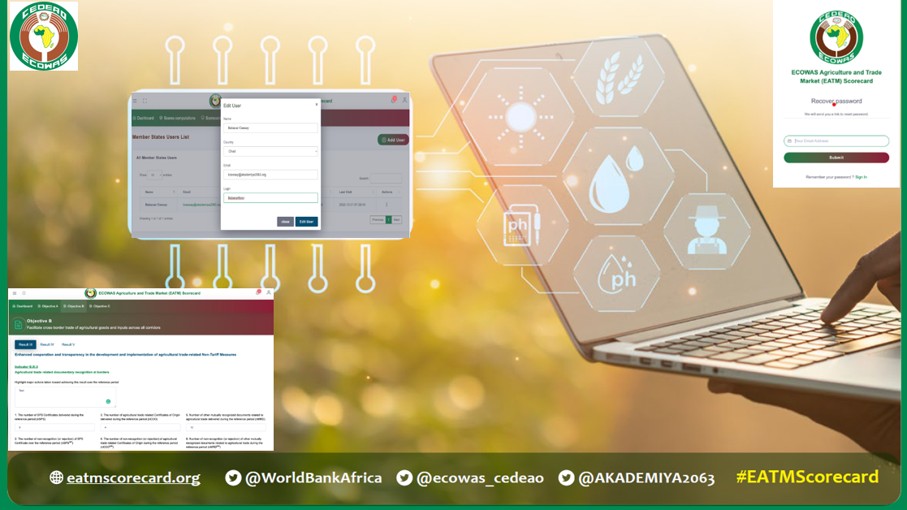 Behind this technical name lies a powerful tool. The dashboard collects and analyses data on agricultural trade policies, customs procedures, transport infrastructure and agricultural input markets.
It aims to provide decision-makers with a clear picture of the barriers hindering regional trade and to measure progress made in implementing common trade policies.
The Scorecard highlights countries’ strengths and weaknesses in the context of agri-food trade, raises awareness of the status of trade policy implementation, and strengthens the implementation of existing policy frameworks at national level. In the medium and long term, it helps to improve the overall trade environment and increase intra-regional trade in agri-food products, with the aim of enhancing the resilience of the West African food system.
In late 2024 and early 2025, the tool was first tested in Ghana, Niger, Sierra Leone, Togo and Chad – five (05) pilot countries where national technical teams collected and analysed data in the field.
The figures tell the same story. On average, a trader spends six (06) days gathering and processing the documents required to export or import agricultural products, plus a further 1.6 days completing customs formalities. Even once these procedures are complete, the road remains fraught with obstacles. It takes them around one day to travel 100 kilometres, with at least two (02) road checks along that same route.
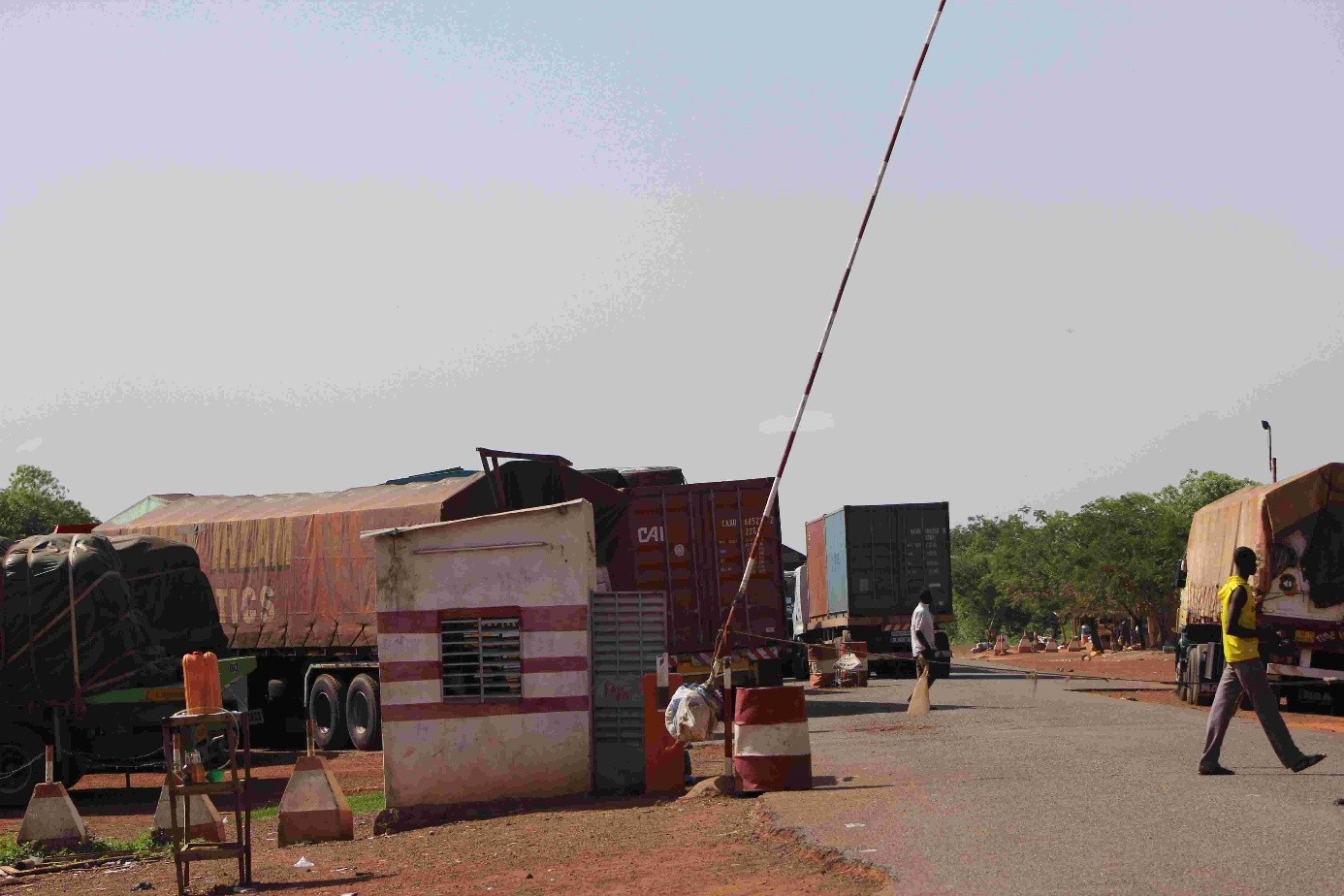 According to the data collected, traders spend, on average, nearly 10 per cent of the value of their goods on costs relating to documentation, border formalities and transport. Even before their goods reach the market, a portion of their profits has already evaporated.
The data collected quickly highlighted the persistent challenges. For example, despite the objective of creating a regional common market, the implementation of ECOWAS trade policies and regulations averages only around 30 per cent in the pilot countries. The ambition to remove customs duties, quotas and trade restrictions, first envisaged in the late 1990s, has been realised by only around 25 per cent.
In 2022, 90 per cent of imported agricultural products and inputs were still subject to customs duties or equivalent taxes. Furthermore, 60 per cent of regional trade was still subject to trade restrictions or bans. At the same time, three-quarters of agri-food exports remained subject to export taxes and more than half to import quotas.
Despite the many challenges and constraints in complying with ECOWAS trade policies and regulations, progress has been noted. Satisfactory progress has been made in implementing reforms aimed at facilitating trade within the ECOWAS region.
 The Common External Tariff (CET) is now effectively applied across all pilot countries, contributing to the harmonisation of tariff policies and greater predictability in trade. At the same time, obstacles relating to the processing of certificates of origin (CO) and other cross-border commercial documents have been removed or significantly reduced, thereby simplifying procedures, shortening processing times and reducing costs for economic operators. There has also been an increase in mutual recognition and more efficient processing of commercial documents between the pilot countries and other Member States, thereby enhancing the smooth flow of intra-Community trade. Finally, all pilot countries have put in place monitoring mechanisms, cross-border redress systems and appropriate consultation frameworks for dealing with non-tariff measures, significantly improving the management and resolution of trade barriers.
Various recommendations to stakeholders and partners to improve the situation…
The ECOWAS Agricultural Trade and Market Scoreboard should be fully utilised as a strategic tool for monitoring progress towards achieving the objectives of the ECOWAS Trade Liberalisation Scheme (TLS) as applied to agricultural products and inputs.
- In order to achieve the objectives of this tool, in the short term it is essential to reduce and streamline the number of checkpoints along regional trade corridors, whilst in the long term, strategic partnerships must be developed to modernise the road infrastructure serving these corridors.
- At the same time, countries are called upon to systematically identify existing barriers and draw up action plans with specific deadlines in order to strengthen collaboration, coordination and cooperation in the areas of customs, administration and border procedures.
- Sustained efforts, also underpinned by clear deadlines, are needed to update and significantly expand the list of registered agricultural inputs, with a view to greater harmonisation. Furthermore, in order to stimulate competition, it is essential to identify and remove barriers to private-sector integration in the agricultural inputs sector, whilst actively encouraging its participation.
- The development and large-scale implementation of a comprehensive capacity-building and training plan are essential to build a critical mass of accredited professionals within the seed and fertiliser value chains.
- Finally, at national and regional levels, stakeholders will need to continue raising awareness amongst decision-makers and other stakeholders to ensure the recommendations are implemented. Following the 2025 data collection phase, the next phase will focus on monitoring the implementation of the recommendations whilst extending the tool to other ECOWAS countries with a view to improving trade both within and between countries.