For the 2026 rainy season, rainfall totals are expected to be above average to average in the Central and Eastern Sahel and normal to below average in the Sudanese zone and the Western Sahel, with start dates ranging from average to late in the Western Sahel and normal to early in the Central and Eastern Sahel, late to average end dates in the Western Sahel and normal in the Central and Eastern Sahel, generally long to average dry spells and generally average to above-average flows in the main river basins.
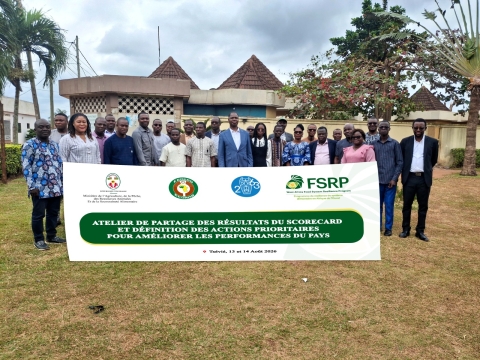
Organised from 20 to 24 April 2026 in N’Djamena, Chad, by AGRHYMET Regional Climate Centre for West Africa and the Sahel (AGRHYMET RCC-WAS) and the National Meteorological Agency (ANAM) and the Chad Water Resources Directorate, in collaboration with the African Centre for Meteorological Applications in Development (ACMAD), the national meteorological and (SMHN) of the 17 countries of West Africa and the Sahel, river basin organisations and with the participation of representatives of user interface platforms (from the sectors of agriculture and food security, water resources and disaster risk reduction and climate security) and focal points for anticipatory actions, the 2026 edition of PRESASS has reached the following conclusions.
I. Summary of forecasts
Seasonal forecasts are based on a new-generation objective methodology, an analysis of the current situation and likely trends in Sea Surface Temperatures (SSTs), forecasts from global climate centres, and statistical analyses of data from National Meteorological and Hydrological Services (NMHSs) and expert knowledge of climate characteristics in West Africa and the Sahel. Based on the 1991–2020 climatological reference period, the various analyses have enabled the following forecasts to be established:
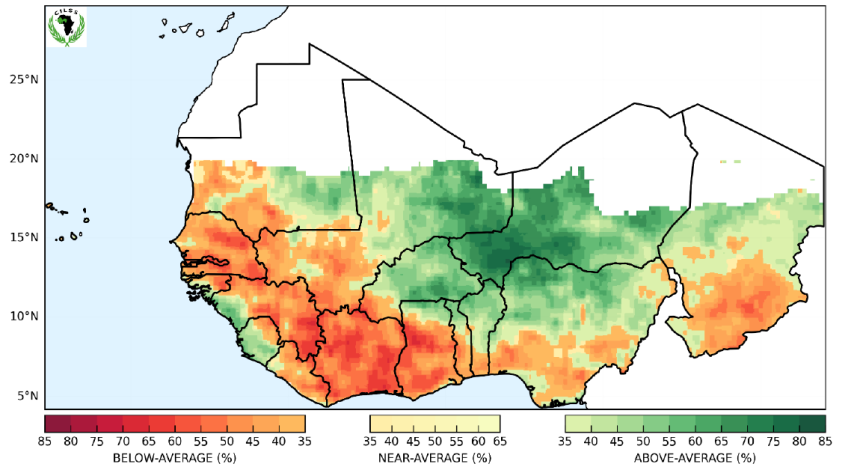
Overall below-average to average rainfall totals are expected over the period of May–June–July in West Africa and the Sahel, except in a few areas of Niger, north-western Nigeria and the coastal regions of the Gulf of Guinea countries.
Over the period June–July–August 2026, the rainfall deficit will persist in the same areas, extending to central and western Nigeria and the agricultural zone of Chad. The situation of above-average rainfall will also persist in Niger, in certain areas of the far north of Nigeria, central and eastern Burkina Faso, central and eastern Mali, and eastern Mauritania.
In contrast, rainfall totals are expected to be above average to normal in the Central and Eastern Sahel regions, covering central Chad, Niger, northern Nigeria, central and northern Benin, Burkina Faso (except the far south), central and eastern Mali, eastern Mauritania and the coastal areas of Sierra Leone and Guinea.
• Normal to early start dates are forecast for the Sahelian belt covering the agricultural areas of Chad and Niger, as well as central and northern Nigeria, Benin and Togo, and the eastern half of Burkina Faso. Season start dates are expected to be mostly normal to late in the Western Sahel, covering western Burkina Faso, almost the entire agricultural zone of Mali, the far north of Guinea, Guinea-Bissau, Senegal, The Gambia, Cape Verde and the southern part of Mauritania.
• Late to average end-of-season dates are expected in the Western Sahel (Mali’s agricultural zone, central and northern Guinea, Guinea-Bissau, The Gambia, Senegal, Cape Verde and southern Mauritania). In the Central and Eastern Sahel, the end of the season is expected to be normal to late, particularly in the agricultural areas of Chad and Niger, Burkina Faso, the northern parts of Nigeria, Benin, Togo, Ghana and Côte d’Ivoire, Liberia, and in southern Sierra Leone and Guinea.
• Long to moderate dry spells are forecast at the start of the rainy season across all the Sudanese and Sahelian agricultural zones of West Africa and the Sahel. In the second half of the rainy season, these dry spells are also expected to be long to moderate in the agricultural zone of Chad, the central and western parts of the agricultural belt of Niger, north-western Nigeria, the northern parts of Benin, Togo and Ghana, Burkina Faso and eastern Mali. They are expected to be mostly moderate to long in the Western Sahel (northern Sierra Leone, central and western Guinea, Guinea-Bissau, Senegal, The Gambia and southern Mauritania).
• Average flows are expected in the Senegal Basin (in Senegal, The Gambia, Mali and Mauritania), the upper Niger River Basin (in Guinea, Mali and Côte d’Ivoire), the Inner Niger Delta (in Mali), the Middle Niger (in Mali, Niger, Burkina Faso, Benin and Nigeria), the Middle Benue (in Nigeria), the Senegal Basin (in Senegal and The Gambia), the Gambia Basin (in The Gambia and Senegal), the Volta Basin (in Mali, Burkina Faso, Benin, Togo, Ghana and Côte d’Ivoire), the Comoé (in Burkina Faso and Côte d’Ivoire), the Bandama and Sassandra basins (in Côte d’Ivoire), the Cavally (in Côte d’Ivoire and Liberia), the Chari (in Chad), the Mono (in Togo and Benin), and the Ouémé (in Benin).
Excess flows are expected in the Logone basin (in Chad) and the Komadougou Yobé basin (in Niger and Nigeria). Finally, the upper Bénoué basin (in Nigeria and Chad), the Lower Niger Delta (in Nigeria), the Lofa (in Liberia and Guinea), and the Congo and Konkouré basins (in Guinea) are expected to experience low flows.
II. Possible implications of the 2026 seasonal forecasts
The 2026 seasonal forecasts, although suggesting generally favourable conditions in the Central and Eastern Sahel, may have negative implications in certain areas of West Africa and the Sahel. Indeed, in areas where above-average rainfall totals, normal to early start dates, medium to long dry spells and above-average runoff are expected, it cannot be ruled out that situations of excessive moisture for crops, erosive and dangerous runoff, and river flooding may occur. These situations could give rise to a variety of risks depending on the area, including difficulties in the movement of people and animals, as well as in accessing
vital economic and health facilities, particularly in areas of civil insecurity. They also portend significant risks of flooding, the inundation of agricultural and forage areas, and the loss of animal and human destruction of infrastructure (including roads, electricity networks, markets, schools, health centres, places of worship, cemeteries and material assets). They may also encourage the proliferation of waterborne and diarrhoeal disease pathogens, the proliferation of crop pests, swarming of locusts, landslides, silting of watercourses, the proliferation of weeds, post-harvest losses, etc.
In areas where below-average rainfall totals, late start dates to the growing season and prolonged dry spells are expected, an uneven distribution of rainfall is likely, which could disrupt cropping schedules, the growth of crops and fodder plants, as well as transhumance movements. This situation could also prolong the lean season, exacerbate the vulnerability of populations, lead to the abandonment of fields and encourage the exodus of able-bodied workers. These areas would also be exposed to risks of heatwaves and hot winds, which could cause delays and losses in sowing, as well as reduced agricultural yields. This situation could exacerbate inflation, rising food prices, falling livestock prices, and food and nutrition crises.
The combination of these likely climate risks with civil instability, widespread poverty and the vulnerability of households could exacerbate social tensions, land disputes, conflicts between herders and farmers, and disputes over public infrastructure, whilst also contributing to idleness, banditry, violence, etc.
III. Recommendations
- Regarding the risk of flooding
The generally wet conditions expected in the Central and Eastern Sahel and the anticipated excess runoff in certain river basins, such as those of Lake Chad and the Komadougou Yobé, point to a risk of flooding. To address this, it is recommended to:
• strengthen preventive measures, operational monitoring and the response capabilities of agencies responsible for flood monitoring and humanitarian aid;
• raise awareness among communities, particularly those at risk, in order to reduce the impact of disasters;
• reinforce protective dykes and ensure the maintenance of road infrastructure and dams, with an emphasis on forecast-based management;
• clear drainage channels and improve sanitation in urban areas to facilitate the drainage of rainwater;
• strengthen collaboration between hydrological, meteorological and civil protection services to improve proactive flood risk management;
avoid moving livestock into areas at risk of flooding and heavy runoff without adequate supervision;
• encourage the cultivation of crops suited to conditions of excess soil moisture, such as rain-fed rice;
• ensure the safety of vulnerable people, particularly children, women, the elderly and those with limited mobility;
• strengthen the communication of seasonal forecasts and their use by communities, by supporting the efforts of the media, disaster risk reduction platforms, NGOs and national Early Warning Systems (EWS);
2) Regarding the risks of disease and plant pests
Wet and flooded areas can encourage the spread of climate-dependent diseases (cholera, malaria, dengue fever, schistosomiasis, etc.). Furthermore, the late start to the season and the long dry spells expected could lead to persistently high temperatures, dust storms and the proliferation of harmful insects and other pathogens causing respiratory and epidemic diseases. To this end, it is recommended to:
• strengthen the capacity of national health systems and national disaster risk reduction platforms;
• improve sanitation in towns and cities and avoid contact with contaminated water;
• prevent diseases by vaccinating people and animals;
• prevent animal diseases caused by pathogens that thrive in either wet or dry conditions;
• step up vigilance against crop pests such as the desert locust and the autumn armyworm, given the wet conditions expected in the Central and Eastern Sahel;
• strengthen monitoring of Rift Valley fever, given the excessive rainfall in the Central and Eastern Sahel;
• step up the dissemination of alert information on climate-sensitive diseases, in collaboration with meteorological, hydrological and health services, NGOs, community radio stations, etc.
3) Regarding the risk of drought
In areas where prolonged dry spells and early end-of-season dates are forecast, which could lead to water deficits and affect the growth and yields of crops and fodder plants, it is recommended to:
• prevent the proliferation of the millet ear miner;
• ensure the rational management of surface water resources to meet various needs and prevent conflicts;
• promote the adoption of climate-smart techniques adapted to drought and strategies to mitigate the risks of reduced production, including: the selection of species or varieties tolerant to water stress, supplementary irrigation, large-scale irrigation, the efficient use of agrometeorological advice and the development other income-generating activities;
• promote risk transfer to protect producers against crop losses, through the uptake of index-based agricultural insurance;
• ensure the regular and timely dissemination of meteorological, climatic and hydrological information, as well as specific advice to users and decision-makers, throughout the rainy season.
• liaise with national and regional Meteorological, Hydrological and Agricultural services to obtain specific information and appropriate advice.
4) Regarding conflict risks
In areas where late start dates, long dry spells and early end dates are forecast, which may lead to shortfalls in agricultural and fodder production, it is recommended to:
• strengthen grassroots production capacities by promoting the use of appropriate strategies for adaptation, income generation and the resilience of agro-sylvo-pastoral production systems;
• create and maintain conditions for the inclusive, non-discriminatory and equitable management of public infrastructure and productive, environmental and socio-economic resources;
• encourage job creation and private enterprise, and promote income-generating activities, particularly for women and young people, in order to reduce idleness. This will strengthen people’s ties to their local areas and reduce migration and mass exodus;
• develop basic infrastructure,
• promote initiatives to improve communities’ livelihoods with a view to securing agro-pastoral activities, particularly in areas of civil insecurity.
5)bRecommendations for making better use of the rainy season
Given the generally varied nature of the rainy season in West Africa and the Sahel, it is recommended that farmers, herders, water resource managers, project managers, NGOs and policy-makers:
• make the most of periods of excess water through the appropriate use of floodplains and surface water;
• establish rainwater harvesting and storage systems to ensure continuity of agricultural and domestic water use during the dry season;
• invest more in high-yield crops suited to local humidity conditions and the expected start and end dates of the season, particularly in the Central and Eastern Sahel (rice, sugarcane, tubers, etc.);
• support the deployment of agrometeorological techniques to increase the yields of crops and fodder plants;
• strengthen agro-hydro-meteorological information, guidance and support services for farmers;
• Step up monitoring of the desert locust, particularly in frontline countries;
• facilitate farmers’ access to improved seeds and agricultural inputs tailored to their needs, to make better use of the rainy season;
• Encourage farmers to make better use of arable land, particularly in areas that are difficult to access;
• Secure farmers’ incomes by promoting the uptake of index-based agricultural insurance.
• strengthen inter-ministerial coordination mechanisms to respond more effectively to the impacts of agro-hydro-climatic conditions.
Finally, users in the various sectors are advised to keep an eye out for updates to these seasonal forecasts, which will be issued by AGRHYMET CCR-AOS and the national meteorological and hydrological services throughout the rainy season.