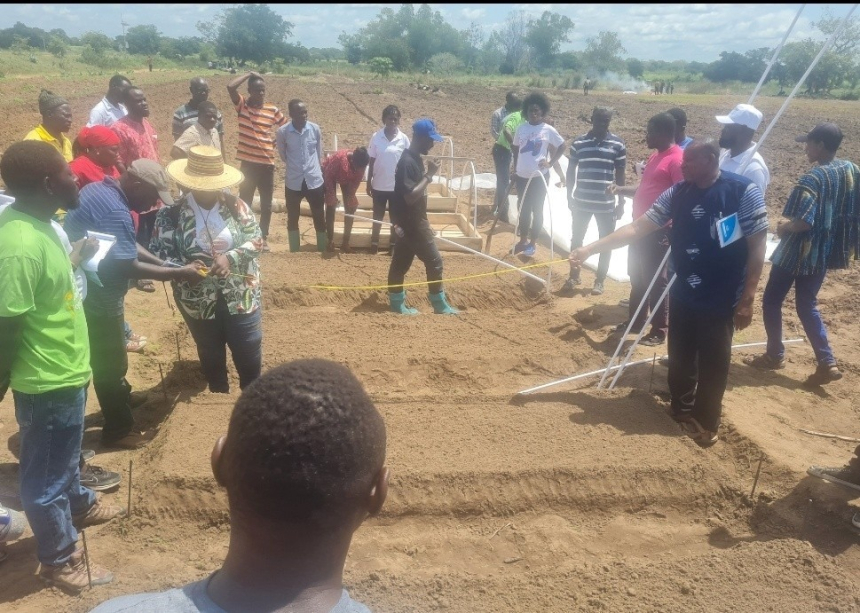
In order to address the annual fluctuations in tomato prices in the country and to ensure the year-round availability of tomatoes in Ghana, the Ministry of Food and Agriculture, through the West Africa Food System Resilience Programme (FSRP), deployed a combination of interventions in selected tomato production sites in the country, mainly in Northern Ghana. As part of this initiative, a number of practical field exercises were organised for technical agricultural managers.
Supported by a Norwegian grant of $2,274,300 and supervised by the World Bank, the project aims to reorganise the Ghanaian tomato industry with a view to dry-season production.
A total of 1,500 tomato growers will be supported by the FSRP's Norwegian tomato programme, with inputs and knowledge upgrading with a view to producing a total of 10,000 tonnes of tomatoes by February next year.
At Tono, in north-east Ghana, the practical training consisted of germination tests, the preparation of carbonised rice husks for biochar, the sterilisation of soil environments, the establishment of nurseries in trays and crates, the establishment of ground nurseries, the construction of anti-insect nets and soil solarisation.
Tomatoes are an essential part of the Ghanaian diet, accounting for 40% of expenditure on vegetables. However, only 34% of the 1.4 million tonnes of tomatoes consumed each year are produced locally, resulting in substantial imports (particularly between December and May).
The training of tomato growers and other players in the tomato value chain, which will be provided by the technical services of Ghana's Ministry of Food and Agriculture, will enable growers to use quality seeds that are well adapted to local seasonal and climatic variations. This training will help to overcome the logistical problems associated with pest and disease control, limited extension services, and poor agronomic and farming practices that lead to low yields in tomato production.