FSRP stakeholders and partners welcome the initial results after more than two (2) years of implementation

Published on 13 February 2025

The West Africa Food System Resilience Programme (FSRP) held its first meeting to review the support missions for 2024. The event took place from 15 to 17 May 2024 in Lomé, Togo. Over seventy (70) participants from Burkina Faso, Ghana, Mali, Niger, Sierra Leone, Senegal and Togo, as well as from regional institutions (CILSS, CORAF and ECOWAS) and the World Bank, took stock of the implementation of the PRSF according to its implementation principles.

During the three (03) days of discussions, the participants shared information on the various activities carried out over the last six (6) months at national and regional level, while reviewing the challenges linked to the implementation of the FSRP before proposing possible solutions to meet these challenges.

Work focused on (i) parallel sessions between countries and regional organisations on specific topics relating to digital services, integrated landscape management, strengthening regional trade and agricultural markets, the rice value chain and gender; (ii) plenary sessions to review common challenges and propose solutions that could contribute to the successful implementation of the PRSP.

One of the innovations at this regional meeting was the exhibition of products and innovations by the actors and beneficiaries of the FSRP/Togo. Some twenty producers from Togo's main agricultural production zones shared the products generated with the support of the FSRP.

This first summary meeting of the PRSP's support missions for 2024 was a platform for promoting the sharing of knowledge, strengthening coordination between players and defining strategic guidelines for the future of the programme. The first countries (Burkina Faso, Mali, Niger and Togo) are halfway through the implementation of their activities.

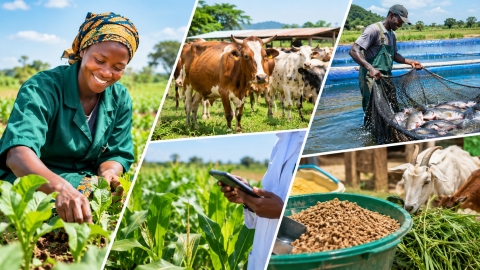
In the field, the PRSF's activities focus primarily on preventing and managing agricultural and food crises, strengthening the resilience of agro-sylvo-pastoral production systems, and facilitating trade in agricultural goods and inputs within and across national borders in West Africa. After two (02) years of implementation, significant results have been noted and the actions carried out in the countries and at regional level have reached a total of 1,281,766 direct beneficiaries in 2023, 37% of whom are women.

Overall, we note that the FSRP is a unique tool that strengthens regional integration through the exchange of technologies and innovations and the mobility of researchers and stakeholders between countries, which will contribute considerably to the implementation of ECOWAP and thus accelerate the transformation of the agricultural sector in the sub-region.

1st General Assembly of the ECOWAS Rice Observatory: stakeholders in the rice sector adopt a roadmap for the development of the sector

Published on 13 February 2025

More than 150 participants from West African states and their partners took part in the first General Assembly (GA) of the Economic Community of West African States (ECOWAS) Rice Observatory, held on 21 and 22 May 2024 in Abuja, Nigeria. During two (02) days of discussions, the GA took stock of the activities carried out and approved a roadmap to accelerate the growth of the rice sector in West Africa.

Established in 2021 to operationalise the ECOWAS Rice Offensive, the ECOWAS Rice Observatory (ERO) coordinates rice sector-related programmes, public/private investments and follow-up policy recommendations for key decision-makers. The main objective of Rice Offensive is to help West Africa achieve rice self-sufficiency by 2030 through profitable, resilient and environmentally sustainable agricultural enterprises that contribute to rural economic growth, poverty reduction and equity for women.

After two (02) years of intense work in the countries and at the regional level, the ERO presented the main achievements and the strategy documents to be approved to its main stakeholders, which are farmers' organisations, processors and millers, traders and distributors, input suppliers, research institutes, government agencies and ministries, development organisations and NGOs, financial institutions, ERO national sections and members of the rice working groups of the ECOWAS Member States.

Discussions focused on the situation of the rice sector in each country, the main initiatives underway to develop the rice value chain, the policy measures adopted in this area, and recommendations for regional action in support of Member States.

At the end of the discussions, the General Assembly approved the regional roadmap for the development of the rice sector in West Africa, while calling for it to be aligned with the national rice development strategies of the countries concerned, taking into account their respective priorities.

The West African sub-region produces around 17 million tonnes of milled rice a year. According to the FAO (2023), per capita rice consumption in West Africa is one of the highest in the world, ranging from 100 to 200 kilograms per person per year, depending on the country. In view of this importance, and to ensure sustainable self-sufficiency in rice production, the GA recommended strengthening and involving the private sector, with a synergy of actions between agri-dealers and input distributors in the countries, as well as the involvement of national and regional banking institutions.

On the sidelines of the GA, the conclusions and recommendations of the ERO's first GA were examined by the Board of Directors, which met on 23 May 2024 to draw up an action plan for their implementation. The Board, chaired by Mr Alain SY TRAORE, ECOWAS Director of Agriculture and Rural Development, includes representatives of scientific partners, development partners, the private sector and countries.

The holding of the first ERO GA is an important milestone in the implementation of the ECOWAS Rice Offensive, which is itself a major framework for the ECOWAS Agricultural Policy (ECOWAP).

Gender-sensitive communication: FSRP communication specialists trained

Published on 13 February 2025

"Communication is essential to contribute to the mainstreaming of gender in activities at regional and country level" is one of the main conclusions of Dr Mariame MAIGA, Regional Gender and Social Development Adviser at CORAF and the PRSF, who led the webinar on gender-sensitive communication held on 18 January 2024.

The West African Food System Resilience Programme (FSRP), whose development objective is to increase preparedness against food insecurity and improve the resilience of food systems in participating countries, has made gender a major focus.

With this in mind, all activities carried out both in-country and at regional level must be gender- and youth-sensitive, addressing and responding to the specific needs of disadvantaged groups such as women and young people, as well as other vulnerable groups such as people living with disabilities, widows, orphans, the elderly, climate refugees, and so on.

The FSRP aims to enable vulnerable groups to benefit from the potential of agro-sylvo-pastoral and fisheries value chains as a way of escaping poverty and meeting food needs in the face of climate change.

To achieve this, all FSRP stakeholders are currently being trained in the approaches and mechanisms for taking gender into account in activities.

Some fifteen communications specialists from countries and regional organisations gained a better understanding of the importance of gender-sensitive communications. They were provided with practical tools for integrating a gender perspective into communication plans and activities, while being encouraged to create inclusive and egalitarian messages to promote the FSRP's gender-sensitive branding in the programme's regional institutions and implementing countries.

Using very specific examples and real-life situations, Dr Mariame MAIGA and Ms Adèle KOUASSI, a journalist specialising in gender issues in rural Côte d'Ivoire, began by identifying the obstacles, stigmas and challenges faced by vulnerable people in society and in rural areas.

Above all, the trainers shared concrete examples and cases that advertising and social communications activities help to disseminate, whether consciously or unconsciously.

The Webinar also focused on the mechanisms and approaches for taking gender into account in communication activities, summarised in 6 stages: (i) collecting field data, (ii) formulating the objective of the activity, (iii) identifying target audiences, (iv) choosing the means of communication, (v) developing the message, (vi) planning and budgeting.

In view of the interest shown by participants in this subject and to enable them to carry out practical work, another face-to-face training session is planned for this year.

Trade in agricultural products: ECOWAS intends to strengthen its partnership with AOCTAH to collect data at borders

Published on 12 February 2025

The Regional Coordination of the PRSF held a working session with a team from the Permanent Secretariat of the West African Association for the Cross-Border Trade of Agro-Sylvo-pastoral and Halieutic Food Products (AOCTAH/WACTAF) in Lomé on Friday 24 November 2023.

Exchanges on the collection of data on trade in agricultural products at border level in support of FSRP countries.

West Africa is characterised by a wide diversity of agricultural products, ranging from cereals (such as millet and maize) to food crops (such as cassava) and livestock products. This offers significant potential for intra-regional trade, which is an important aspect of the region's economic development.

It should be noted, however, that some countries in the region face food security challenges, which may limit their ability to participate fully in intra-regional trade. In addition, quality and safety standards for agricultural products vary from one country to another, which can hamper trade by creating technical barriers.

To help improve intra-regional trade in agricultural products in West Africa, ECOWAS is implementing component 3 of the FSRP to develop value chains and strengthen integration between countries in the West African sub-region by removing barriers to trade.

In order to operationalise the activities on the ground, exchanges have been undertaken with organisations with experience of intra-regional trade in agricultural products, including AOCTAH, whose mandate is to promote solidarity in food and nutritional security and trade in the CILSS and ECOWAS areas.

Areas of collaboration will focus on the use of AOCTAH country focal points to support data collection at borders in PRSP beneficiary countries. In-depth discussions will soon take place to make the partnership effective and to work with the countries.

ECOWAS-AOCTAH collaboration will facilitate trade between countries while promoting standards and rules at borders and in countries to facilitate the marketing of agricultural products within and beyond national borders. 

Combating food crises: regional standards for local storage adopted in Lomé

Published on 11 February 2025

Stakeholders and partners in the West African food system met in Lomé from 14 to 18 November to launch the local storage memento and finalise the charter on the operation of local stocks in West Africa and the multi-stakeholder framework.

This regional meeting was part of the implementation of the ECOWAS regional storage strategy.  The storage of foodstuffs is a very old practice in rural areas to cope with lean periods marked by food shortages and famine, as well as climatic risks. In this storage system, local stocks are of major importance in the various dimensions of food security, and more particularly (i) in preventing and managing cyclical and cyclical food crises (in deficit areas), including pastoral crises (livestock feed), and (ii) in supplying the market and national and regional food security stocks (in surplus areas).

Despite this importance, the stakeholders and partners did not have any reference documents to guide the success of storage activities at local level.

Coordinated by ECOWAS, the stakeholders have joined forces to develop a local storage handbook, a charter of good practice for local storage operators and a multi-stakeholder intervention framework.

The Lomé meeting was therefore an opportunity to bring together the stakeholders in local storage and to submit the documents drawn up to them for validation and dissemination. That is why Alain SY TRAORE, ECOWAS Director of Agriculture and Rural Development, expressed his satisfaction at seeing this process move forward with significant results thanks to the involvement of everyone. In particular, he praised the involvement of producer organisations: "Producer organisations have taken the lead in the process, both at the political level, with the involvement of regional networks, and at the more technical level, with the considerable investment of their storage managers in the production of these reference tools on local storage.

Faced with the multiple shocks facing the region, leading to an impressive increase in the number of vulnerable people unable to cover their basic needs, ECOWAS is counting on the simultaneous deployment of local storage, national stocks and the Regional Food Security Reserve.

The representative of Togo's Minister of Agriculture, Livestock and Rural Development, Colonel AGADAZI Ouro-Koura, welcomed the meeting as a sign of the mobilisation of stakeholders and partners to curb the food crises facing many people in West Africa. In this respect, local storage is a solution to the fight against food insecurity.

At the end of the Lomé meeting, the memento of local storage in West Africa was launched, the charter on the operation of local storage in West Africa was finalised with the involvement of stakeholders, and the process of drawing up a multi-actor intervention framework for local storage was launched.

About Proximity Standards

  1. The memento of local storage in West Africa is a reference manual for the region, providing organisations involved in this activity with a clear codification of good practice in all areas relating to their activity, based on their own practical experience. It is written in a language that is easy for organisations to understand, illustrated with simple diagrams, and can be translated into national languages;
  2. The charter of best practice for local storage operators is a reference tool produced by capitalising on best practice in the region. It is designed to guide the development of local storage based on accumulated and capitalised knowledge, and to contribute to the gradual structuring of local organisations and their unions, federations and networks. The charter is based on a set of standards that provide minimum guarantees of good management in terms of governance, as well as technical and financial management. The charter concerns all stakeholders involved in the management of food security issues in West Africa. If storage organisations sign up to the charter, it will be easier to mobilise external support and enter into contracts with the two lines of defence.
  3. The regional multi-actor intervention framework defines a shared vision of local storage and its place in the overall storage system. It enables national and regional organisations to gain a better understanding of how it works, so that they can fine-tune cooperation arrangements and negotiate contractual relations with public and humanitarian institutions. It takes into account the food-livestock component

Regional Trade Facilitation in West Africa: the Regional Committee held its 4th meeting in Abuja, Nigeria

Published on 10 February 2025

The 4th meeting of the Regional Trade Facilitation Committee examined the implementation of trade facilitation reforms under the WTO Trade Facilitation Agreement (TFA) and the African Continental Free Trade Area (AfCFTA). More than 20 participants from 11 ECOWAS countries took part from 20 to 22 November 2023 in Abuja, Nigeria.

In three days of intense work, the status of implementation of existing trade facilitation instruments (WTO EFA, AfCFTA, etc.) was updated.The terms of reference of the sub-committees of the Regional Trade Facilitation Committee were validated. Issues relating to non-tariff barriers (NTBs) in the region and those relating to the free movement of goods in the region were also examined. The meeting also put forward proposals to strengthen collaboration between the national trade committees and the transport and transit committees.

The recommendations resulting from this meeting will be implemented in order to improve the free movement of products in the West African region, in line with the efforts of the ECOWAS Commission. Indeed, the ECOWAS Commission has been working on the design of regional instruments, tools and institutional bodies, as well as capacity building for stakeholders, with the aim of promoting coordinated and effective implementation of trade facilitation reforms in Member States, following commitments made under the WTO Free Trade Agreement, the African Free Trade Agreement and regional protocols.

The creation of the Regional Trade Facilitation Committee, the launch of the ECOWAS Trade Barriers Alert Mechanism, the development of regional trade and transport facilitation strategies, and the elimination of non-tariff barriers are just some of the results of the actions undertaken by ECOWAS.

During its 4th meeting, the Regional Trade Facilitation Committee discussed at length the regional trade and transport facilitation strategy developed by the ECOWAS Commission to promote coordinated implementation of regional trade and transport in the 15 Member States. In line with international best practice, the Regional Trade Facilitation Committee seeks to promote collaboration between the National Trade Facilitation Committees and the National Transport Facilitation Committees in the Member States, in order to create a synergy of action between these two committees and optimise both the human and financial resources required for their smooth operation. 

ECOWAS Commission consults West African cross-border agri-food interprofessional organisations with a view to the emergence of inclusive regional trade

Published on 9 February 2025

This consultation, organised by the Economic Community of West African States (ECOWAS) Commission, provided a framework for an institutional and organisational self-diagnosis of existing and emerging cross-border agri-food inter-professional structures in West Africa, incorporating gender issues and environmental and social safeguards.

Some forty representatives of inter-professional agri-food organisations took part in the conference, held from 31 October to 3 November 2023 in Dakar/Senegal, to discuss the promotion of inclusive regional trade in agri-food products generated by local businesses.

Over four days of discussions, the players and partners in the intra-regional agri-food market used the Strengths, Weaknesses, Opportunities and Threats (SWOT) and Political, Economic, Social, Technological, Ecological and Legal (PESTEL) tools to identify the current challenges facing inter-professional organisations, which are hampering their operation and impacting on the achievement of their objectives.

The Dakar regional meeting was part of the implementation of the West Africa Food System Resilience Programme (FSRP), financed by the World Bank and coordinated by ECOWAS, CILSS and CORAF, which is currently benefiting 7 countries (Burkina Faso, Chad, Ghana, Mali, Niger, Sierra Leone and Togo). The ECOWAS Agricultural Trade Programme (EAT) also took part.

In West Africa, agricultural production has increased significantly in recent years, but marketing is still weak.

The representative of the ECOWAS Directorate of Agriculture and Rural Development at the meeting, Dr Bio Soulé GOURA, stressed the importance of agricultural markets in the West African economy: "The market ensures and facilitates access to food by transferring goods, products and services between producers, distributors, manufacturers and consumers. It is therefore the primary guarantor of food and nutritional security for populations".

In fact, in the sub-region, the functioning of the market, in particular trade in foodstuffs, both at national and cross-border level, is important, with enormous potential, but has many imperfections that prevent it from playing its role as guarantor of coordination of the economy, and guarantor of the food and nutritional security of the population.

This is why the results of the Dakar meeting are eagerly awaited, as underlined by the Secretary General of Senegal's Ministry of Agriculture, Rural Equipment and Food Sovereignty, Malick N'DAO. Malick N'DAO, Secretary General of Senegal's Ministry of Agriculture, Rural Equipment and Food Sovereignty. "The results of this consultation will fill a gap and enable countries to strengthen intra-regional trade in our sub-region, especially as official statistics show that trade in agri-food products only represents around 20 to 25% of the value of intra-regional trade, which in turn only represents around 15% at most of the region's overall trade transactions.

The partner actors present drew up priority action plans to strengthen the achievements and correct their weaknesses through key activities to be carried out in the short, medium and long term. The PRSF at regional and country level will take into account a number of activities in its 2024 Work Plan and Budget (WBP) to help strengthen these key partners in order to boost intra-regional trade in West Africa.

The Dakar meeting is therefore a first step towards meeting the many challenges involved in creating a genuine intra-regional market for the benefit of players and partners in the agri-food sector.

Customs and regional trade experts familiarise themselves with the new ECOWAS Trade Liberalisation Scheme rules of origin (ROO)

Published on 7 February 2025

Some twenty experts representing the Focal Points of the National Committees for the Recognition of Community Origin (NRCVG) from customs administrations, industry ministries and the private sector met in Cotonou/Benin from 16 to 20 October to familiarise themselves with the new ECOWAS procedures for the recognition of Community origin and product certification.

Indeed, with the evolution of origin recognition procedures in the world and the need to ensure that the ECOWAS Trade Liberalisation Scheme becomes a real vector for regional integration and economic growth in West Africa, ECOWAS has, by Supplementary Act A/SA.7/12/18 of 22 December 2018, revised its protocols on Community origin and procedures applicable to goods originating in ECOWAS. In addition, two regulations on the modalities for implementing the Additional Act were adopted in December 2021 by the ECOWAS Council of Ministers.

The main aim of these reforms is to update and simplify procedures for recognising Community origin and certification, while respecting Member States' commitments with other international organisations such as the World Customs Organisation (WCO) and the World Trade Organisation (WTO).

Through theoretical and practical sessions, learners will now be able to identify a product as originating in accordance with the new ECOWAS rules of origin. In addition, the focal points present in Cotonou will be responsible for training other relevant stakeholders in their respective countries on the ECOWAS preferential tariff treatment.

This first training of trainers session will be followed by other sessions to contribute to a better understanding of the new ECOWAS rules of origin and facilitate their implementation.

At the end of the meeting, a series of recommendations were made to the ECOWAS Commission and Member States. The implementation of these recommendations will undoubtedly contribute to a better appropriation of the texts by the NRCVGs. 

Second summary meeting of the 2023 support missions: the FSRP on track to achieve its development objective

Published on 8 February 2025

The main stakeholders in the implementation of the West Africa Food System Resilience Programme (FASRP) met from 28 November to 1 December 2023, in hybrid format, for the second summary meeting of the World Bank's supervision missions for 2023.

Six months after the first summary meeting held in Senegal, more than 55 stakeholders and partners involved in the implementation of the FSRP shared the results achieved during 2023 and the main activities planned for 2024.

The regional institutions (CILSS, CORAF and ECOWAS) in charge of operational components 1, 2 and 3 respectively led sessions on activities at regional level and in the countries.

The main results achieved in digital advisory services to prevent food crises, the sustainability of the agricultural production system and the integration of regional trade and markets were shared. Experiences were also shared and proposals for solutions to the main challenges were put forward.

The levels of achievement of the main indicators were presented. After two years of implementation, the PRSF has helped to reduce food insecurity by 16% in the areas covered by phase 1 of the programme. A total of 1,221,760 direct beneficiaries, 22% of them women, have benefited from the PRSF's actions.  The key figures are as follows:

  • More than 654,000 players in the food system, 29% of them women, have had access to hydro and agrometeorological advisory services thanks to the programme;
  • Nearly 22,000 hectares of land have been put into practice using sustainable landscape management technologies;
  • More than 226,000 farmers, 30% of them women, have adopted climate-smart agricultural technologies and services;
  • 24 technologies have been made available to farmers by a consortium of national research institutes, the CGIAR and other international institutes;
  • Nearly 3,200,000 vulnerable people can potentially be supported for 1 month by the Regional Security Reserve; 55 private sector players and nearly 123,000 women farmers have received goods and services to increase regional trade and the marketing of the programme's priority value chains, respectively.

In four days of exchanges, the summary meeting of the supervision missions was an opportunity to share the results of the implementation of the PRSP in the countries and at regional level. Learning and the creation of synergies between all PRSP stakeholders are the fruits of this regional meeting.

Overall, significant results have been achieved and the World Bank has encouraged all stakeholders to redouble their efforts to achieve the objectives of the PRSP.

ECOWAS adopts a harmonised guide to health inspection and risk-based decision-making

Published on 6 February 2025

Experts and partners involved in food safety issues in West Africa met from 4 to 6 October 2023 in Abidjan to validate the Harmonised Guide to Health Inspection and Risk-Based Decision Making, a reference framework document for making decisions under the inspection programme to encourage compliance or take coercive measures.

The forty or so participants from 14 of the 17 countries in the ECOWAS-CILSS region first examined the content of the draft guide drawn up by the technical working groups and pre-validated by the group of experts, going through each section and the proposed texts, before proceeding to validate it. This final stage marked the end of the process of developing this important document, which began in May 2023 in Cotonou with the training workshop for experts and the setting up of a regional technical working group, which led to the drafting of the guide. In July 2023, a regional meeting to pre-validate the draft guide was held in Dakar, Senegal, to make progress on its preparation.

The development of this guide is part of the establishment of a regional mechanism for the convergence of food safety regulatory measures between the countries of the Economic Community of West African States (ECOWAS) and the Sahel, as set out in the ECOWAS harmonised regional regulation C/REG.21/11/10. This is why Alain Sy Traoré, Director of Agriculture and Rural Development at the ECOWAS Commission, welcomed the existence of this document: "Our sub-region is the only one in Africa to have such a mechanism for coordination, cooperation, synergy of actions and mutual responsibility. You have succeeded in drawing up this guide, but the challenge remains to implement it at regional level in the countries concerned, so as to truly reach all the stakeholders involved in the value chain from production to consumption of food products" at the opening ceremony of this regional meeting.

The food consumed in West Africa is produced, managed and delivered, in most cases, under rather difficult conditions, often without respect for sanitary measures. To guarantee food safety, food inspection is a key element of the food production, processing and distribution system. Harmonisation of food safety inspection protocols is essential, which is why the "Harmonised Guide to Food Safety Inspection and Risk-based Decision Making" adopted by ECOWAS will help to improve food safety and ensure the health of the population.

The participants drew up a roadmap with specific actions including validation of the Guide by the ECOWAS bodies (Council of Ministers) and pre-testing of the Guide in the countries in order to make the necessary adjustments and publish it.

Subscribe to Ecowas