Mali: 235 power tillers handed over to farmers in the Ségou, Sikasso and Koutiala regions

Published on 3 June 2025

At the height of the crop preparation season, agricultural cooperatives in the Ségou, Sikasso and Koutiala regions have just received substantial logistical support under the West African Food System Resilience Programme (PRSA-Mali).

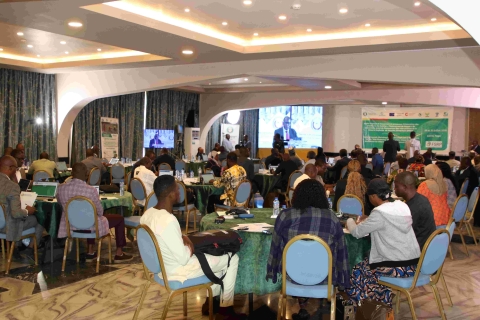
On Wednesday 16 April 2025, the Minister for Agriculture, Daniel Siméon Kelema, presided over a ceremony at which 235 power tillers and their accessories were handed over to farmers in these regions, in the presence of several key figures from the agricultural sector.

The grant, financed by the World Bank, is aimed at improving agricultural productivity in a country where agriculture remains the mainstay of the national economy, employing more than 70% of the working population.

The three beneficiary areas of Ségou, Sikasso and Koutiala represent major agricultural basins for growing rice and maize, two essential commodities in the fight against food insecurity. For Minister Kelema, this allocation marks a significant step forward in the agricultural mechanisation policy: "The motor cultivator represents a compromise between animal traction and the tractor. It is more affordable and easier to handle, making it a tool that is well suited to the family farms that dominate our agricultural landscape.

The Minister pointed out that this gesture was in line with the vision of the President of the Transition, who has made the modernisation of the agricultural sector a central plank of the Agricultural Orientation Law and the Agricultural Development Policy.

The government is banking on mechanisation to boost production, improve yields and reduce the drudgery of agricultural work. FSRP-Mali is a regional programme supported by the World Bank to the tune of $60 million over five years. It aims to strengthen the resilience of food systems in several countries in the West African sub-region, while responding to the growing threats posed by climate shocks and food crises. In addition to the equipment, the PRSA-Mali is rolling out a range of structural initiatives: mechanical restoration of 4,000 hectares of degraded land, development of 1,000 hectares of low-lying areas, creation of 50 hectares of market garden areas, not forgetting the free distribution of 4,360 tonnes of agricultural seed and the subsidised sale of 15,000 tonnes of chemical fertilisers (DAP and NPK), as well as 8,564 tonnes of organic fertilisers. The choice of the power tiller is also explained by its ability to rapidly transform farmers' daily lives. Less expensive than a tractor and easier to manoeuvre in small plots, the power tiller meets the needs of rural Malian farms, which are often small and family-run. It makes working the soil easier, speeds up cultivation operations and improves responsiveness to climatic hazards. The ceremony on 16 April was not just about handing over a batch of equipment. It symbolised a clear desire to break away from subsistence farming and move into an era of sustainable, resilient production that is better integrated into regional economic dynamics.

Mali: 1,616 producers, including 36,414 women, benefit from 1,056 tonnes of agricultural seed for the 2023-2024 season

Published on 15 February 2025

The Government of Mali applied for and obtained funding from the World Bank to provide seed support to producers in the PRSA-Mali intervention zone. In August 2023, the programme acquired and distributed 1,056 tonnes of improved seeds to producers in the communes where it operates, comprising 463 tonnes of maize, 592 tonnes of rice and 1,059 kg of onions.

The acquisition of these agricultural seeds mobilised the programme's managers, as well as all stakeholders, to ensure the success of the input distribution operations. To achieve this, committees were set up at national, district and communal levels.

The 1,056 tonnes of agricultural seed distributed benefited 1,616,316 farmers, including 36,414 (23%) women.

The table below gives details of the distribution and number of beneficiaries per PRSA-Mali intervention circle.

Region

Circles

Quantities of seed delivered and distributed

Number of final beneficiaries of PRSA-Mali seeds


Maize (in tonnes)

Rice (in tonnes)

Onion (kg)

MenWomanTotal  
SégouSégou

5

140

154

10 493

483

10 976

  
Niono

0

54

450

4424

4025

8 449

  
KoutialaKoutiala

40

40

100

13 167

819

13 986

  
Yorosso

10

10

40

1379

42

1 421

  
SikassoSikasso

373

303

247

81 396

26 852

108 248

  
Kadiolo

35

45

68

14 343

4193

18 536

  
TOTAL 

463

592

1 059

125 202

36 414

161 616


%

77

23


Despite the delay in delivering the seeds, the operation was favourably received by all those involved (growers, local authorities, administrations and management).

The rains stopped for 20 days after the crops were actually planted, necessitating reseeding operations in all the districts covered by the programme.

If the recommendations are taken on board, future operations could be improved. Farmers are asking for agricultural inputs to reach them by May at the latest.

Mali: 4000 ha of degraded land to be rehabilitated through integrated landscape management

Published on 15 February 2025

From 22 March to 2 April 2023, a technical team from the FSRP Mali carried out an information and awareness-raising mission for local stakeholders on the Programme and the concept of Integrated Landscape Management (ILM). This mission was part of the launch of activities relating to Integrated Landscape Management (ILM).

In the Cercles of Ségou and Niono in the Ségou region, the Cercles of Koutiala and Yorosso in the Koutiala region and the Cercles of Sikasso and Kadiolo in the Sikasso region, the FSRP Mali national coordination team informed beneficiaries and raised their awareness of the programme's main activities, as well as those relating to GIP in particular. Participatory mapping was used to collect data for the pre-identification of ILM sites in order to define the programme's ILM intervention areas.

The main stakeholders from the deconcentrated departments of agriculture, water and forests, rural engineering, animal and industrial production, hydraulics and meteorology, as well as the administrative and political authorities of the localities visited, gained a better understanding of the GIP approach. This innovative environmental management mechanism enables people to achieve sustainable improvements in the food security and nutritional status of vulnerable rural households and their resilience to climate risks. ILM is a spatial, ecological and socio-economic approach to natural resource management. Its aim is to ensure the well-being of  populations through a shared vision supported by all stakeholders. It makes it possible to restore natural resources, improve the profitability of agricultural production and anticipate and even manage conflicts at local level.

The stakeholders and partners in the field, working in groups, drew up mental maps showing, among other things, the rice, maize and shallot/onion production zones. They also listed

relief features, degraded land, insecure areas and non-timber forest products. The solutions developed in this respect relate to the adoption of a common development vision over 25 years, and the preparation and implementation of an integrated development plan for the territory  a 5-year period.

A total of 71 priority communes have been selected, based on eleven predefined criteria, to  from the programme. The activities planned for the programme's beneficiaries include the restoration of 4,000 ha of degraded land (1,400 ha in Sikasso, as many ha in Kadiolo, Koutiala and Yorosso, and 1,200 ha in Ségou and Niono). In addition, 50 ha of small will be rehabilitated. There are also plans to develop 1,000 ha of flood plains.

In terms of improving the food and nutrition situation in priority landscapes, the programme will support the strengthening of food and nutrition education in each of the municipalities involved.

Mali: the technology park opens its doors to the public

Published on 9 April 2024

Stakeholders in agricultural development in Mali were invited to the third open day of the Mali   Technology Park.

This activity, part of the implementation of component 2 of the West Africa food system resilience program, provided an opportunity to exchange views with users of agricultural technologies, with a view to ensuring their adoption and thus improving agricultural production.

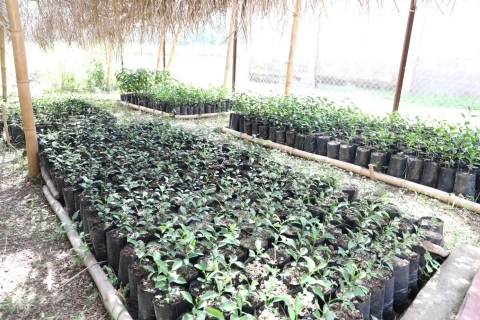
The technology park opened its doors for the third year running to promote research, training, and the application of technologies in the field of agroforestry, with a focus on sustainable development and food security in Mali and West Africa.

The Agricultural Technology Park in Mali is an innovative initiative aimed at modernizing and improving the efficiency of the country’s agricultural sector. Initiated and managed by the Institut d’Economie Rurale (IER), it hosts research and development centres dedicated to agriculture, where scientists and experts can work on new cultivation techniques, improved seeds, pest and disease control methods, etc.

The park is also equipped with modern facilities such as agricultural research laboratories, crop storage and processing facilities, greenhouses for growing plants, etc.

The visitors, made up of students, researchers, company directors and agricultural producers, were able to see that the Mali Technology Park is a centre for agricultural training and education on best agricultural practices, new technologies and farm business management.

Subscribe to Mali