Environmental and social issues involving gender-based violence/sexual exploitation and abuse/sexual harassment (GBV/SEA/HS) play a key role in the implementation of the activities of the West African Food System Resilience Programme (PRSA-BF). To this end, and to ensure that its activities such as hydro-agricultural development, the financing of micro-projects and the construction of infrastructure, among others, are carried out properly, the PRSA-BF has commissioned a study to assess the impact of the programme on the food system in West Africa, In June 2021, the PRSA-BF commissioned the development of environmental and social safeguard instruments, in particular 𝐥𝐞𝐂𝐚𝐝𝐫𝐞𝐝𝐞𝐆𝐞𝐬𝐭𝐢𝐨𝐧𝐄𝐧𝐯𝐢𝐫𝐨𝐧𝐧𝐞𝐦𝐞𝐧𝐭𝐚𝐥𝐞𝐞𝐭𝐒𝐨𝐜𝐢𝐚𝐥𝐞 (𝐂𝐆𝐄𝐒 ), 𝐥𝐞𝐂𝐚𝐝𝐫𝐞𝐝𝐞𝐬𝐏𝐨𝐥𝐢𝐭𝐢𝐪𝐮𝐞𝐝𝐞𝐑 é𝐢𝐧𝐬𝐭𝐚𝐥𝐥𝐚𝐭𝐢𝐨𝐧 ( ) 𝐂𝐏𝐑𝐞𝐭𝐥𝐞𝐏𝐥𝐚𝐧𝐝𝐞𝐆𝐞𝐬𝐭𝐢𝐨𝐧𝐝𝐞𝐬𝐏𝐞𝐬𝐭𝐞𝐬𝐞𝐭𝐏𝐞𝐬𝐭𝐢𝐜𝐢𝐝𝐞𝐬 (𝐏𝐆𝐏𝐏 ).
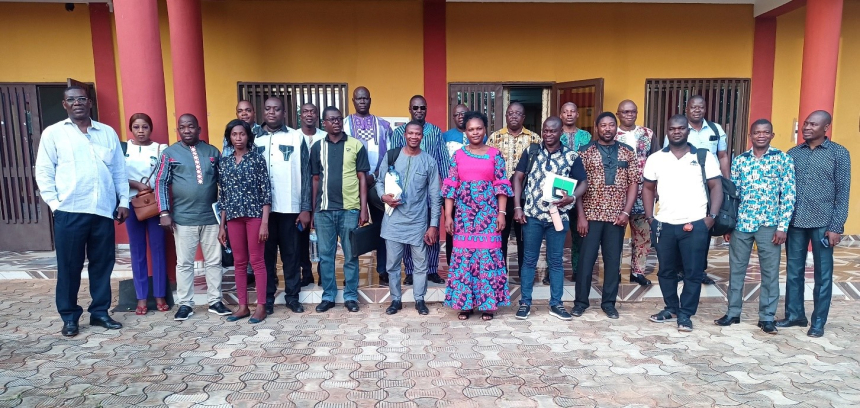
To assess these instruments, the Technical Committee on Environmental Assessments (𝐂𝐎𝐓𝐄𝐕𝐄 ), under the auspices of the Agence Nationale Des Evaluations Environ-nementales (𝐀𝐍𝐄𝐕𝐄 ), organised a working session in Ziniaré (Plateau-Central region) in August 2023. Chaired by Dramane SAVADOGO, Director of Strategic Environmental Assessments and Environmental Impact Assessments/ANEVE, the session was conducted in plenary session by a multidisciplinary group and was marked by presentations on the three (3) documents to be examined.
Koumbéyao Jean-Homère SOMDA, PRSA-BF Environmental Protection Specialist, presented the𝐂𝐆𝐄𝐒 and websites. 𝐏𝐆𝐏𝐏𝐂𝐏𝐑 was presented by Panbagnounou LANOU, Social Development Specialist. These presentations, which were followed by discussions, led to recommendations and validation of the various documents, subject to COTEVE's observations being taken into account.
The validation of the environmental and social safeguard instruments means that the West African Food System Resilience Programme in Burkina Faso now complies with the ECOWAS legislative and regulatory framework and the World Bank's Environmental and Social Standards.