In Burkina Faso, thanks to the Food System Resilience Programme (FSRP) financed by the World Bank with a contribution from the Burkina Faso government, around 120 million US dollars (72 billion CFA francs) have been mobilised to support 100,000 vulnerable households, i.e. 650,000 people, including 325,000 women and young people, and to help develop 26,000 hectares.
These beneficiaries from 7 regions of Burkina Faso (Haut-Bassins, Boucle du Mouhoun, North, Centre-West, East, Centre-East and Centre-South) will receive specific support to produce and market their products in a more stable environment due to the cross-border location of the target areas.
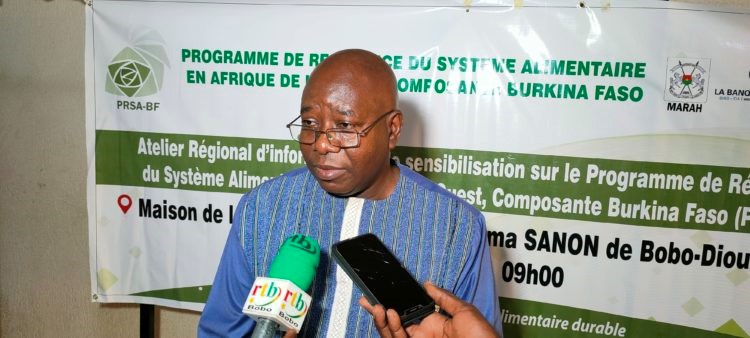
To achieve this, "the FSRP will provide climatic and hydro-meteorological information to help farmers in the target areas plan their production according to climatic events and weather conditions. This digital advice will help them to make informed decisions regarding the choice of seeds, sowing periods, production zones, as well as the possible occurrence of natural disasters such as floods," emphasised Mr Edouard SANOU, Coordinator of the FSRP-Burkina Faso, during awareness-raising sessions for FSRP beneficiaries.
To facilitate trade and commerce in agricultural products, the FSRP will implement market-related mechanisms by helping to remove trade barriers and road harassment to facilitate intra-regional trade and increase profits.
Research for development is at the heart of the FSRP, which will help to build research capacity for fruit and vegetables. The Institut de l'Environnement et des Recherches Agricoles (INERA), Burkina Faso's national research centre, will be strengthened to play the role of regional centre of excellence for fruit and vegetables in West Africa. In addition, infrastructure will be made available to farmers to support hydro-agricultural projects and the restoration of degraded land.
Various forms of support will be provided for agricultural projects and micro-projects in terms of equipment, with beneficiaries contributing up to 50%. The programme also provides for the introduction of technologies accessible to women and young people, and initiatives to develop nearly 26,000 hectares, including the rehabilitation of the Bama agricultural lowland.
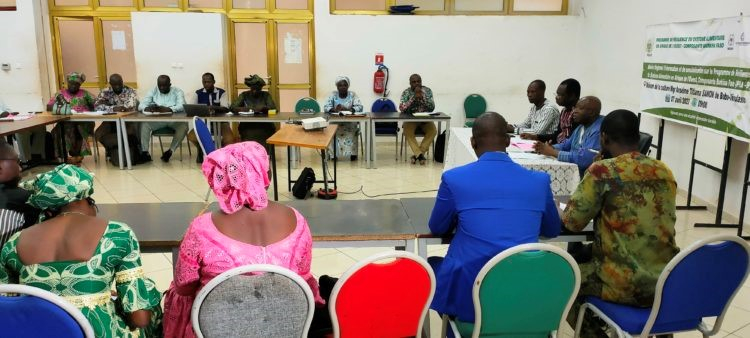
From 3 to 7 April 2023, stakeholders and partners from the 7 target regions of Burkina Faso were briefed on the objectives, expected results, implementation strategies and institutional and organisational arrangements of the PRSF in Burkina Faso, in order to familiarise themselves with national and World Bank procedures and gain a better understanding of the targeting strategy and the modus operandi for knowledge management, gender mainstreaming and environmental and social safeguards.
The West Africa Food System Resilience Programme (FSRP) is a major initiative aimed at strengthening the region's capacity to cope with food and climate crises. Conceived by ECOWAS and its technical arms CORAF and CILSS, and funded by the World Bank, the FSRP is a joint effort to help stakeholders meet the challenges they face.
The PRSF has a multi-phase approach. The first phase of the programme, worth US$395.74 million, including US$330 million from the World Bank, benefits four countries: Burkina Faso, Mali, Niger and Togo, and three regional institutions (ECOWAS, CILSS and CORAF). The second phase, worth US$315 million, targets three countries: Ghana, Sierra Leone and Chad.