As part of the implementation of the West Africa Food System Resilience Programme, 60 motor cultivators and accessories were purchased for agricultural cooperatives operating in the Planned Agricultural Development Zones (ZAAP) targeted in the Savanes, Kara and Centrale regions.
This action is part of the support for the implementation of the Emergency Programme for Strengthening Community Resilience and Security (PURS).
In order to optimise the use and management of this equipment, the FSRP has undertaken to strengthen
the capacities of 45 technical advisors in agricultural business management (CTGEA) in the cantons concerned to monitor the management of these motor cultivators by the beneficiaries.
The aim was to equip agricultural advisers in the cantons where the cooperatives benefiting from the motor cultivators are based with best practices for the use and monitoring of motor cultivators. These CTGEA will be responsible for supervising the use, maintenance and management of this equipment within the respective cooperatives of the beneficiaries.
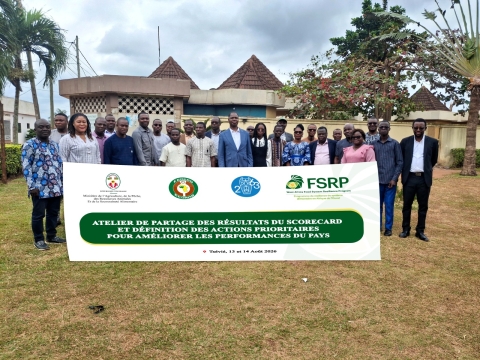
The training was held at the National Agricultural Training Institute (INFA in Tové) from 22 August to 5 September 2025. Two sessions were organised, each bringing together
22 and 23 participants, trained by INFA specialists in agricultural mechanisation.
Adopting an approach combining theory and practice, the training covered several modules, including: (i) preventive and corrective maintenance of motor cultivators, (ii) the basics
of managing a mechanised agricultural services business, (iii) practical work including driving motor cultivators, hitching and unhitching, and carrying out mechanised agricultural work.
This training is a key step in ensuring the effective and sustainable use
of the agricultural equipment provided. It contributes to strengthening the technical autonomy of cooperatives and ensuring the sustainability of investments made under the FSRP.
Organised as a prelude to the training of rotary tiller operators, this
capacity-building session marks an essential preparatory phase. It aims to equip local equipment management bodies with the skills necessary to effectively supervise the use of motor cultivators, with a view to sustainable and concerted management in the service of rural development.