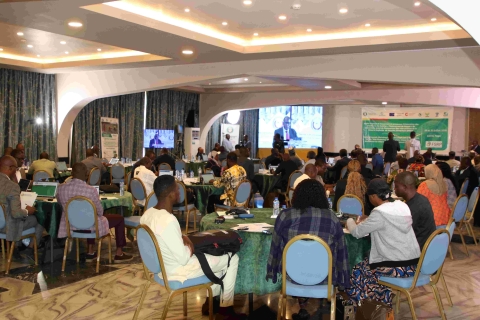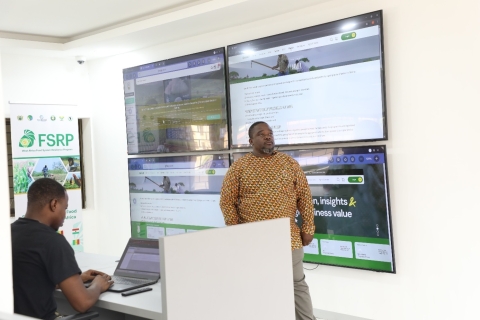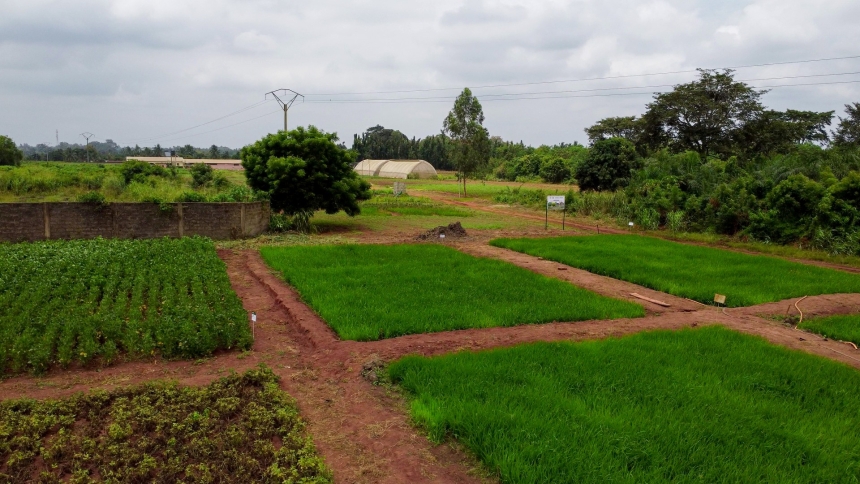
Faced with the challenge of feeding a rapidly growing population, CORAF has deployed a network of ten agricultural technology and innovation parks in eight countries. From Senegal to Chad, via Sierra Leone, Mali, Burkina Faso, Niger, Ghana, and Togo, ten agricultural technology and innovation parks are transforming the way proven innovations reach farmers. A concrete response to one of the region’s most cruel paradoxes: having access to high-performance agricultural technologies but failing to disseminate them widely.
According to a technical note published in December 2025 by CORAF, these parks demonstrated 557 technologies and innovations in 2024. From drought-tolerant maize varieties to improved livestock farming techniques and post-harvest processing equipment, the spectrum covers the entire agricultural value chain.
Living showcases of innovation
"Agricultural technology and innovation parks are living storefronts where producers, businesses and decision-makers can see, touch and understand technologies before adopting them. Unlike traditional approaches to extension, we create a meeting place between those who develop innovations and those who can disseminate them on a large scale.” explains Dr. Niéyidouba Lamien, program manager at CORAF and coordinator of component 2 of the Food System Resilience Program in West Africa (FSRP), which provides a significant share of park funding in FSRP countries.
The initiative responds to an alarming observation. In West Africa, agriculture employs nearly 70% of the workforce, but yields remain among the lowest in the world. Soil degradation, climate change, and a lack of improved seeds are holding back productivity. Meanwhile, research centers are accumulating proven technologies that never pass through the doors of laboratories.
SOME KEY FIGURES
10 technology parks in 8 countries (Benin, Burkina Faso, Chad, Ghana, Mali, Niger, Senegal, Sierra Leone, Togo)
557 technologies demonstrated in 2024
6,527 visitors, 40% of whom are women
52 partnership agreements signed with the private sector
The private sector and young people at the heart of the system
One of the most significant results of the year 2024 lies in the massive engagement of the private sector. Of the 81 organizations that expressed interest, 52 have formalized partnerships with national research institutes. Among them, 70% are private actors: seed companies, producer associations, food processors and specialized media.
"For the first time, we see seed companies come directly to our centers to sign multiplication agreements," says an official of the Agricultural Research Center of Burkina Faso, where 22 partnerships have been concluded. Demand for basic seed has already increased. This is a sign that the mechanism works.”
This dynamic is all the more remarkable given that it takes place in a difficult regional context. In Mali, Burkina Faso and Niger, security instability complicates agricultural activities. Yet agricultural technology and innovation parks continue to operate, providing rural populations with access to innovations that can improve their resilience.
Beyond the diffusion of technology, parks play an increasing role in youth training. In 2024, 25 young agricultural entrepreneurs from six countries received specific support under the "Youth in agribusiness" program. A response to the demographic challenge: West and Central Africa has the youngest populations on the continent, and agriculture remains the leading source of potential jobs.
"These parks have become natural incubators for the next generation of agripreneurs. Young people find concrete opportunities and acquire skills that they can use in their own businesses.” , says Dr. Caroline Makamto Sobgui, scaling specialist at CORAF and first author of the technical note.
A model to be consolidated
The device is not free from challenges. The technical note identifies six prerequisites for the success of parks:
- a multidisciplinary team,
- a rigorous selection of technologies,
- a solid institutional anchoring,
- continuous monitoring and evaluation,
- strategic communication and
- an environment conducive to partnerships.
So many requirements that require significant human and financial investments. The question of sustainability also arises. The parks are currently funded by several international programs—the World Bank’s West Africa Food System Resilience Program (FSRP), and the Swiss Cooperation’s TARSPro project. Their continuation beyond these funds will depend on the capacity of national institutions to develop autonomous economic models, notably through the sale of services and seeds.
Despite these uncertainties, the initial results are encouraging. By demonstrating that agricultural research can build productive partnerships with the private sector, agricultural technology and innovation parks offer a promising avenue for bridging the historic gap between laboratories and fields. This transformation is all the more urgent because the West and Central African region will have to double its food production by 2050 in order to feed its population.