The recurrence of climatic disturbances, pest attacks (army worms and others) and plant diseases, coupled with a fragile security climate, are factors that expose many people every year to the risk of food insecurity and malnutrition.
The major consequence is the decapitalisation of communities' livelihoods, with the corollary of a deterioration in the nutritional status of the most vulnerable groups. Faced with this situation, the West Africa Food System Resilience Programme, Burkina Faso Component (FSRP-BF), in collaboration with the Executive Secretariat of the National Food Security Council (SE-CNSA), has undertaken to implement the Resilience Basket (RB).
The PdR is a package of interventions designed to strengthen the resilience of vulnerable populations. It improves the food and nutritional security of vulnerable households by strengthening their livelihoods. The programme has supported 102 vulnerable households, 18 of which are headed by women and 07 by young people. These households come from 09 villages in 03 regions. Each household received: i) 30kg of maize seed; ii) 10kg of cowpea seed; iii) 80g of vegetable seed (tomato and onion); iv) 750kg of fertiliser (200kg NPK, 550kg Urea); v) ploughing of 3 ha; vi) 01 kits of vegetable production equipment (wheelbarrow, watering can, hoe, etc.); vii) local technical supervision. This support enabled each household to plant 01 ha of cowpeas, 02 ha of maize and 0.25 ha of market gardens.
These households will be supported over a period of 03 years, and the aim of the support is to get them out of their vulnerable situation.
At the end of the first year, the beneficiaries recorded an increase in their production, yields and income. This has enabled the households to adequately meet their food and nutritional needs and to diversify their sources of income through related activities (small-scale livestock farming and others) following the sale of their surplus production, all of which contributes to improving their livelihoods and strengthening their resilience.
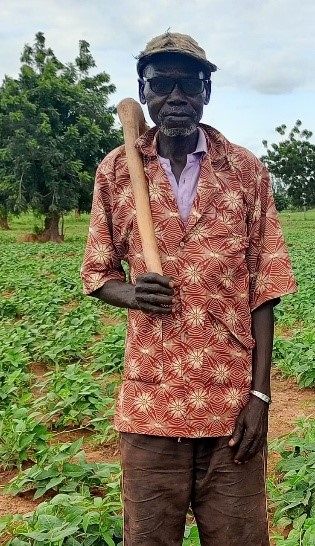
Mr BOUGMA Piraogo Marcel, is one of the beneficiaries of the PdR in the village of Nassoulou in the commune of Kindi, in the province of Boulkiemdé in the Centre West region. He describes the benefits of the PoR as follows: ‘Before the support, we used to grow small quantities of maize behind our cages so that we could eat fresh maize as soon as it was harvested. We didn't know that our soils were suitable for growing this crop over such large areas. So, for lack of means, we never tried. This experiment has shown us that maize production is profitable, and I intend to continue. My production of cowpeas and market garden produce wasn't as developed, but the advice and grants I've received have improved it a lot’.
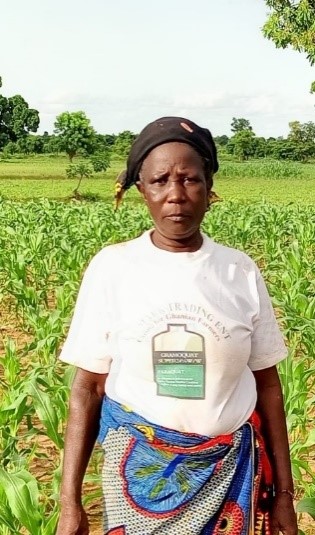
Mrs KIEMTORE Jeanne, a beneficiary from the same locality, said she was pleased with the initiative and described it in these terms: ‘I wasn't producing maize because I didn't have enough resources to do so. So we didn't eat any. I only produced a small portion of cowpea. This didn't allow us to cover our food and other needs. The support I received enabled me to grow large quantities of maize and cowpeas that would enable me to meet my household's food requirements for several years. I'm going to work to maintain this momentum.
The key success factors are the commitment of the beneficiaries and their community to the success of the initiative, the integration of maize into the eating habits of vulnerable households, the coverage of their food and nutritional needs, the adoption of good agricultural practices by the beneficiaries, and the support of technical services and local authorities.