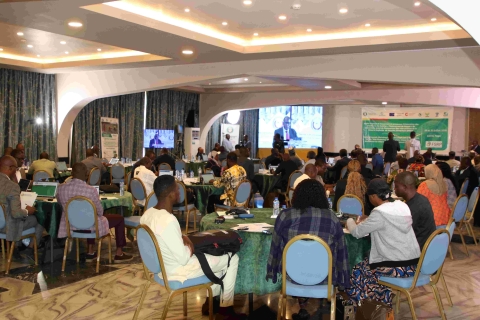
As part of the implementation of Component 1 of the West African Food System Resilience Programme (FSRP), a capacity-building workshop was held from 24 to 26 June 2024 in Niamey/Niger for the staff of AGRHYMET CCR-AOS, a specialised agency of the Permanent Inter-State Committee for Drought Control in the Sahel (CILSS) based in Niamey. This in situ training focused on the theme: "Taking into account gender and gender-based violence (GBV), sexual abuse and exploitation (SAE) and sexual harassment (SH) in the development of food and nutrition security projects and programmes". It was organised as part of FSRP component 1 entitled "Digital advisory services for the prevention and management of agricultural and food crises", implemented by AGRHYMET CCR-AOS with funding from the World Bank. The aim is to contribute to the elimination of inequalities between men and women in activities in the agricultural and climate sectors. This important training course was attended by some twenty AGRHYMET CCR-AOS experts active in the design and implementation of projects and programmes for the benefit of West African and Sahelian communities.
At the opening ceremony, the Coordinator of Component 1 of the FSRP project, Dr Alhassane Agali, welcomed the participants. He stressed that the issues of environmental and social safeguards, in general, and GBV and AES/HS, in particular, are firmly on the AGRHYMET CCR-AOS agenda as important performance standards for the security of the stakeholders and beneficiaries of its interventions in the countries of West Africa and the Sahel. The training workshop was opened by Prof. Atta Sanoussi, Head of the Training and Research Department (DFR), representing the Director General of AGRHYMET CCR-AOS. In his speech, Pr Sanoussi mentioned the relevance of the activity, which is in line with the CILSS gender policy, and congratulated the FSRP project's component 1 on its choice of theme and pedagogical approach.
The workshop was jointly facilitated by Dr Mariame Maïga, Regional Gender and Social Development Advisor at CORAF (Senegal) and the FSRP's GBV Prevention, Response and Mitigation Expert, Ms Assétou Kaboré (Niger) based at AGRHYMET CCR-AOS. At the end of the workshop, the participants expressed their satisfaction with the new knowledge acquired in relation to gender and GBV. Indeed, the trainers clarified the concepts of gender and GBV in relation specifically to food and nutritional security, a vital area for women and men exposed to the effects of climate change in the sub-region.