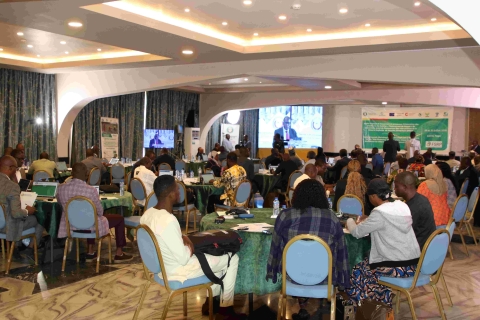
A team of specialists in agricultural trade issues visited four markets in the northern, central and southern districts of Ghana to assess their viability as centres for cross-border trade in agricultural products in the West African sub-region.
This activity, part of the implementation of the West African Food System Resilience Programme (FSRP), provided an opportunity for discussions with market women, district assembly authorities and the directors of agriculture in the districts where the markets are located. The markets assessed by the team are the Fumbisi market in the North region, the Abofour and Agogo markets in the Ashanti region and the Denu market in the Volta region.
For each market, the assessment covered market infrastructure, market management, viability of regional trade and marketing, safety and disaster management systems, food handling, food safety and quality controls, and welfare provisions.
The FSRP aims to support key value chain activities through the implementation of relevant interventions to improve food insecurity preparedness and strengthen the resilience of agri-food systems in West Africa. In Ghana, the project's priority value chains are rice, maize, soya and poultry (with a focus on broiler production). One of the PRSF's main interventions, called Component 3, focuses on promoting regional trade as part of measures to ensure food security and resilience in member countries. Farmers and traders in the sub-region engage in substantial cross-border trade in agricultural products, but this activity faces a number of challenges that impede the free flow of trade. The aim of this activity is therefore to facilitate trade and the movement of agricultural products between Ghana and its neighbouring countries in these main market centres.
The team also examined the state of safety and disaster management in each market. This included recurring and potential disasters, presence or proximity of fire stations or hydrants, emergency coordination protocols or arrangements, prevalence of crime, internal security arrangements, presence or proximity of police stations, police posts or barriers.
In line with standard FSRP requirements, the team assessed the attention paid by each market to the well-being of its users in terms of health care, welfare and hygiene. The presence of health posts, infirmaries or first aid facilities was studied, as was the existence of crèches or nurseries on the market premises, the proximity of primary schools and the necessary provisions to discourage the prevalence or potential for child labour practices.
The four (04) markets were selected for evaluation after extensive consultations with regional and district directors of agriculture, as centres for promoting trade in the FSRP's value chain products - rice, maize and soybeans. The FSRP will carry out rehabilitation and upgrading work to better position them as centres for the expansion of agricultural trade in the region.
The results of the evaluation exercise will be presented to the PRSP Project Implementation Unit, the Ministry of Food and Agriculture and the World Bank for further consideration.