Women in the agricultural sector, whether producers, workers or agricultural entrepreneurs, face greater difficulties than men in gaining access to productive resources, markets and services. Most women carry out their activities at family level, using low-performance technologies and on a small scale, both in production and in processing and marketing. They have fewer opportunities to farm and less chance of accessing land on a rental basis. Their access is usually limited to plots that are of poorer quality, smaller and further from their homes. These disparities between men and women are a constraint on the development of profitable productive activities and the eradication of poverty in rural households.
To make an effective contribution to overcoming these gender inequalities in Togo's agricultural sector, the FSRP has supported capacity-building for the national institutions and players involved in its implementation, on the strategy and tools for integrating the gender and youth dimensions into all the project's components and activities in order to make it more inclusive and sensitive to this disadvantaged group.
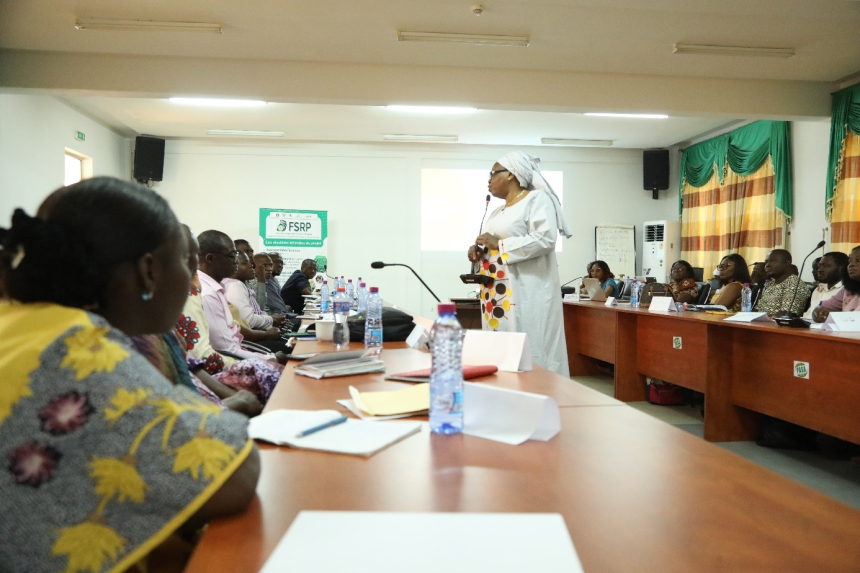
This training course, run by CORAF's regional gender adviser, Dr Mariam MAÏGA, from 5 to 8 December 2023 in Lomé, brought together representatives of technical structures, members of the ministry's gender focal unit, agricultural research centres, extension services, inter-professional players, the network of women farmers and civil society.
Over four days, subjects relating to the concept and tools of gender analysis, the impact of climate change, resilience, analysis of gender aspects in the agri-food system and the gender action plan were addressed.
Ultimately, this training will make it easier to take account of the specific needs of disadvantaged groups in accessing and adopting technologies that are sensitive to climate, gender, nutrition, access to developed land, inputs, quality seeds and extension services, among others.