In the villages and prefectures of Togo, a quiet revolution is underway: healthier food for children and a better future for women.
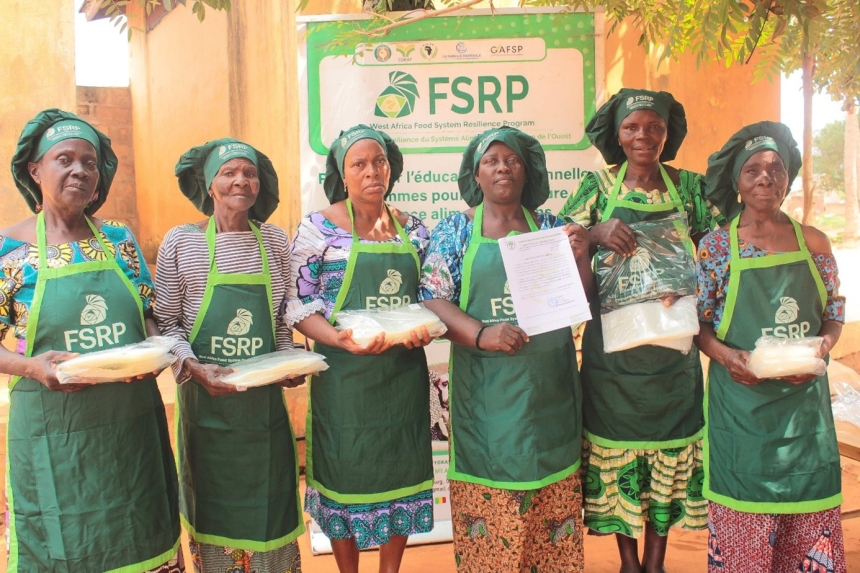
Specialising in the production of infant flour enriched with moringa, néré or orange-fleshed sweet potato (PDCO), seventeen (17) women's cereal processing cooperatives have just received their health certificates and labelled packaging thanks to the support of the Food System Resilience Programme in West Africa (FSRP-TOGO).
These processing units were set up by the project with the aim of helping to combat malnutrition, offering better quality products at lower cost to the most vulnerable sections of the population and, above all, strengthening the economic empowerment of rural women, as highlighted by the president of the Motoag-Man cooperative in Dapaong: "With these new labelled packages and health certification, we will be able to sell more and improve our living conditions. It's an opportunity to move out of the informal sector."
For Elikplim, a cooperative based in Nyamassila, this recognition opens the way to new prospects full of hope and opportunity: "With these certificates, we now have proof that our flour is safe and meets standards. We can now take our flour to the Order of Malta hospital in Elavagnon, which is a large health centre." There is similar enthusiasm in Kpalimé, where the head of FEMME SOLIDARITE highlights the transformative impact of the programme: "Thanks to the support of the project, we have learned to improve our hygiene and processing practices. This certificate is a source of pride for all the women in our cooperative, who see their work being valued. Receiving this certificate and packaging is a victory for all of us."
As a reminder, the path to certification was rigorous. First, 720 women from 60 cooperatives were trained in good production and hygiene practices. Then, close monitoring enabled the selection of the 30 best processing units, 17 of which had their products validated by the National Institute of Hygiene (INH), following analyses carried out on samples taken by the Togolese Institute of Agricultural Research (ITRA).
In addition to certification, the cooperatives receive support to improve the presentation and distribution of their flours. More than 30,000 labelled packages have been purchased and distributed. This new packaging aims to improve the visibility of the products in pharmacies, supermarkets and health centres, places that have been largely inaccessible to these producers until now.
To mark the occasion, a joint CTOP-FSRP-ITRA mission travelled across the country's six agricultural regions from 19 to 25 August 2025 to officially present the certificates and packaging to the beneficiary cooperatives.
This project is part of the FSRP-TOGO strategy to promote nutritionally smart agriculture while strengthening food security and women's empowerment.