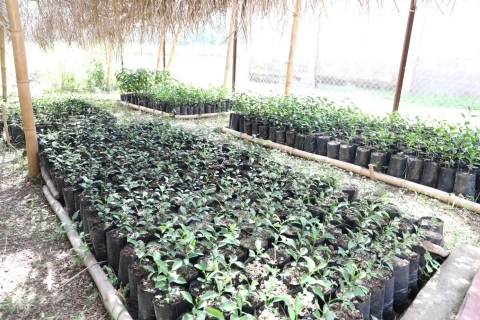
In the north of Togo, farmland is becoming increasingly nutrient-poor due to erosion (on hillsides and mountainsides), climate change and the excessive use of pesticides and mineral fertiliser by farmers.
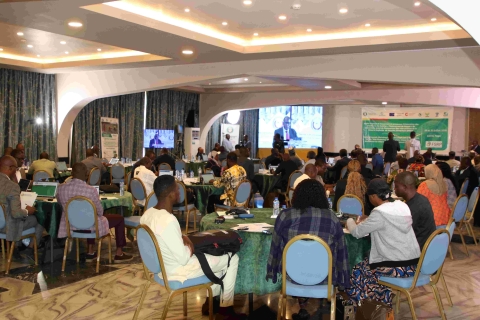
To reverse this trend, the Ministry of Agriculture, Village Hydraulics and Rural Development, as part of the implementation of the FSRP, has trained 4,103 beneficiaries in sustainable land management (SLM) practices in 60 Planned Agricultural Development Zones (ZAAP), to help them adopt these practices and thus contribute to restoring degraded land.
In the Kadjalla ZAAP in the Niamtougou prefecture, Atou Jean was one of the beneficiaries of this training, which enabled him to learn techniques for preparing compost, BOKASHI organic fertiliser, apichi and mulching, which he applies to his plots while reducing the use of mineral fertiliser.

On a 1 ha maize plot, he applied 100 kg of organic fertiliser two weeks before sowing. A few days later, he added 75 kg of mineral fertiliser (50 kg of NPK and 25 kg of urea). On the other area, he applied only mineral fertiliser (300 kg of NPK and 150 kg of urea) without adding any organic fertiliser.
The maize plants that had received the organic fertiliser and a little mineral fertiliser were vigorous and growing well, whereas those on which he had only applied mineral fertiliser were yellow and had difficulty developing.
He is the attraction in the village of Outi, and has no hesitation in explaining his secret. Atou Jean is happy to know that he is contributing to the restoration of the land in his village, and invites his fellow farmers to follow him down this promising path: “I’m asking all the farmers in the region to adopt bokashi, which is a reality and really helps to restore the land. The use of fertiliser is increasingly impoverishing our land and is dangerous for ourselves. Although boKashi is a bit tricky to prepare, it costs nothing compared to fertiliser, which is increasingly expensive.

The adoption of organic manure in northern Togo is an essential farming practice for restoring soil fertility. Organic manure, which includes compost, crop residues and animal waste, is an environmentally friendly alternative to chemical fertilisers. Organic matter improves soil structure, increasing its capacity to retain water and supply nutrients to plants.
By improving soil cohesion, organic fertiliser reduces nutrient leaching and captures the mineral salts needed by plants. Unlike chemical fertilisers, which offer a short-term solution, organic fertiliser enriches the soil on a long-term basis, promoting stable agricultural productivity over the long term. It uses local resources and reduces dependence on expensive inputs, which is particularly beneficial for low-income farmers.