Although Niger is a dry country, it has abundant groundwater and surface water resources. The territory has more than 1,000 ponds, 175 of which are permanent and particularly threatened by sand encroachment. These water resources play an important role in feeding the population and livestock, as well as in agricultural production, both flood-irrigated and irrigated. However, the rapid drying up of these water sources remains a constraint on their use for farming, livestock watering and domestic needs. In order to relieve the populations of rural areas, who often struggle to find water for their needs, the World Bank, through the West Africa Food System Resilience Programme (WAFSRP), has supported the Government of Niger in the construction of water mobilisation works, including the development of eight (8) ponds for agro-pastoral and fisheries purposes in the programme's intervention area. Following a technical study carried out by the engineering services in the Tahoua and Zinder regions, it was revealed that in these regions, ponds are very often confronted with the phenomena of early groundwater drawdown, drying up or depletion of ponds, posing a problem of availability of water volumes and land to meet the needs of users.
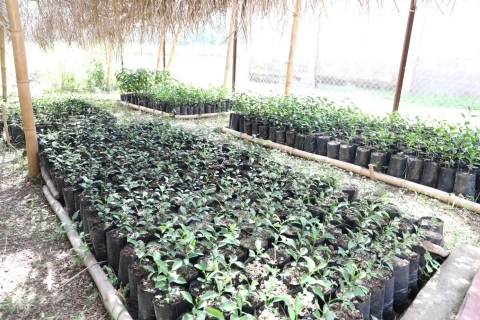
Work is being undertaken to develop eight (08) ponds in the two regions through deepening, rebuilding thresholds, and mechanical and biological protection in order to contribute effectively to the development of agro-sylvo-pastoral production activities with a view to strengthening the resilience of the beneficiary populations in the communes of ZERMOU, MIRRIAH, and DUNGASS in the Zinder region, and the municipalities of BOUZA, TAMA, and MALBAZA in the Tahoua region.
These developments will enable the direct development of agricultural land around ponds, the recharge of the water table, an increase in income from investments by the population, and the sustainable restoration of ecosystems.