In Togo, agri-food processing is a sector that creates wealth and provides jobs for the population. Soya processing is dominated by small-scale and semi-industrial units, with large-scale units now gradually being installed throughout the country.
However, consumption of local processed products is lower than that of imported products, partly because of the hygienic conditions under which they are produced.
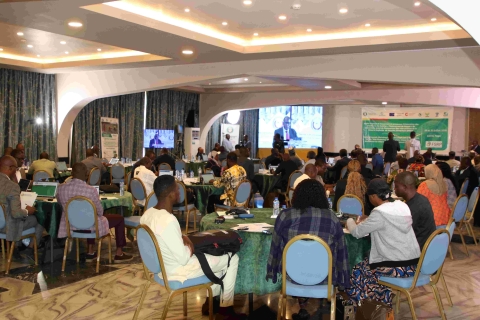
To remedy these weaknesses, the Food System Resilience Programme in West Africa (FSRP TOGO) is supporting the training of 200 soya processors in compliance with food hygiene standards, diversification of the range of processed products and packaging presentation. The aim of the training is to teach women about hygiene, quality, hazard control, packaging and good food processing practices, so that they can offer the public a diverse range of good-quality processed products.
Organised in conjunction with the Conseil Interprofessionnel de la Filière Soja au Togo (CIFS-Togo), this training targeted the family of processors organised within the Association Togolaise des Transformateurs de Soja (ATTS), and provided an opportunity to address issues of standards, hygiene, quality and packaging in order to correct shortcomings and offer the public products manufactured under good hygienic conditions.
As far as the FSRP's objectives are concerned, this training contributes to the adoption of nutrition-sensitive technologies by women processors and, in the short and medium term, helps to increase the proportion of nutrition-sensitive technologies and contributes to the implementation of the Togo 2025 roadmap, which itself aims to promote local processing through its third objective, that of strengthening agri-food processing industries and encouraging high value-added agriculture.
The training took place simultaneously from 30 September to 02 October 2024 in Tsévié, Atakpamé and Kara, and from 03 to 05 October 2024 in Sokodé and Dapaong.