Togo: Launch of reforestation operation with 4,100 fruit trees in Yanda in the canton of Badin

Published on 7 September 2025

In Yanda, a town located 280 km northeast of Lomé, a reforestation operation was launched as part of the implementation of Integrated Landscape Management (ILM), promoted by the West Africa Food System Resilience Programme (FSRP).

A total of 4,100 certified fruit trees, including baobabs (grafted and ungrafted), tamarinds (grafted and ungrafted), nérés and jujubes, were planted at the pilot sites of Nakpatongou (Kpendjal Ouest), Mangokoura (Plaine de Mô) and Badin (East Mono), located in the FSRP's GIP areas. These plantations cover an area of at least 41 hectares.

This initiative, led by the Ministry of Agriculture, Village Hydraulics and Rural Development, in collaboration with the Ministry of Environment and Forest Resources, is fully in line with the implementation of the Togo 2025 government roadmapIt contributes to national efforts to combat climate change in line with the Government's strategic priorities for rural development, food security and sustainable management of natural resources.

The success of the operation is based on an exemplary participatory approach: local authorities, NGO partners and, above all, the beneficiary rural communities have been fully involved in identifying sites and are now committed to maintaining the plants.

The testimony of Kodjo ODJILO, chief of the village of Yanda, illustrates this commitment: "As soon as we were made aware of the benefits of reforestation, I immediately mobilised my community. And as they say, charity begins at home: I have personally committed to ensuring the maintenance of the plants," he said with conviction.

Beyond the environmental issue, the initiative also opens up economic opportunities, particularly for women. Mrs. Agnès, a beneficiary of the project, confides: "Thanks to these trees, we will be able to produce tamarind juice, sell the leaves, seeds and baobab flour, and even néré fruit. This represents a real economic boost for us. We are grateful to the FSRP. "

The official launch, held in Yanda on 28 August 2025, was attended by a delegation comprising the representative of the governor of the Plateaux region and the Senate, representatives of the ministers of agriculture and the environment, the secretary general of the East-Mono prefecture, the mayor of the Est-Mono 2 commune, the regional director of agriculture, the FSRP's deputy operational coordinator, and other local authorities who raised awareness among the beneficiary community about the benefits of agroforestry and the importance of reforestation, and above all emphasised the need to monitor and maintain the plants.

Through this concrete action, the FSRP is illustrating its vision of making the agroecological transition an opportunity to improve the resilience of communities while creating wealth in rural households.

Togo: livestock farming becomes a source of resilience for more than 400 households in the savannah region

Published on 4 August 2025

When animal housing does not meet technical standards, especially biosecurity standards, this leads to high livestock mortality and low animal growth. Housing is therefore the primary factor in successful livestock farming.

In our rural areas, the construction of adequate sheepfolds and chicken coops is struggling to become common practice among farmers, whose activities are limited to family production.

Based on these findings and in view of the difficulties encountered by livestock farmers in rural areas, the West Africa Food System Resilience Programme (FSRP - TOGO) provides support for the construction of infrastructure (BTA/PTA) suitable for animals and support for breeding stock of poultry and small ruminants to livestock farmers in order to improve the level of production of livestock units.

Unlike open-air livestock farming systems, this is an improved traditional system where animals (local chickens and small ruminants) are raised in better-designed habitats built with local materials and adapted to climatic conditions. Traditional improved sheepfolds (BTA) and traditional improved chicken coops (PTA) are the result of endogenous know-how and technical innovations that reduce the risk of disease and predation in livestock farms.

These structures, built with shared costs by the FSRP with a contribution from the beneficiary, combine respect for the environment, animal welfare and economic efficiency, while taking into account the sustainability of the livestock unit.

To date, 400 livestock farming households have been supported through the construction of 176 improved traditional sheep pens (BTA) and 224 improved traditional chicken coops (PTA) in the Savanes region, with a gradual expansion underway to the Kara and Centrale regions, gradually consolidating a more resilient and sustainable livestock farming model.

Additional support in the form of breeding stock. In addition to sheepfolds and chicken coops, breeding stock for poultry and small ruminants are provided to livestock farmers to improve animal performance. A total of 315 breeding stock of guinea fowl have been acquired for 45 guinea fowl farmers in the Savanes region. 179 farmers in the same region received 215 roosters and 1,075 hens. 484 sheep and 220 goats were also purchased for 121 sheep farmers and 55 goat farmers to optimise the animals' growth, fertility and disease resistance.

True success stories: beneficiaries have their say

My name is DINDIOGUE Yalkbir , and I live in the canton of Bonbouaka.
Some time ago, I was fortunate enough to receive support from the FSRP. They gave me four goats (three males and one female) and helped me build my sheepfold in exchange for a small contribution to help with water, sand and construction work.

At the time, I only had three goats of my own. But thanks to the animals I received from the FSRP, my herd is gradually growing: I now have twelve (12) goats, some of which were born to the FSRP goats. In the past, I kept my animals in the family home. But with the support of the project, I now have my own building dedicated to livestock farming. With the support of ICAT agents, I am also able to manage my business better.

Thanks to this, I have been able to sell a few animals to restart my business, pay off my debts and also support my husband a little. This project has really helped me.

"In Tabinmong, poultry farming has changed my life"

I am a poultry farmer and seller in Tabinmong, in the savannah region.

Thanks to the FSRP, I was able to build a modern, well-equipped chicken coop. The FSRP provided me with everything I needed to get started: breeding hens, a rooster, waterers, feeders, and the chicken coop itself, which I helped to build including sand, water and cement for the manufacture of breeze blocks for the construction of the buildingIt's an experience I remember fondly, because it marked a real turning point in my business.

Before that, I was working with the means at my disposal, with no real shelter for the poultry. During the rainy season, water seeped in everywhere, making farming very difficult. Thanks to the FSRP's support, I was able to restart my business and produce up to 300 birds, most of which were sold. At the moment, I am raising more than 100 adult birds and around 150 chicks. Today, I can honestly say that my life has improved significantly. I have been able to start building my house, buy fertiliser for my field and, above all, provide for my family. I really live better than before! he concluded.

Togo: the rice value chain is on the road to development with support from the FRSP

Published on 5 July 2025

In Togo, rice plays an increasingly important role in people's diets and is a strategic issue for national food security. Despite favourable agro-ecological potential and strong local demand, rice yields remain low overall. This situation is largely due to two major constraints: insufficient control over land management, particularly in lowland areas and irrigated perimeters, and the difficulty of access to quality inputs (certified seeds and fertilizers). These factors considerably limit the productivity of producers, reduce the profitability of farms and hinder the emergence of this value chain. Faced with these challenges, rethinking agricultural development policies and strengthening mechanisms for distributing climate-smart agricultural inputs appear to be essential levers for sustainably boosting the rice sector in Togo.

To reverse this trend, the FSRP Togo has not only acquired and distributed inputs (improved seeds and fertilisers) but has also strengthened the capacity of rice growers in lowland management techniques and equipped them with intelligent ploughing equipment (power tillers).

By combining investment in equipment with institutional support, FSRP Togo is helping to make the rice sector a genuine lever for rural growth. Thanks to the distribution to date of 342.54 tonnes of certified rice seed and 2,569.05 tonnes of fertiliser (NPK 15 15 15 and urea) in the form of input credit, repayable in kind, to 34,254 rice growers, including 21,717 women (63.40%), the positive effects are beginning to be felt. The main results are an increase in average yields of between 5% and 8% per hectare and a 16% improvement in farmers' incomes. These encouraging results are the fruit of mechanisms put in place not only to improve farmers' access to agricultural inputs, but also to facilitate production monitoring, the collection of paddy rice at harvest and the marketing of surplus production by farmers. With this in mind, partnership agreements have been signed with several rice mills in Togo, such as the Tône rice mill in the Savanes region, which, thanks to this agreement, has increased its stock from 800 tonnes in 2020 to 2,000 tonnes in 2024, with the number of aggregated producers rising from 1,700 to 16,800 thanks to support from the FSRP.

In order to professionalise farming practices and promote sustainable land management (SLM) approaches, 640 rice farmers, including 59 women, have been trained in Smart Valleys, a low-cost, participatory approach aimed at improving rainwater retention and management to increase yields and crop resilience in the face of climate change. To facilitate the work of the trained farmers, the FSRP provided them with work kits for drawing up the plans and laying out the plots.

Decisive support from the FSRP for the establishment of Togo's National Rice Observatory (ONR-T)

Togo took another decisive step forward with the establishment of the National Section of the National Rice Observatory in December 2024. This initiative is part of a regional initiative supported by ECOWAS, aimed at improving governance, coordination and management of the rice sector in the country.

Thanks to the active collaboration of partner organisations and players in the value chain, the creation of this national body marks a turning point in the structuring of the sector.

The Togo National Rice Observatory (ONR-T) aims to coordinate investment in the rice sector, inform political decisions, collect regular data and communicate on the development of the rice value chain. Its objectives are to monitor and evaluate the production, processing and marketing of rice in Togo to improve performance; to facilitate coordination between public and private players and non-governmental organisations in order to develop partnerships and joint strategies to structure the sector; and to promote innovation and modern technologies to improve the productivity of rice farms, among other things. As for the outlook, it remains the operationalisation of the national section and the mobilisation of resources for the implementation of activities, the development and execution of the action plan and the resource mobilisation plan, the development and implementation of major projects for the structural transformation of the sector in line with regional prescriptions.

Togo: the rise of rice industry players

Published on 5 July 2025

Rice growers play a fundamental role at the base of the sector. Thanks to increasing technical support, training in good farming practices and the introduction of high-yield certified seed, these producers are seeing a marked improvement in their performance, as this beneficiary can testify: "I am SOWARE Amina. I benefited from the FSRP project, a bag and a half of fertiliser and 10 kg of rice seed that I grew on 0.25 hectares. Personally, I used to harvest no more than 5 bags of paddy rice from 0.25 hectares. But with the seeds that the project gave me, this year I harvested 9 bags of 100 kilos from the same area. Thanks to this good harvest, I sold the surplus to support the family financially and resume my tontine and my business, which I had left for lack of funds. I also have a stock at home for the family's consumption".

The Tône rice mill, before the arrival of the FSRP, had groups that delivered paddy for annual processing. Since 2020, with the increase in demand for local rice on the national market, the mill has been unable to meet demand with its stock, estimated at 800 tonnes of paddy per year. Other difficulties were linked to the limited stock, including difficulties in obtaining credit from banks. Today, with the support of the FSRP, our area of intervention, which was limited to Barkoissi, covers the entire savannah region and extends as far as Kanté in the Kara region. We have gone from 1,700 producers to 16,800 aggregate producers, an increase that has had a considerable impact on the quantity of raw materials to be mobilised, which has risen from 800 tonnes to 2,000 tonnes of paddy. In addition to these impacts, thanks to the FSRP we have discovered areas with high paddy rice production, whose producers will be included in the list of Tone Rice producers", she confided. In terms of jobs created, the rice mill has gone from 32 to 73 people. In processing, the number of jobs has risen from 12 to 23, and the number of women sorters from 20 to 50," she concludes.

By acting on several links in the value chain, from the development of agricultural land to access to quality inputs and capacity building for stakeholders, the FSRP is playing an active role in the modernisation and competitiveness of the Togolese rice industry.

Togo: Effective trade structuring for the benefit of rice growers

Published on 5 July 2025

The development of commercial partnerships with processors and distributors has enabled producers to enhance the value of their production. By structuring relations between producers and rice mills within a transparent and equitable framework, it becomes possible to ensure a better distribution of margins, access more stable and remunerative distribution channels and boost the local economy. On the marketing front, in addition to the Tone rice mill, three other rice mills have benefited from PRSP support for product marketing. These are the Binah, Notsè and Sotouboua rice mills. Market contracts have been signed with producers to guarantee the sale of their products. Thanks to this support, a total of 24,178 producers have been able to market their produce to date.

In addition to contractualization, which secures sales to producers, players in the rice value chain have received various forms of support to improve their marketing in value chains, including capacity building on market access under the FTAA, training for women and young traders on cross-border trade, customs procedures and other regulatory requirements of the Abidjan-Lagos Corridor. These players have also been supported in their participation in various markets, at the Lomé International Agriculture and Food Fair (SIALO), and at various fairs promoting local products to promote trade in their products.

Several other initiatives have been supported by the FSRP in partnership with the Ministry of Trade and the High Authority for Quality and the Environment (HAUQE). These included the development of a certification programme for priority Togolese agri-food products, including rice, for the HAUQE, to help companies become more competitive and have easier access to markets. The programme has also supported the compilation of Togo's foreign trade statistics on products targeted by the WAEMU, ECOWAS and FTAA markets, as well as the compilation of a directory of exporters and potential exporters of agri-food products to put them in touch with buyers in the ECOWAS region.

Togo: 52 young poultry farmers trained to ensure the success of their projects

Published on 26 June 2025

In Togo, 52 young poultry sector promoters have just enhanced their technical skills to better manage their farms and ensure the success of their projects. The training took place from 2 to 6 June 2025 at the Institut de Formation Agricole (INFA) in Tové, with the support  to the West Africa Food System Resilience Programme (FSRP) in partnership with the Centre Régional d'Excellence sur les Sciences Aviaires (CERSA).

Faced with a growing demand for eggs, meat and chicks, poultry farming is emerging as a profitable activity, accessible to young people in both rural and urban areas. But to succeed, farmers must overcome a number of technical and financial difficulties.

This training course was set up to meet these challenges. Over the course of five days, participants were trained in key areas: poultry feed, husbandry, animal health and the formulation of balanced rations.

"I've been rearing broilers for six years, and this course opened my eyes to a lot of aspects I didn't know about. There were about fifty of us, and each of us had our own method, but here we learnt about good practice", confides Kaina Ayéki, a participant from the maritime region.

The poultry feed manufacturers, known as provendiers, also benefited from technical support. They learned about the feed manufacturing process, quality standards and the biosafety measures needed to avoid contamination.

"I thought I had a good grasp of feed production, but I learned a lot. Visiting the INFA's feed mill made me realise the shortcomings of my old practices, especially in terms of biosafety", explains KOYI Pascale, a feed miller.

Led by CERSA experts under the supervision of Professor Kokou TONA, the centre's director, the   strengthened CERSA's position as a key player in the development of the poultry industry in West Africa.

This reinforcement is part of sub-component 3.2 of the FSRP, dedicated to the development of strategic value chains. It benefited 52 young poultry farmers, including 14 women: 31 local poultry farmers, 17 modern poultry farmers and 4 feed producers.

Fruitful exchanges between a joint mission from the World Bank and Dutch Cooperation and FSRP beneficiaries in Togo

Published on 10 May 2025

On 7 May 2025, a joint mission from the World Bank and Dutch Cooperation, major financial partners of the Food System Resilience Programme in West Africa (FSRP), made a field visit to the Central and Plateaux regions in Togo. Three cooperatives that have benefited from FSRP support, in the form of training and equipment donations, were visited in Yaloumbè (Central region), Nyamassila (Plateaux-Est region) and Kpélé Tutu.
In Yaloumbè, a 13-member cooperative specialised in rice production has been trained in Smart Valleys technology, developed by AfricaRice and promoted by the FSRP in Togo. After a year of experimentation, the farmers highlighted the advantages of this approach, including optimised water management thanks to the development of basins in the lowlands, a significant reduction in the number of seed used (1 kg/ha compared with 3 kg/ha previously) and a tripling of yields, from 1.5 tonnes to 5 tonnes per hectare. However, the discussions highlighted several constraints, including the lack of permanent access to water due to the absence of an irrigation system.
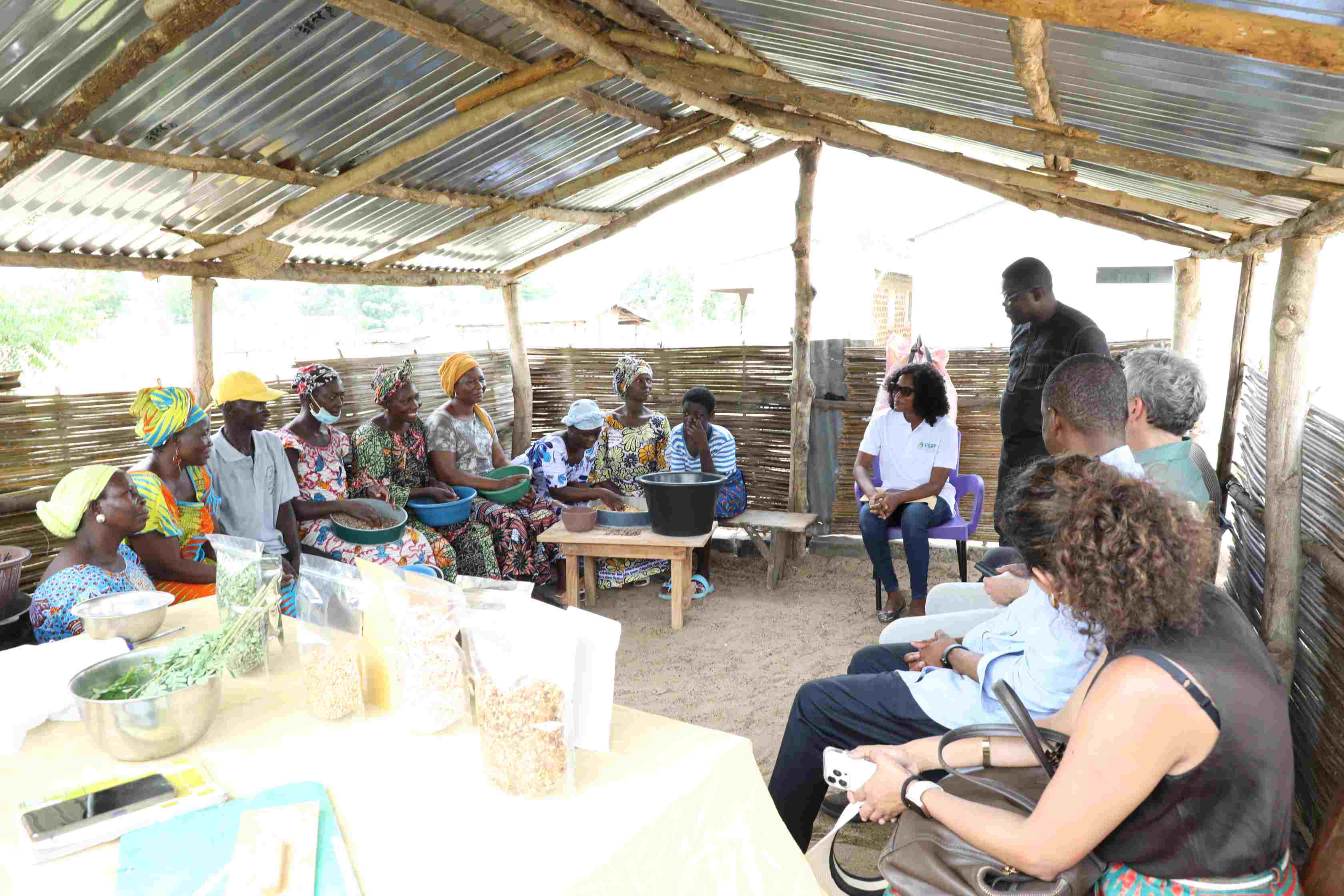
In Nyamassila, the women's cooperative specialised in the processing of enriched flours made from moringa and néré benefited from training organised by the FSRP in 2023 on techniques for processing local flours. Thanks to this support, the members of the cooperative have begun to improve their living conditions by becoming real entrepreneurs, now supplying these enriched products to the local hospital and to the elderly.
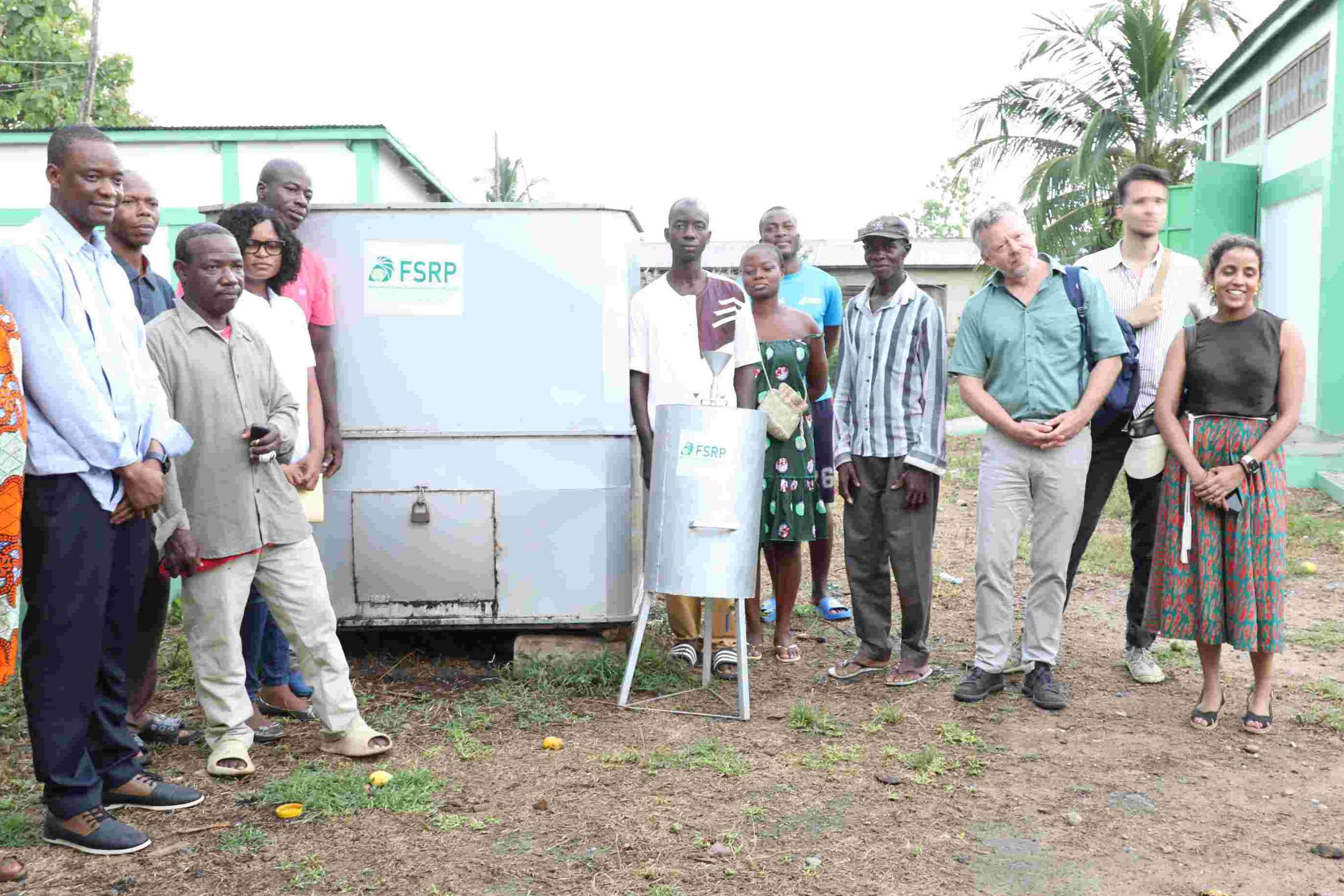
The 85-member Kpélé Tutu cooperative is dedicated to producing compost and biopesticides, and is actively helping to boost agricultural productivity in the Planned Agricultural Development Zone (ZAAP) in the Plateaux-Est region. The cooperators, trained in the manufacture of these biological inputs, use a large-capacity composter to transform organic waste (plant leaves, peelings, garden waste, etc.) into compost, a natural fertiliser that is particularly beneficial for market garden crops and maize.
Discussions between members of the World Bank mission, comprising Ms Ashwini Sebastian, Regional FSRP Task Team Leader, and Mr Nouhoun Traoré, FSRP Co-TTL at the World Bank Office in Togo, and the Dutch cooperation team, comprising Mr Jeroen Rijniers and Mr Dominic van Asseldonk, and beneficiaries revealed the initial positive impact of the programme's interventions on the living conditions of the target populations. However, the discussions also highlighted additional needs, particularly in terms of irrigation, agri-food processing and storage.
This joint mission was part of the activities to monitor and review the results of the FSRP, financed by the World Bank's International Development Association (IDA), with additional financial support from the Netherlands Cooperation through the Global Agriculture and Food Security Programme (GAFSP).
Discussions continued on 8 May 2025 in Lomé with representatives of the FSRP coordination regional institutions within ECOWAS, CILSS and CORAF.

Togo: FSRP promotes the breeding of Maradi red goats to empower rural women

Published on 3 May 2025

Raising small ruminants is a vital source of income for many rural women. In the context of the fight against poverty, the quest for food security and resilience to the effects of climate change, the introduction of more efficient breeds appears to be a priority for creating income-generating activities and improving the incomes of vulnerable women through more productive and sustainable goat farming.
With technical support from the Institut Togolais de Recherche Agronomique (ITRA), the FSRP Togo has launched the pilot extension of the Maradi red goat in twelve (12) localities spread across the country's six agro-ecological regions, with the aim of improving the incomes of vulnerable women by breeding the Maradi goat, nicknamed "the poor man's dairy cow" because of its high milk production.
Originating in the Maradi department of Niger, this remarkably robust breed of goat has a number of assets, including its great hardiness and its ability to produce milk rich in vitamin A. Thanks to these assets, the Maradi red goat has proved to be the mainstay of economic development for rural households.
This FSRP initiative to introduce prolific breeds into livestock production systems is based on a rigorous methodology, as explained by Dr DJABA Atouga, head of the goat and sheep programme at the ITRA agricultural research centre in Kolokopé: The Maradi red goats you see arrived at the centre on 9 October 2024 and underwent a two-month quarantine period before being mated. To ensure that the organised matings were successful, we observed a further period of around four months to see the first signs, including udder development. Following these appearances, we proceeded to distribute the goats to vulnerable women identified in the country's six agricultural regions. Each woman received at least two (2) pregnant goats and a suitable feeding kit.
After just a few days of providing pregnant goats, goat kids have been born in some places. This is the case of Mrs Kossiwa Yao, a beneficiary based in Langabou, who describes her experience with the animals: "These goats are all I have today and I look after them as if they were my own children. As soon as they were born, they gave birth to a vigorous male kid within a week. Even though she is nursing the kid well, she still has a lot of milk in her udders. I'm planning to extract some of it to make cheese and sell at the market. 
Through this action, the FSRP Togo is laying the foundations for structural improvement in the goat sector, while placing rural women at the heart of the agricultural development dynamic. This initial pilot phase paves the way for a gradual extension, based on concrete results, in favour of more resilient, inclusive and economically viable family farming.
ICAT's technical services provide regular veterinary and technical monitoring of these animals for the twelve women who have each received at least two (02) pregnant goats in the country's six agricultural regions.       
 

Togo: 120 women processors received training on the challenges and opportunities of the FTAA at the 2nd edition of the fair for the promotion of local products

Published on 24 April 2025

In Togo, women play an essential role in agricultural production. However, their involvement in processing, trading and entrepreneurial activities remains marginalised. This under-representation is the result of several obstacles, including social and cultural norms and structural barriers to access to finance and economic opportunities. 
With a view to strengthening the economic empowerment of women, the FSRP Togo supported from 12 to 15 March 2025, through the Coordination Togolaise des Organisations Paysannes (CTOP) and other women from sister organisations such as the Fédération des Promotrices d'Agro-industrie du Togo (FEPROMAT) and the Réseau National des Femmes Agricultrices du Togo (RENAFAT), the organisation of the 2nd edition of the fair to promote local products and trade opportunities in the African Continental Free Trade Area (AfCFTA). The aim of this event is to support women by promoting local products and developing new business opportunities linked to the AfCFTA. 
The opening ceremony was marked by three speeches, including that of the President of CTOP, who thanked the Head of State and all the partner organisations of CTOP, the FSRP, which had supported the organisation of the fair. He invited and encouraged the population to buy and consume the products on display, the quality of which is no longer in doubt: "Yesterday there were doubts about the quality. But today, with the support and assistance of various projects, the women at are putting good quality products on the market, as you can see. I invite you to try them! They are 100% produced by Togolese women". He said.
The representative of the PRSF Deputy Coordinator and the representative of the Minister of Agriculture, Village Hydraulics and Rural Development welcomed the massive attendance of women at this training course. They invited and encouraged the women to seize the opportunity to find out more about market access opportunities under the FTAA and to obtain the necessary documentation to prepare to export their products to countries in the sub-region. 
Mrs Edou Adjovi Dodji made no secret of her delight at receiving the training: "Before, we used to cross borders without any papers; without an identity card, a CFE card or an economic operator's card, unaware of our rights and duties. Thanks to this training, we've learned a lot. How to formalise our businesses, our cooperatives or processing units so that we can cross the border easily with our products, processed locally in Togo.  We also learned about all the documents we need to formalise, and the files we need to provide to customs to be able to cross borders easily. After this training, we plan to set up a WhatsApp group through which we can relay the training, keep up to date with the latest news from the Ministry of Trade, and ask for ongoing support from the expert so that we can export more easily to the FTAA zones".
It should be noted that the training benefited 120 women processors and producers of agricultural products, who exhibited their products at the fair organised to mark International Women's Rights Day, celebrated every 8 March.

Togo: 1,800,000 basic cuttings of two new high-performance PDCO varieties distributed to multipliers and processors of high nutritional value foodstuffs

Published on 4 March 2025

Recent progress in the development and supply of improved crop varieties in Togo has helped to improve agricultural productivity and yields.

However, this production has so far been limited to a small group of producers. In addition, with the private sector positioning itself on the promotion of orange-fleshed sweet potatoes (OFSP), ITRA's basic cutting production capacity needs to be strengthened to meet this ever-increasing demand and, above all, to serve areas not yet covered by improved seeds.

The FSRP has therefore supported ITRA in producing the basic cuttings of two high-yield, climate-resilient PDCO varieties in order to make an effective contribution to food security in Togo. The cuttings produced are used to supply the PDCO root multipliers and producers selected in the savannah region.

After production, the FSRP Togo has begun to make these two new high-yield varieties of orange-fleshed sweet potato, which have recently been added to the national catalogue, available to 25 multipliers spread throughout the country and 1,067 women producers and processors of PDCO in the savannah regions.

Carried out through the Togolese Institute of Agronomic Research (ITRA), this FSRP action aims to promote and distribute these improved seeds of high-performance varieties in areas not yet served and thus contribute to the substantial improvement of the productivity and resilience capacities of the targeted populations.

Prior to the distribution of these seeds, the beneficiaries were given training in the intensive production process (good production and conservation practices) for sweet potatoes and varietal recognition.

The producers were then given support in setting up their plots.

Subscribe to Togo