Passar para o conteúdo principal

Tchad : Remise de plus de 3000 tonnes de semences améliorées aux producteurs en prélude à la campagne agricole 2024

Publicado em 5 Agosto 2024

In preparation for the 2024 agricultural season, the national coordination of the Food System Resilience Program in Chad (FSRP-Chad) has launched a vast operation to distribute improved seeds. More than 3,000 tonnes of sesame and maize seeds were distributed to over 5,000 farmers in the Logone Occidental and Logone Oriental regions.

The initiative, carried out between 15 and 20 July by the Moundou regional coordination of FSRP-Chad, aims to strengthen the resilience of vulnerable households that depend mainly on agriculture for their income. During the distribution campaign, FSRP Chad officials also had the opportunity to meet members of the college of women seed producers, underlining the importance of including women in agricultural development.

The main aim of this distribution is to provide producers with high-quality seeds, which will improve agricultural production and guarantee food security for local communities. By having improved seeds at their disposal, farmers can look forward to a more abundant harvest that is more resistant to climatic hazards, thus contributing to greater resilience in the face of environmental and economic challenges.

The World Bank-funded FSRP-Chad continues to support farmers through various initiatives and programmes, demonstrating its commitment to improving the living conditions of rural populations and ensuring the sustainability of the food system in Chad. This seed distribution is just one of the many actions undertaken to strengthen food security and promote agricultural development in the country.

Togo : un pool de 60 techniciens agricoles renforcés sur l’application RiceAdvice

Publicado em 5 Agosto 2024

From 15 to 20 July, the FSRP-Togo in collaboration with AfricaRice trained a pool of 60 agricultural technicians, including 8 women, on the RiceAdvice Platform. The training was part of the implementation of activities to consolidate regional agricultural innovation systems by modernising national extension services , promoting access to and exchange of technologies.

RiceAdvice is an interactive Android-based decision support tool that provides a recommendation on rice variety and cropping calendar, and identifies the best fertiliser to buy, as well as the quantities and timing of application based on nutrient requirements and fertiliser prices. Using RiceAdvice, farmers can also select their own target yield level to suit their budget.

The aim of this training is to contribute to positive changes in producers’ typical yields and thus add value to our farmers’ incomes.

The agents trained will in turn be called upon to train their peers in their respective regions and to support rice growers in the specific management of their plots to increase their productivity.

The participants were trained in the use of the application in the classroom, and a practical simulation was carried out in a real-life situation with producers from the surrounding villages, to run the questionnaire and enter the data relating to the information required from the producer to generate the recommendations.

Togo : 28 362 producteurs bénéficient des semences certifiées et engrais pour la campagne agricole 2024

Publicado em 5 Agosto 2024

As part of the additional support provided by the GAFSP, the FSRP TOGO has acquired input kits consisting of certified seeds of improved varieties of maize (biofortified maize), cowpea, soya, rice and other inputs (fertilisers, pesticides, etc.) for 28,362 selected agricultural producers primarily from producer organisations (POs) and developed sites, including planned agricultural development zones (ZAAPs) and lowlands.

This support from FSRP will reinforce that provided in 2023 to around 22,746 producers in the Savanes region and the Kéran prefecture, and is aimed at improving the productive capacity of beneficiaries.

Under the supervision of the Institut de Conseil et d’Appui Technique (ICAT), seed distribution operations have begun in the regions of Kara, Centrale, Plateaux Est and Maritime, and will continue with the distribution of fertilisers intended solely for beneficiaries of maize and rice seeds.

At Doufelgou in the Kara region, some beneficiaries are planting seeds as soon as they receive them. Dissirama, a soya farmer, and Sanda Kagbanda are both delighted. Dissirama said: “I have a three-hectare field that I share with my wife. Last year we sowed soya with the old varieties, but unfortunately we didn’t get any good results. We were thinking of changing crops when ICAT informed us of this support from the FSRP. And now that the time is right, we’re sowing immediately, in the hope that this time the harvest will be better”.

Sanda Kagbanda said: “I grow maize and cowpeas. Before, to get the seeds, we were asked to come to the agency. To leave home and go to the agency was a long way. You had to pay for transport and all the other costs. But now the FSRP has made things easier for us by bringing the seeds closer to us. Not only is it close by, it’s also of good quality. With this, I have a feeling that the season will end well.

As a reminder, a rice farmer will receive a kit comprising 10 kg of rice seed, a 50 kg bag of NPK 151515 fertiliser and 25 kg of 46% N urea.  A recipient of a maize kit will receive 10 kg of seed, 100 kg of NPK 151515 fertiliser and 50 kg of 46% N urea. The soya seed recipient will receive 20 kg of soya seed, and the cowpea recipient will receive 10 kg of seed and 2 litres of insecticide

Sensibilisation du personnel de l’ARAA sur la prévention des VBG et EAS/HS

Publicado em 22 Julho 2024

The fight against gender-based violence (GBV), sexual exploitation and abuse (SEA) and sexual harassment (SH) is taking on a new dimension within the Regional Agency for Agriculture and Food (RAAF). From 9 to 10 July 2024, Ms Assétou KABORE, a specialist in the prevention and mitigation of the risks of GBV/EAS/HS, conducted information and awareness-raising sessions in Lomé, as part of the implementation of the West Africa Food System Resilience Programme (FSRP).

Ms KABORE’s technical support was part of the general implementation of the World Bank’s Good Practice Note and Environmental and Social Framework (ESF). The implementation of the FSRP triggers NES1, NES2, NES5 and NES n°10 among others. Triggering these standards requires the development of instruments such as the Environmental and Social Management Framework (ESMF), the Labour Force Management Plan (LFMP), the Resettlement Policy Framework (RPF) and the Stakeholder Mobilisation Plan (SPMP). Each of these tools pays particular attention to the prevention and mitigation of risks associated with EAS/HS.

To achieve efficiency in the implementation of SES activities, the World Bank has adopted a strategy of pooling experts. The GBV risk prevention and mitigation specialist, Ms KABORE, is based at CILSS, but has a mandate to cover ECOWAS/RAAF and CORAF. An action plan for the period 2023-2024 has been drawn up, focusing on the prevention, mitigation and response to the risks of GBV and EAS/HS.

During two days in Lomé, discussions with RAAF staff, including support staff, drivers, technical cleaners, fiduciary staff, management and the Complaints Management Committee, including sensitive complaints, raised awareness of EAS/HS and their implications in the implementation of PRSP activities. Mrs KABORE, assisted by the environmental protection expert, Gaoussou DIARRA, highlighted the importance of staff signing the code of conduct and adopting measures to prevent EAS/HS, including displaying awareness-raising posters and kakemonos.

The discussion sessions also provided an opportunity to see how gender, GBV and EAS/HS issues are considered in the management of office and logistics infrastructure, and to assess the implementation of the EAS/HS action plan within the ECOWAS/RAAF. Capacity building needs were identified to inspire the development of an updated action plan for 2025 and 2026.

The technical support ended with the formulation of recommendations to improve the prevention, mitigation and response to the risks of GBV and EAS/HS within the RAAF. These recommendations aim to strengthen institutional capacity and ensure a safe working environment that respects fundamental human rights for all employees.

These awareness-raising sessions mark an important stage in the commitment of the ARAA and the FSRP project to the prevention of GBV and EAS/HS. By raising staff awareness and implementing concrete actions, RAAF is showing the way towards better integration of social and environmental standards, including EAS/HS, in the West African region.

Togo : l’approche SMART VALLEYS enseignée à 20 riziculteurs pilotes pour son appropriation et son extension à 120 autres riziculteurs

Publicado em 1 Julho 2024

In Togo, as in many West African countries, the development of agricultural land, especially lowlands, requires human and financial resources that are quite costly for farmers. The latter are often faced with a lack of knowledge to make good use of the type of development made available to them, with limited financial means to maintain them.

Faced with these constraints, plus the effects of climate change, the SMART VALLEYS approach is increasingly being put forward as a sustainable solution that can strengthen the resilience of rice growers.

Less costly and more sustainable, SMART VALLEYS is a lowland management system designed to facilitate the retention and management of rainwater in fields, thereby reducing the loss of fertiliser due to flooding and boosting crop yields.

With a view to promoting this innovative approach and strengthening the resilience of rice growers, the FSRP/TOGO is supporting the training of a pool of endogenous rice grower-trainers through the Conseil Interprofessionnel de la filière riz au Togo (CIFR/TOGO), organised from 24 to 29 June 2024 at the Togo Food farm-school in Tchangaïdè, followed by theoretical and practical sessions with demonstrations of lowland management.

This training course for rice growers, which took place in Blitta in the central region, aims to build the technical capacity of rice growers to appropriate and extend the technology for simple, sustainable and inexpensive development of lowland rice fields for water and land management using the SMART-VALLEYS approach.

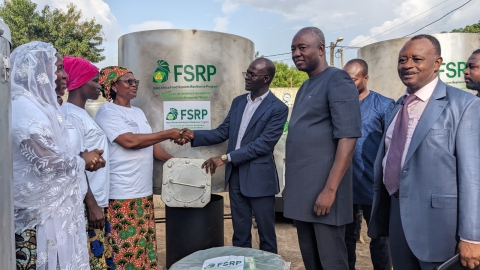
To facilitate the practice and dissemination of the technology, the FSRP/Togo has offered producers, in addition to the training, development tools consisting of wheelbarrows, bundles, ropes, cutters, decameters, picks and many other materials whose symbolic handover was made at the opening of the training by the Regional Director in charge of Agriculture Mr. ANADI Bayodjéba in the presence of the Regional Director of ICAT and the Chairman of the Board of Directors of CIFR. He thanked the FSRP/Togo for this multi-faceted support for the rice sector in Togo and urged the beneficiaries to make good use of it.

According to the trainees, this equipment offered by the FSRP is an asset to the training. It facilitates demonstrations and will show producers the difference between traditional methods and the SMART VALLEYS method, which is very simple to use. This is what Mrs Komla said in her own words: “My name is Mrs KOMLA Mamalinawè and I grow rice in Titigbé in the Sotouboua prefecture. As a woman, I don’t have a large area to cultivate. I used traditional methods inherited from my parents to grow my rice, with all the possible consequences. But thanks to this training, I’ve benefited twice over. I can now make improvements and hope for a good harvest at the end”, she told us.

Célébration de la Journée Internationale de la Sécurité Sanitaire des Aliments : la CEDEAO et la FAO sensibilisent les acteurs du système alimentaire à adopter des pratiques alimentaires sûres et saines

Publicado em 1 Julho 2024

On 7 June 2024, the international community celebrated the 6ème International Food Safety Day on the theme “Food safety: preparing for the unexpected”, inviting everyone to try to adopt healthy eating practices.

The ECOWAS Commission’s Department of Economic Affairs and Agriculture and the FAO Sub-Regional Office for West Africa took advantage of the day to raise awareness among stakeholders in the West African food system of the importance of food safety and to help promote safe and healthy food practices at all levels of the agricultural value chain and society.

During a webinar open to the public, experts from the two institutions and from the countries presented the state of preparedness of the West Africa and Sahel Region for food safety emergencies in West Africa and shared some good practices of Member States in managing food safety emergencies and guaranteeing healthy and safe food for the population.

As recommended by stakeholders during the first webinar organised by ECOWAS on 07 June 2023, the webinar will become an annual activity initiated by ECOWAS to raise public awareness because “According to the World Health Organisation (WHO), every year, According to the World Health Organisation (WHO), every year, around 600 million people – or almost one in ten people worldwide – fall ill after eating contaminated food. It is therefore necessary to initiate and strengthen awareness-raising activities among the regional population on food safety issues and on the necessary measures to be taken in food systems,” emphasised Mr Septime HOUSSOU-GOE. Septime HOUSSOU-GOE, Programme Officer at the Department of Agriculture and Rural Development, opened the meeting on behalf of the Director, Alain SY TRAORE.

Before the DADR representative, Mr Drissi Mehdi, speaking on behalf of the Representative of the FAO Sub-Regional Office for West Africa, welcomed this joint initiative by the FAO and ECOWAS for the well-being of our populations.

He recalled some of the key actions undertaken by the FAO to promote healthy eating throughout the world, and particularly in West Africa, before stressing that “the FAO is ready to work closely with ECOWAS through a structuring programme to ensure that good practices for healthy and safe eating are adopted in our sub-region. “

Professor Ousmane SARR, from the Faculty of Medicine at Cheick Anta Diop University in Dakar, gave an overview of food safety regulations and issues in West Africa and the Sahel. Dr Mamadou N’DIAYE, Food Safety Specialist at the FAO Sub-regional Office for West Africa, focused on “Preparing the Region”.

These two presentations were followed by the sharing of country experiences on the national dynamics of food safety emergency management.

The national experiences of Nigeria, Côte d’Ivoire, Senegal and Mali were also shared. The governance mechanisms for food safety and the involvement of States in the activities of the CODEX Alimentarius were presented, followed by exchanges/discussions between the participants.

ECOWAP stakeholders and partners were familiarised with food safety issues and questions. They were given some approaches for adopting appropriate behaviour in order to avoid illnesses caused by a lack of healthy food thanks to food safety. Above all, they were informed of the existence of regional regulations and codex standards in ECOWAS member states.

In view of the importance of the subject for health and socio-economic development, the participants congratulated ECOWAS and the FAO on the initiative and suggested that: (i) continue to support greater participation by ECOWAS Member States, Mauritania and Chad in the process of drawing up international standards; (ii) continue to strengthen the harmonisation of national and regional regulations; (iii) strengthen training leading to qualifications and diplomas in the field of food safety throughout the value chain; (iii) strengthen the capacity of analysis and control laboratories in accordance with international standards; and finally (iv) strengthen cooperation between national and regional institutions.

This webinar demonstrated once again that there is a great deal of work to be done to mobilise decision-makers and change people’s behaviour. The FAO and ECOWAS launched a Call to Action aimed at governments and non-state actors.

These two institutions have agreed to develop a Regional Programme to Strengthen Country Capacity in Food Safety, and the main thrusts of this programme were shared with the participants.

The webinar was held as part of the implementation of the West African Food System Resilience Programme (FSRP), financed by the World Bank and coordinated at regional level by ECOWAS in collaboration with CILSS, CORAF and other partners, with 8 beneficiary countries (Burkina Faso, Chad, Mali, Niger, Ghana, Sierra Leone, Senegal and Togo).

La CEDEAO sensibilise les acteurs du Ghana et du Burkina Faso sur le principe de la reconnaissance mutuelle entre les pays dans le cadre des mesures sanitaires et phytosanitaires (SPS)

Publicado em 1 Julho 2024

ECOWAS trained around one hundred Ghanaian and Burkina Faso practitioners and regulators involved in food and agricultural trade on sanitary and phytosanitary (SPS) measures to ensure food security in the sub-region , from 10 to 14 June 2024 in Accra/Ghana and from 19 to 21 June 2024 in Ouagadougou/Burkina Faso. The main objective of the sessions organised as part of the implementation of the West Africa Food System Resilience Programme (FSRP) was to create a knowledge acquisition forum for the Ghanaian and Burkina Faso authorities involved in regulating food handling standards and those involved in cross-border trade in food and agri-food products. Work in each country focused on training and knowledge-sharing sessions, field inspection visits and practical demonstrations on health inspection and food-borne disease decision-making, with an emphasis on protecting consumers from illness, injury or death caused by consuming food.

Sanitary and phytosanitary measures (SPS) are quarantine and biosecurity measures applied to protect human, animal or plant life or health against the risks associated with the introduction, establishment and spread of pests and diseases and against the risks associated with additives, toxins and contaminants in food and feed.

The training sessions covered the following topics: “General principles of food hygiene”; “SPS Agreements”; “Hazard Analysis and Critical Control Points (HACCP)”; “Food import and export inspection and certification systems”; “The legislative and regulatory framework in force in Ghana and Burkina Faso”; and the “Harmonised Guide to Health Inspection and Decision-Making”.

During the various training sessions, the facilitators also presented to the country teams the new harmonised risk-based sanitary and phytosanitary guide developed by ECOWAS, to harmonise protocols across the country.

After the classroom sessions, field visits were organised, including (i) health inspection of imported products (such as canned goods and fresh products – dairy and meat), (ii) health inspection of products intended for export and health inspection of local products (such as meat, fish and other fresh products).

The regulators carried out product identification, physical inspection of products, detection and identification of signs of non-compliance and unsafe products, and techniques for collecting, identifying and packaging samples for further laboratory analysis.

Through these training sessions, the stakeholders and partners appreciated the various initiatives and support provided by ECOWAS in the region. They also expressed the hope that ECOWAS would be able to mobilise all its resources to effectively defend commercial agricultural production and productivity in selected value chains in the region.

La CEDEAO et le CORAF partagent les principales réalisations des composantes 2 et 3 du programme FSRP avec la nouvelle Chef du programme (TTL) au niveau de la Banque mondiale

Publicado em 1 Julho 2024

Ms Ashwini Rekha Sebastian, Senior Agroeconomist at the World Bank, was recently appointed as FSRP Task Team Leader at regional level. From 26 to 28 June 2024, she met with the programme’s managers and experts from Component 2, coordinated by CORAF, and Component 3, coordinated by ECOWAS, in Lomé at the Headquarters of ARAA/ECOWAS. She is also in charge of the FSRP Ghana and replaces in this position of Task Team Leader of FSRP at regional level, Ms Katie Kennedy Freeman who has been called away to other duties.

The main achievements of the two components, the main challenges and the strategic orientations were discussed during the technical exchanges. With the experts and managers of each of the institutions, the work plans for the life of the PRSF were examined. For activities in 2024, the work plan and annual budget of the two (2) institutions were reviewed.

Discussions with CORAF focused, on the one hand, on consolidating regional agricultural research and extension systems for technological innovations adapted to the region’s food systems (smart technologies from the point of view of climate, nutrition, gender and youth) and, on the other hand, on Integrated Landscape Management (ILM), an approach that aims to ensure that natural resources are protected in the implementation of the FSRP.

Discussions with ECOWAS focused mainly on increasing intra-regional food trade between surplus and deficit areas, creating added value in priority regional value chains, developing the rice sector with the support of the ECOWAS Rice Observatory (ERO) and regional trade facilitation issues and popularising regional regulations and measures to promote trade between countries. Emphasis was also placed on support for the Regional Food Security Reserve (RRSA) and food safety issues.

At the end of the discussions, the TTL in charge of the project noted that she had learned a great deal about the achievements and challenges encountered in the field. She urged the managers and experts of components 2 and 3 to speed up the implementation of the annual PTBAs in line with the PRSP’s key indicators to help achieve the project’s development objectives. She also stressed the need for regional organisations to be more present in the countries and to strengthen their technical support to the latter.

Première Assemblée Générale de l’Observatoire du riz de la CEDEAO : les parties prenantes du secteur rizicole adoptent une feuille de route pour le développement de la filière

Publicado em 24 Maio 2024

More than 150 participants from West African States and their partners took part in the first General Assembly (GA) of the Economic Community of West African States (ECOWAS) Rice Observatory (ERO), held on 21st and 22nd May 2024 in Abuja, Nigeria. Over two days of discussions, the GA took stock of the activities carried out and adopted a Roadmap for accelerating the growth of the rice sector in West Africa.

Established in 2021 to operationalize the ECOWAS Rice Offensive, the ECOWAS Rice Observatory (ERO) coordinates rice sector-related programmes, public/private investments, and policy recommendations for key decision-makers to help West Africa achieve rice self-sufficiency by 2030 through profitable, resilient, and environmentally sustainable agricultural enterprises that contribute to rural economic growth, poverty reduction and equity for women.

After two years of intense work in the countries and at the regional level, ERO presented the main achievements and the strategy documents to be adopted to its main stakeholders: farmers’ organisations, processors and millers, traders and distributors, input suppliers, research institutes, government agencies and ministries, development organisations and NGOs, financial institutions, ERO national sections and members of the rice working groups of the ECOWAS Member States.

Discussions focused on the status of the rice sector in each country, the main initiatives underway to develop the rice value chain, the policy measures adopted in this area, and recommendations for regional action in support of Member States.

At the end of the discussions, the General Assembly adopted the regional roadmap for the development of the rice sector in West Africa, while calling for it to be aligned with the national rice development strategies of the countries concerned, considering their respective priorities.

The West African sub-region produces around 17 million tonnes of milled rice a year. Per capita rice consumption in West Africa is one of the highest in the world, ranging from 100 to 200 kilograms per person per year, depending on the country. In view of this importance, and to ensure self-sufficiency in rice production in the long term, the GA recommended strengthening and involving the private sector, with synergy of action between agro-dealers and input distributors in the countries, as well as the involvement of national and regional banking institutions.

The conclusions and recommendations of the ERO’s first General Assembly were examined by its Board at its meeting on 23 May 2024, with a view to drawing up an action plan for their implementation. The Board, chaired by Mr Alain SY TRAORE, ECOWAS Director for Agriculture and Rural Development, includes representatives of scientific partners, development partners, the private sector, and countries.

The holding of the first ERO GA is an important milestone in the implementation of the ECOWAS Rice Offensive, which is itself a major framework for the ECOWAS Agricultural Policy, ECOWAP.

As the rice sector is far from self-sufficient in West Africa, with most countries still import a significant proportion of their rice needs, implementing the recommendations of this meeting will strengthen regional cooperation and partnerships between countries that share similar challenges and opportunities. By getting them to work together, the Rice Observatory will be able to capitalise on each other’s strengths, sharing knowledge and creating synergies that will benefit the whole region.

Les acteurs et partenaires du FSRP saluent les premiers résultats après plus de deux années de mise en œuvre

Publicado em 17 Maio 2024

Press Release

The Food System Resilience Program in West Africa (FSRP) held its first summary meeting of support missions for the year 2024. The event took place from 15 to 17 May in Lomé, Togo.

Over 70 participants from Burkina Faso, Ghana, Mali, Niger, Sierra Leone, Senegal and Togo, as well as from regional institutions (CILSS, CORAF and ECOWAS) and the World Bank, took stock of the implementation of the Programme in line with its implementation principles. They shared and exchanged information on the various activities carried out over the last six months at national and regional level, while reviewing the challenges linked to the implementation of the FSRP before proposing possible solutions to meet these challenges.

Over 3 days of exchanges, the work focused on (i) parallel sessions between countries and regional organizations on specific subjects relating to digital services, integrated landscape management, strengthening regional trade and agricultural markets, the rice value chain and gender; (ii) plenary sessions to review common challenges and propose solutions that could contribute to the successful implementation of FSRP.

One of the innovations at this regional meeting was the exhibition of products and innovations by Togo’s stakeholders and beneficiaries. Some twenty producers from Togo’s main agricultural production zones shared the products generated with the support of the FSRP.

This first wrap up meeting of FSRP support missions for 2024 was a platform for promoting the sharing of knowledge, strengthening coordination between players and defining strategic directions for the future of the programme, as the first countries (Burkina Faso, Mali, Niger and Togo) are halfway through the implementation of their activities.

On the ground, the PRSF’s activities essentially target the prevention and management of agricultural and food crises, the strengthening of the resilience of agro-sylvo-pastoral production systems, and the facilitation of trade in agricultural goods and inputs within and across national borders in West Africa. After two years of implementation, significant results have been noted and the actions carried out in the countries and at regional level have reached a total of 1,281,766 direct beneficiaries by 2023, 37% of whom are women.

At the opening ceremony, representatives of the World Bank, CILSS, CORAF, ECOWAS and Togo’s Minister of Agriculture, Livestock and Rural Development praised the progress made by the FSRP, which bears witness to collective efforts to strengthen the resilience of the food system in our region, with tangible results in the countries and at regional level.

Overall, it was noted that FSRP is a unique tool that strengthens regional integration through the exchange of technologies and innovations and the mobility of researchers and stakeholders between countries, which will contribute considerably to the implementation of ECOWAP and thus accelerate the transformation of the agricultural sector in the sub-region.

Subscribe to