Passar para o conteúdo principal

Le technoparc de l’ITRA transforme les pratiques agricoles

Publicado em 1 Maio 2024

In Davié, Togo, a significant agricultural revolution is taking shape. At the heart of this transformation is the Agricultural Technology Park of the Togolese Institute for Agricultural Research (ITRA), a game-changing learning and innovation space for local farmers. In this park, agricultural technologies and innovations are at the service of agriculture to contribute to the improvement of agricultural productivity, food security and nutrition of populations.

Demonstration site for agricultural technologies and innovations

The ITRA agricultural technology park, located at the Littoral CRAL agronomic research center in Davié, is the result of a fruitful collaboration with CORAF as part of the Food System Resilience Program (FSRP) funded by the World Bank. This park is home to a multitude of high-yielding crop varieties, from corn and soybeans to rice and sorghum. Several high-yielding varieties are highlighted in the park. The creation of this park aims to disseminate technologies and innovations resulting from research. “This park is one of the tools for disseminating technologies generated by research to producers. This park was built thanks to the support of CORAF within the framework of the FSRP to transfer technologies to producers” says Soulé Bifai Aboudoulaye, , coordinator of the Davié agricultural technology park.

“This park is one of the tools for disseminating technologies generated by research to producers. This park was created thanks to the support of CORAF within the framework of the FSRP to transfer technologies to producers” affirms Soulé Bifai Aboudoulaye; coordinator of the Davié agricultural technology park.

What makes the Technoparc so special is not only the cultures it houses, but also the awareness programs and guided tours that are organized there. Aware that ignorance of research results and the lack of good agricultural practices are major obstacles for local farmers, The initiators of the Technoparc emphasized the communication and customization of the specific needs of each region.

Dissemination of varieties with high yield potential

“ITRA agents brought us a new rice seed, the Exbaika variety with a cycle of 120 days and a potential yield of 8 tonnes per hectare. We tested it and for a first experience, we are satisfied. The rice I produced before was 4 months old. In addition, there was rain this year,” says Aglo Komi, rice producer in Akodésséwa in Togo.

“ITRA agents brought us a new rice seed, the Exbaika variety with a 120-day cycle and a potential yield of 8 tonnes per hectare. We tested it and for a first experiment, we are satisfied. The rice I used to produce was a 4-month cycle. In addition, the rain was there this year,” says Aglo Komi, a rice producer in Akodésséwa, Togo. To invite producers to discover and take ownership of innovations in the park, open days are organized with the support of CORAF. Various communication materials, ranging from television to social networks to local meetings, were also used to inform farmers about the benefits of new agricultural technologies. Guided tours were organized to allow farmers to experiment with these new techniques in the field, thus strengthening their understanding and confidence.

Apélété Fansouwodji, a local producer, says: “What delighted me is that before we produced large sorghums and the yield was not always there. But today, thanks to the visit to the Davié technopark, we saw that there are small-sized sorghums that produce correctly.”

The success of the Technoparc is not limited to its impact on local farmers. By mobilizing local stakeholders and promoting transparent and inclusive communication, the park creates synergy between the various actors in the agricultural sector. This holistic approach aims to extend the park’s long-term benefits, thus transforming the way agriculture is practiced in Togo.

Les règles du Schéma de Libéralisation des Echanges de la CEDEAO présentées aux parties prenantes des Etats membres du Mano River Union

Publicado em 1 Maio 2024

Under the auspices of the ECOWAS Trade Liberalisation Scheme (TLS) Task Force, the ECOWAS Commission’s Customs Union and Taxation Directorate, in collaboration with the regional coordination of the West Africa Food System Resilience Program (FSRP), invited key stakeholders in charge of implementing the TLS in Côte d’Ivoire, Guinea, Liberia and Sierra Leone to a training session on the new rules of the TLS of origin of the ECOWAS Trade Liberalisation Scheme (TLS).

The meeting was held from 16 to 18 April 2024 in Freetown, Sierra Leone, and comprised three phases: a consultation meeting between the ETS Task Force and the stakeholders and focal points of the institutions responsible for implementing the ETS; a field visit to the Liberia/Sierra Leone border; and a presentation of the TLS to private-sector economic stakeholders.

Through exchanges and, above all, the sharing of experiences, the capacities of government bodies implementing texts on trade in general and trade in agro-sylvo-pastoral products in particular were strengthened. In addition, private sector players were made aware of the need to better understand and take advantage of the benefits offered by the various trade texts, particularly the SLE. The meeting was also an opportunity to identify the challenges specific to the Mano River Union countries in the implementation of Community texts and to propose appropriate solutions to address them.

It should be remembered that despite the introduction of the SLE to facilitate the free movement of people and goods, those involved in cross-border trade, particularly drivers and transporters, face numerous difficulties along the various corridors. To these challenges must be added the lack of professionalism on the part of those involved, which is often reflected in the absence of the required documentation on loads and the non-conformity of means of transport, representing another factor in hassle and increasing the cost price at the final destination.

These practices have harmful consequences, such as unnecessary delays on the roads, higher transport costs for goods and limited access to product markets. In addition, the transport and marketing of agricultural and livestock products from the EU area are negatively impacted by these obstacles along trade corridors, thereby slowing down the movement of these products from production areas to consumption areas.

To find a solution to this situation, it was strongly recommended, among other things, to: continue to raise awareness among cross-border trade stakeholders so that they take full ownership of the ECOWAS protocols; strengthen the capacities of the National Committees for the Recognition of Community Origin (NRCVOC) of products; strengthen collaboration between the Focal Points of the institutions in charge of implementing the ETS, principally the customs administrations.

Programme d’alimentation scolaire en Sierra Leone : des résultats significatifs avec l’appui du FSRP

Publicado em 1 Maio 2024

By the end of 2023, the school feeding programme in Sierra Leone had benefited more than 114,823 children in 584 pre-primary and primary schools, 51.5% of whom were girls, with 126 days of feeding completed in all the targeted schools. To achieve this, 1,855.763 tonnes of food were purchased and distributed to 584 schools in the three targeted districts in December 2023.

The programme planned to provide food aid in kind to 120,000 children attending public primary schools in 34 chiefdoms in 3 districts (Karene, Kenema and Bonthe). 1,720 tonnes of rice, 420 tonnes of pulses, 140 tonnes of vegetable oil enriched with vitamin A and 70 tonnes of iodised salt were to be purchased and distributed to 584 nursery and primary schools in 34 chiefdoms in the targeted districts.

All of these objectives were achieved thanks to a memorandum of understanding between the main organisations involved in this field, including the WFP and the Ministry of Agriculture and Food Security. The support of the West Africa Food System Programme in Sierra Leone has been significant in ensuring the supply of quality food to the canteens.

Le FSRP soutient la formation de 120 candidats tractoristes et maintenanciers des Zones d’excellence

Publicado em 1 Maio 2024

A total of 120 trainees, including 100 tractor operators and 20 maintenance technicians, have been trained under the ‘Entreprises Cantonales de Travaux Mécanisés’ (ECTM) programme, whose mission is to help increase the rate of mechanisation of farming operations.

This initiative, supported by FSRP TOGO, aims to equip farmers with the skills and tools they need to boost productivity and improve profitability.

Designed specifically for young people aspiring to become tractor operators with no previous experience, this training equips them with the essential skills to use cutting-edge agricultural technologies effectively and responsibly. Held from 28 March to 7 April 2024 at the Institut de formation agricole (Infa) in Tové, the training combined theory and practice, and focused on: (i) tractor knowledge and operation, (ii) mastery of manoeuvring and maintenance operations, and (iii) safety and operating rules. According to the trainers, these various aspects will help to turn these aspiring tractor operators into key players in innovation, entrepreneurship and the skilled labour needed to drive forward agricultural modernisation in Togo.

This activity is part of the partnership between the government of Togo and the Office Chérifien des Phosphates (OCP Africa), set up by the Ministry of Agriculture, Livestock and Rural Development through an innovative training programme focusing on agricultural mechanisation.

Carried out by the Agricultural Transformation Agency (ATA), the training is supported by the ministry’s technical departments, such as DAEMA and ICAT, to ensure successful implementation and maximum impact.

Through this training programme, FSRP is contributing to a more prosperous Togolese agriculture, where mechanisation plays a key role in achieving food self-sufficiency and sustainable economic growth.

Afrique de l’Ouest et Sahel : 38 millions de personnes en situation d’insécurité alimentaire et nutritionnelle selon le PREGEC

Publicado em 9 Abril 2024

Around one hundred (100) stakeholders and partners of the food and nutrition system in West Africa and the Sahel met in Lomé from 20 to 22 March 2024. The objective of the meeting was to take stock of the situation within the framework of the Regional Mechanism for the Prevention and Management of Food Crises in West Africa and the Sahel (PREGEC).

The conclusions of this meeting show that almost 38.1 million people are acutely food and nutritionally insecure in the Sahel and West Africa region and in Cameroon, including around 25 million in Nigeria.

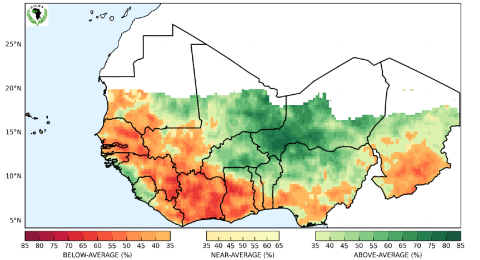
“If nothing is done immediately, the situation will worsen and could reach 52 million people between June and August, including more than 2.4 million in emergencies,” warn the stakeholders and partners during their meeting in Lomé.

The worsening food and nutrition situation is the result of several factors, including the sharp erosion of household purchasing power following the soaring prices of the main foodstuffs, as well as persistent insecurity and conflict in the Lake Chad basin, Liptako Gourma, north-west Nigeria and the English-speaking part of Cameroon.

To stabilize the situation, PREGEC recommends that governments: i) strengthen information monitoring on the food and nutrition situation; ii) continue to implement national response plans for vulnerable populations; and iii) refrain from using measures to restrict the free movement of food in the sub-region.

PREGEC also urges development partners to support governments in the rapid implementation of their response plans, and to strengthen the security of supply routes to areas affected by civil insecurity in Burkina Faso, Mali, Niger and Nigeria.

Cereal production for the 2023-2024 crop year was 77 million tonnes. Production was 0.6% down on last year. This drop is explained by rainfall problems and lower production in Niger (-5.5%), Nigeria (-5.7%) and Chad (-6.8%).

As a reminder, the PREGEC charter is a code of good conduct which sets out the responsibilities and commitments of the stakeholders involved in the prevention and management of food crises. These commitments relate to strengthening information systems, platforms for dialogue, coordination and coherence of interventions, and prevention and response instruments. Through this framework, farmers’ organisations, civil society organisations and private sector organisations are calling on the public authorities and their technical and financial partners to respect the commitments of the PREGEC charter.

Burkina Faso : le personnel de mise en œuvre du FSRP sensibilisé aux mesures de violence basée sur le genre (VBG), le harcèlement sexuel (HS) et l’exploitation et abus sexuel (EAS)

Publicado em 9 Abril 2024

On 20 March 2024 in Ouagadougou, stakeholders and implementing partners of the West Africa Food System Resilience Program (FSRP) in Burkina Faso were briefed on measures to combat sexual harassment and gender-based violence.

From the FSRP regional implementation offices and the Ministry of Agriculture, Animal Resources and Fisheries, 30 agents were given training on measures relating to sexual exploitation and abuse and sexual harassment (EAS/HS) as well as gender-based violence to facilitate the implementation of the FSRP.

These measures are intended to help promote gender equality, protect the rights of women and girls, and combat sexual harassment and gender-based violence among the actors and implementing partners as well as the target populations of the PRSP.

In its implementation in countries, FSRP carries out actions that include the construction of numerous infrastructures, such as buildings and productive facilities. These activities involve many people of all categories, in particular men, women, and young people. From this point of view, the implementation of the FSRP is likely to give rise to social and environmental risks, particularly the risk of trafficking in women for the purposes of prostitution, the risk of forced early marriage, etc. It was therefore necessary to train the stakeholders involved in the implementation of the programme to avoid any inconveniences likely to hamper its implementation.

FSRP has been implemented in Burkina Faso since 2022, with funding estimated at FCFA 72.5 billion, and aims to improve the living conditions of nearly 100,000 households, or 650,000 people, in seven regions: Boucle du Mouhoun, Centre-East, Centre-West, Centre-South, East, Hauts-Bassins and North.

Mali : le parc technologique ouvre ses portes au public

Publicado em 9 Abril 2024

Stakeholders in agricultural development in Mali were invited to the third open day of the Mali   Technology Park.

This activity, part of the implementation of component 2 of the West Africa food system resilience program, provided an opportunity to exchange views with users of agricultural technologies, with a view to ensuring their adoption and thus improving agricultural production.

The technology park opened its doors for the third year running to promote research, training, and the application of technologies in the field of agroforestry, with a focus on sustainable development and food security in Mali and West Africa.

The Agricultural Technology Park in Mali is an innovative initiative aimed at modernizing and improving the efficiency of the country’s agricultural sector. Initiated and managed by the Institut d’Economie Rurale (IER), it hosts research and development centres dedicated to agriculture, where scientists and experts can work on new cultivation techniques, improved seeds, pest and disease control methods, etc.

The park is also equipped with modern facilities such as agricultural research laboratories, crop storage and processing facilities, greenhouses for growing plants, etc.

The visitors, made up of students, researchers, company directors and agricultural producers, were able to see that the Mali Technology Park is a centre for agricultural training and education on best agricultural practices, new technologies and farm business management.

Togo/Entrepreneuriat agricole et agroalimentaire: 813 éleveurs et promoteurs de la région des savanes ont bénéficié de chèques et d’équipements d’élevage

Publicado em 9 Abril 2024

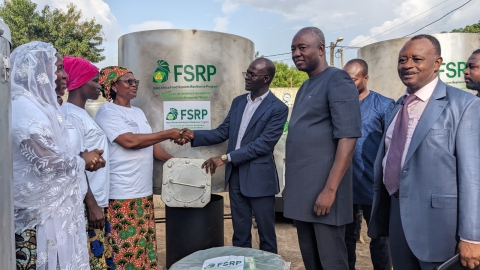
On 21 March 2024 in Dapaong, agricultural development stakeholders and partners attended the official handover of building materials, livestock equipment and cheques to livestock farmers and beneficiaries of the West Africa Food System Resilience Program (FSRP Togo).

As part of its implementation, the FSRP Togo has identified hundreds of livestock farmers in the various prefectures of the Savannah region to be supported, and has identified several beneficiaries, including women and young people, to benefit from funding for the implementation of agricultural/agri-food entrepreneurship initiative sub-projects.

A total of 813 stakeholders in the Savannah region, including 400 livestock farmers and 413 promoters of agricultural and agri-food entrepreneurship sub-projects, have benefited from construction materials, livestock equipment and FSRP cheques respectively.

It should be noted that the PRSF is involved at several levels of the Emergency Programme to Strengthen Community Resilience and Security (PURS) with a view to strengthening the resilience of populations in the face of the growing threats of the Sahel crisis and the harmful effects of the covid-19 health crisis: (i) improving agricultural yields and productivity, (ii) setting up irrigation infrastructure, (iii) developing agricultural mechanisation, (iv) providing access to agricultural inputs, (v) promoting support for agricultural entrepreneurship initiatives, (vi) building infrastructure to support production and add value to agricultural products.

23 acteurs formés à la collecte et au traitement des données du Tableau de bord du Commerce et du Marché agricole de la CEDEAO

Publicado em 6 Março 2024

Twenty-three (23) stakeholders and partners specialized in agricultural trade and markets in West Africa and Chad now have a better understanding of the ECOWAS Agricultural Trade and Market SCORECARD (EATM-SCORECARD).

The participants, from Burkina Faso, Ghana, Mali, Niger, Sierra Leone, Chad and Togo, and partner organisations CILSS and WACTAF (West Africa Association for Cross-Border Trade, in Agro-forestry-pastoral, fisheries products and Food), reviewed the methodology of the EATM-SCORECARD from 19 to 22 February 2024 in Abuja/Nigeria, the data collection process, and the use of the handling and reporting platform. They in turn have the onerous task of training other actors in the field in their respective countries to facilitate data collection and handling.

With the active participation of members of the Regional Task Force from the ECOWAS Directorates of Trade, Agriculture, Customs, Industry and Free Movement, the workshop, which combined theory and practice, enabled the AKADEMIYA2063 trainers to gather additional needs from countries to finalize the platform and thus facilitate its use by stakeholders at all levels.

The results generated by the EATM-SCORECARD should be used by decision-makers to influence policy reforms for the promotion of intra-regional trade and strengthen policy implementation, as underlined by the Director of Trade of the ECOWAS Commission, Dr Kolawole SOFOLA: “It is crucial that we recognise the importance of data in policy formulation and decision-making. Accurate and timely data can help governments design appropriate agricultural policies, anticipate food crises, support small-scale farmers, especially women and young people, and promote regional and international trade”.

As a reminder, this activity is part of the implementation of the West Africa Food System Resilience Program (FSRP), which considers “the integration of regional food markets and trade” as a major axis and aims to facilitate trade in agricultural goods and inputs within and across national borders in West Africa.

The training of trainers workshop in Abuja/Nigeria is an important phase in the process of deploying the EATM-SCORECARD in countries, with the knowledge acquired being put into practice. The national and regional stakeholders have agreed on a timetable to formalize the formation of teams in the countries to move on to data collection and handling, with the aim of having country scores before the start of the last quarter of 2024.

Sécurité sanitaire des aliments en Afrique de l’Ouest et au Sahel : les experts ont tenu la 2ème réunion de la convergence régionale à Accra

Publicado em 6 Março 2024

More than eighty-five food safety experts from seventeen countries in West Africa and the Sahel and their partners met in Accra from February 26 to 28, 2024 to take stock of food safety in the sub-region.

Set up as a regional network for regulatory convergence and food safety in 2022 under the aegis of the ECOWAS Commission, the experts held their first meeting in Abidjan, with a series of priorities relating to contaminants in food, pesticide and veterinary drug residues, microbiological criteria, food hygiene and food additives.

Due to the cross-cutting nature of food safety issues, this regional convergence was established to improve and strengthen regional coordination, information sharing, cooperation and collaboration, planning, resource mobilisation across sectors and projects, including contributing to the objectives of the West Africa Food System Resilience Program (FSRP).

In Accra, they reviewed the state of implementation of these priority actions in the fast-changing West African sub-region.

Through presentations by countries and regional institutions, the reasons for the obstacles to food imports and exports were identified, and the measures taken to protect consumer health were shared at both national and regional levels. It emerged from the meeting that convergence reflects a shared commitment to safeguarding people’s health and thereby ensuring a healthier, more productive society.

Regulatory convergence helps to facilitate trade flows by enabling West African companies to expand their markets and compete more effectively on the global stage. The benefits extend beyond the economic sphere, fostering stronger ties between nations, improving regional integration, and contributing to the stability and prosperity of West Africa and the Sahel.

Subscribe to