Sierra Leone: Young people in Kono District transform unproductive land into sources of food and income with support from the FSRP

Published on 7 September 2025

In Sierra Leone, one of the biggest challenges facing young people in the agricultural sector is access to land and finance, which limits their ability to engage in large-scale commercial farming. Yet, with more than 62.5% of the population under the age of 25 and nearly 80% under the age of 35 according to Statistics Sierra Leone, the potential of young farmers to transform the sector and stimulate economic growth is enormous, provided they receive adequate support.

In 2024, the Food System Resilience Programme in West Africa (FSRP) met with the Yormatah Young Farmers Association in the Kono district of eastern Sierra Leone. Initially, the group cultivated a small plot of land and encountered few difficulties. But when the FSRP stepped in to expand their activities to 100 hectares, access to land became an obstacle.

Determined to seize this opportunity, the group negotiated with landowners in the communities of Yordu and Kondeya, agreeing to give them 40% of their income from rice sales in exchange for land. This win-win agreement enabled them to obtain support from the FSRP, which included seeds, fertilisers, mechanisation services and early warning messages through agricultural extension services.

The group is led by Aiah Emmanuel Gborie, a 30-year-old graduate who sees agriculture as a business and a means to prosperity. "The FSRP changed our mindset," explains Emmanuel. "They showed us that farming is a business and that to be successful, we need to think big. Thanks to the inputs, market linkages and training, we are now farming more productively. Farming has become the foundation of my livelihood."

With this support, the group harvested 700 50-kg bags of husked rice. In accordance with their agreement, they gave 40 per cent to the landowners, who then encouraged them to sell part of their harvest to the World Food Programme (WFP) for cash income. Thanks to a memorandum of understanding signed between the FSRP, WFP and the Sierra Leone Produce Marketing Company, farmers like Emmanuel now have a guaranteed buyer at competitive prices.

On behalf of the landowners, Chief Tamba Fasuluku Karkamoe congratulated the young farmers for transforming fallow land into a source of food and income. "They have shown us how productive the land can be when cultivated. We are ready to make more land available for large-scale agriculture," he said.

This partnership is not only transforming lives, it is also strengthening the Feed Salone initiative, as locally grown rice is increasingly being used to supply government institutions and support national programmes such as school feeding (School Canteens). By placing young people at the heart of its activities, the FSRP is demonstrating that with access to land, inputs and markets, young people can drive Sierra Leone's agricultural transformation, feeding the nation while creating sustainable livelihoods.

Chad: A communication strategy validated to support food resilience

Published on 7 September 2025

An important milestone has been reached in the West Africa and Sahel Food System Resilience Programme in Chad (FSRP-TD), with the official validation of its communication and knowledge management strategy. This strategic milestone was achieved following a national workshop held from 12 to 18 August in Bakara, attended by the programme's Technical Director.

The workshop aimed to raise the profile of FSRP-TD and encourage local stakeholders to get involved in the fight against food insecurity. Over five days, some 30 participants from the programme, partner institutions and the communications sector worked together to review and enrich the draft strategy, developed by consultant Azadine Mahamat, with the facilitation of the Regional Communications Manager.

The work began with a review of the objectives and foundations of FSRP-TD, a programme funded by the World Bank and implemented in 11 provinces of Chad. This return to basics helped to anchor the discussions in the realities on the ground and refocus efforts on the final beneficiaries: farmers, herders, rural women, young people, community structures and institutional partners.

An analysis of the national media landscape highlighted the essential role of community radio stations, social networks and audiovisual tools in effectively reaching rural populations. A SWOT analysis also emphasised the importance of more targeted communication, adapted to local realities.

Gradually, the participants refined the content of the strategy. Several key recommendations were adopted, including reducing the number of strategic areas from five to three, reformulating the objectives according to the SMART approach, prioritising communication targets, and clarifying key messages in accordance with World Bank guidelines. These adjustments were adopted unanimously.

In parallel with the validation work, a capacity-building session was organised for the communicators involved in the programme. Led by Dr Koné, FSRP Regional Communication Expert at the ECOWAS level, this training enabled participants to acquire practical skills in writing success stories, producing digital content and managing communication in crisis situations.

The workshop concluded with a series of recommendations aimed at ensuring the effective implementation of the strategy. These include strengthening partnerships with community media, developing a crisis communication plan, and establishing a specific monitoring and evaluation mechanism. The strategy will also be widely disseminated to ensure that all stakeholders take ownership of it.

In closing the proceedings, the Technical Director of FSRP-TD praised the quality of the discussions and reaffirmed the programme's commitment to making this strategy a central lever of its action. This validation marks a key step in PRSA-TD's efforts to build lasting resilience to the multiple shocks that are undermining the Chadian food system.

Togo/Child nutrition: 17 women's cooperatives obtain their health certificates

Published on 7 September 2025

In the villages and prefectures of Togo, a quiet revolution is underway: healthier food for children and a better future for women.

Specialising in the production of infant flour enriched with moringa, néré or orange-fleshed sweet potato (PDCO), seventeen (17) women's cereal processing cooperatives have just received their health certificates and labelled packaging thanks to the support of the Food System Resilience Programme in West Africa (FSRP-TOGO).

These processing units were set up by the project with the aim of helping to combat malnutrition, offering better quality products at lower cost to the most vulnerable sections of the population and, above all, strengthening the economic empowerment of rural women, as highlighted by the president of the Motoag-Man cooperative in Dapaong: "With these new labelled packages and health certification, we will be able to sell more and improve our living conditions. It's an opportunity to move out of the informal sector."

For Elikplim, a cooperative based in Nyamassila, this recognition opens the way to new prospects full of hope and opportunity: "With these certificates, we now have proof that our flour is safe and meets standards. We can now take our flour to the Order of Malta hospital in Elavagnon, which is a large health centre." There is similar enthusiasm in Kpalimé, where the head of FEMME SOLIDARITE highlights the transformative impact of the programme: "Thanks to the support of the project, we have learned to improve our hygiene and processing practices. This certificate is a source of pride for all the women in our cooperative, who see their work being valued. Receiving this certificate and packaging is a victory for all of us."

As a reminder, the path to certification was rigorous. First, 720 women from 60 cooperatives were trained in good production and hygiene practices. Then, close monitoring enabled the selection of the 30 best processing units, 17 of which had their products validated by the National Institute of Hygiene (INH), following analyses carried out on samples taken by the Togolese Institute of Agricultural Research (ITRA).

In addition to certification, the cooperatives receive support to improve the presentation and distribution of their flours. More than 30,000 labelled packages have been purchased and distributed. This new packaging aims to improve the visibility of the products in pharmacies, supermarkets and health centres, places that have been largely inaccessible to these producers until now.

To mark the occasion, a joint CTOP-FSRP-ITRA mission travelled across the country's six agricultural regions from 19 to 25 August 2025 to officially present the certificates and packaging to the beneficiary cooperatives.

This project is part of the FSRP-TOGO strategy to promote nutritionally smart agriculture while strengthening food security and women's empowerment.

Togo: Launch of reforestation operation with 4,100 fruit trees in Yanda in the canton of Badin

Published on 7 September 2025

In Yanda, a town located 280 km northeast of Lomé, a reforestation operation was launched as part of the implementation of Integrated Landscape Management (ILM), promoted by the West Africa Food System Resilience Programme (FSRP).

A total of 4,100 certified fruit trees, including baobabs (grafted and ungrafted), tamarinds (grafted and ungrafted), nérés and jujubes, were planted at the pilot sites of Nakpatongou (Kpendjal Ouest), Mangokoura (Plaine de Mô) and Badin (East Mono), located in the FSRP's GIP areas. These plantations cover an area of at least 41 hectares.

This initiative, led by the Ministry of Agriculture, Village Hydraulics and Rural Development, in collaboration with the Ministry of Environment and Forest Resources, is fully in line with the implementation of the Togo 2025 government roadmapIt contributes to national efforts to combat climate change in line with the Government's strategic priorities for rural development, food security and sustainable management of natural resources.

The success of the operation is based on an exemplary participatory approach: local authorities, NGO partners and, above all, the beneficiary rural communities have been fully involved in identifying sites and are now committed to maintaining the plants.

The testimony of Kodjo ODJILO, chief of the village of Yanda, illustrates this commitment: "As soon as we were made aware of the benefits of reforestation, I immediately mobilised my community. And as they say, charity begins at home: I have personally committed to ensuring the maintenance of the plants," he said with conviction.

Beyond the environmental issue, the initiative also opens up economic opportunities, particularly for women. Mrs. Agnès, a beneficiary of the project, confides: "Thanks to these trees, we will be able to produce tamarind juice, sell the leaves, seeds and baobab flour, and even néré fruit. This represents a real economic boost for us. We are grateful to the FSRP. "

The official launch, held in Yanda on 28 August 2025, was attended by a delegation comprising the representative of the governor of the Plateaux region and the Senate, representatives of the ministers of agriculture and the environment, the secretary general of the East-Mono prefecture, the mayor of the Est-Mono 2 commune, the regional director of agriculture, the FSRP's deputy operational coordinator, and other local authorities who raised awareness among the beneficiary community about the benefits of agroforestry and the importance of reforestation, and above all emphasised the need to monitor and maintain the plants.

Through this concrete action, the FSRP is illustrating its vision of making the agroecological transition an opportunity to improve the resilience of communities while creating wealth in rural households.

AGRHYMET CCR-AOS: launch of a regional monitoring centre for 17 countries in West Africa and the Sahel

Published on 4 August 2025

AGRHYMET Regional Climate Centre for West Africa and the Sahel (AGRHYMET CCR-AOS) officially launched the Regional Monitoring Room on Climate, Hydrological and Environmental Extremes named "Dr Mahalmoudou Hamadoun" in tribute to the late Director General of the institution (2021-2024).

The official launch ceremony took place at AGRHYMET's premises in Niamey under the patronage of His Excellency the Prime Minister of the Republic of Niger and under the supervision of the Minister of Agriculture and Livestock. It brought together several distinguished guests, including the 34 directors of meteorological and hydrological services from the 17 countries of West Africa and the Sahel, representatives of the six basin organisations in the region, representatives of intergovernmental organisations, representatives of CILSS technical and financial partners, etc. The Technical Advisor, representing the Minister of Agriculture and Livestock, Mr Yacouba Bouda, before officially inaugurating the Regional Monitoring Room, emphasised its importance as "a watchful eye enabling our countries to detect, analyse and anticipate effective early warnings of hydrological, climate and environmental risks, based on high-quality forecasts."

The Executive Secretary of CILSS welcomed the completion of the regional monitoring room, which will strengthen the capacity of the Sahel and West African region to address emerging climate challenges. For Dr Abdoulaye Mohamadou, this new tool will strengthen the link between science and decision-making for better risk awareness and coordinated and effective responses. He emphasised that the monitoring room is equipped with state-of-the-art equipment, staffed by high-level technical and scientific expertise and linked to modern digital platforms fed in real time by very high-quality data. The regional monitoring room will provide the data and products needed by national mechanisms to strengthen informed decision-making based on credible information.

The inauguration of the AGRHYMET CCR-AOS Regional Monitoring Room marks a turning point in proactive climate risk management and will promote the sharing of data and expertise. The establishment of the monitoring room has been supported by the World Bank as part of the implementation of Component 1 of the Food System Resilience Programme in West Africa (FSRP) and the Accelerating Impacts of CGIAR Climate Research for Africa (AICCRA) project, two regional projects promoting research and climate action.

Hybrid rice in SRI to boost rice production in Senegal, Burkina Faso and Mali with support from CORAF through the FSRP

Published on 4 August 2025

With climate change and declining yields undermining rice production in several regions of West Africa, CORAF is banking on a bold solution: the dissemination of hybrid irrigated rice varieties combined with the practice of the System of Rice Intensification (SRI). Commissioned by CORAF, the consortium formed by IER (Mali), INERA (Burkina Faso) and ISRA (Senegal) is implementing this regional initiative with support from the World Bank, as part of the Food Systems Resilience Programme (FSRP). It aims to address the dual challenge of food insecurity and declining agricultural yields in the countries where the project is being implemented.

Local solutions to intensify rice production

The project is being implemented in three key areas: the Niono area in Mali, the Senegal River Delta area in Senegal and the Farako-Bâ area in Burkina Faso. It combines demonstrations in farming communities, the production of hybrid rice seeds and technical training, with the aim of transforming rice production in West Africa.

"Intensive rice cultivation systems (SRI), combined with hybrid irrigated rice varieties, appear to be a solution for strengthening the resilience of agricultural systems in Senegal, Mali and Burkina Faso. We want to boost yields and are currently distributing two hybrid rice varieties – ISRI 9 and Mayun 1 – combining spaced transplanting, compost and controlled irrigation," explains Dr Omar NDAO FAYE, Director of the Agricultural Research Centre in Saint-Louis, Senegal.

Conducting demonstrations in farming communities

In Senegal, teams from CORAF, ISRA, researchers and producers met from 14 to 17 July 2025 in Fanaye and Savoigne in northern Senegal to follow up on this innovative approach. The initial results on the demonstration plots are encouraging: significantly higher tillering compared to usual practices, improved plant vigour, reduced use of seeds and chemical inputs, and increased resistance to water stress.

"Tillering was greater in plots under SRI combined with hybrid varieties. This technique has led to savings on seed and fertiliser purchases. In Savoigne, soil salinity is a limiting factor that must be taken into account when implementing SRI practices. Salt-tolerant and/or lodging-resistant varieties will therefore be added to the SRI technology package," explains Dr Omar NDAO FAYE.

"We are counting on ISRA and related services to build capacity so that farmers can master and effectively implement this agricultural practice," insists Mamadou Niang, a rice farmer in Savoigne.

Seed production and large-scale adoption

Beyond the agronomic results, this project is part of a systemic transformation process. Seed production is another important pillar of this initiative. Local seed companies are involved in this initiative to multiply hybrid seed varieties in accordance with harmonised regional seed regulations. The ultimate goal is to guarantee access to high-quality seeds adapted to local agroclimatic conditions.

"This initiative to disseminate hybrid rice varieties irrigated using the System of Rice Intensification (SRI) in Senegal, Burkina Faso and Mali is a lever for adaptation to climate change, but also a source of hope for young people in rural areas," says Dr Fatou DIENG GUEYE, Monitoring and Evaluation Specialist at CORAF.

The intensive rice cultivation system is based on simple but effective practices: using fewer seeds, spacing plants further apart, enriching the soil with compost, resulting in more vigorous plants, more tillers and higher yields with fewer resources. The combined use of SRI practices and hybrid rice varieties should improve yields to between 8 and 10 tonnes per hectare, compared to yields of 4 to 6 tonnes per hectare using conventional methods. This initiative is part of a broader effort by CORAF, through the FSRP, to make high-performance varieties available to producers and increase agricultural yields in Burkina Faso, Mali and Senegal. It is essential to strengthen the capacities of local producers and seed companies and to structure the hybrid rice seed sector in West Africa in a sustainable manner for the large-scale dissemination and adoption of these innovations.

Validation of the first operationalisation report of the ECOWAS Trade and Agricultural Market Scorecard

Published on 4 August 2025

On 10 July 2025, more than fifty stakeholders and partners specialising in agricultural trade and markets from Ghana, Niger, Senegal, Sierra Leone, Chad, Togo, as well as ECOWAS institutions and partners took part in an online session to present the main findings and recommendations of the regional report on the operationalisation of the ECOWAS Agricultural Trade and Market Scorecard (ECOWAS Agricultural Trade and Market Scorecard), with a view to its validation.
This meeting enabled AKADEMIYA2063 experts to share their analysis of countries' performance and shortcomings in the agri-food trade sector, while reviewing the progress made in implementing trade policies and strengthening existing regulatory frameworks at the national level.
Indeed, the West African region, with its rich economic potential, represents a vast market with the potential to stimulate growth and prosperity, provided that intra-regional trade barriers are removed and trade is facilitated. The liberalisation of regional agricultural trade would enable producers to sell their products at better prices and improve their competitiveness and productivity, in particular through easier access to lower-cost production inputs.
However, despite this strategic importance, West Africa continues to face significant challenges in collecting and analysing data on trade and agricultural markets, limiting the ability of states and ECOWAS to make informed decisions, formulate appropriate policies and promote sustainable economic development.
To address these challenges, ECOWAS, with support from the World Bank and technical expertise from AKADEMIYA2063, has developed an analytical tool: the Agricultural Trade and Market Dashboard. This tool aims to better document intra-African trade flows of agri-food products, identify gaps in existing trade policies and strengthen the implementation of regional frameworks such as the ECOWAS Trade Liberalisation Scheme (ETLS), the Common External Tariff (CET), ECOWAP, CAADP and the AfCFTA.
"By facilitating rigorous monitoring and a better understanding of trade dynamics, the Scorecard provides ECOWAS with an essential lever to promote more effective regional economic integration and support the transformation of agri-food systems in West Africa," emphasised Mr Alain SY Traoré, Director of Agriculture and Rural Development at ECOWAS. 
The rollout of the Scorecard began in February 2024 in Abuja, Nigeria, with regional training for trainers, followed by technical support sessions in each of the countries benefiting from the West Africa Food System Resilience Programme (PRSA/FSRP), in order to set up technical teams responsible for its operationalisation in the field.
These activities led to the collection, analysis and validation of data in five (05) countries (Ghana, Niger, Sierra Leone, Chad and Togo), resulting in the preparation of national reports, before the results were consolidated in a regional report presented for validation during this session.
This report is the result of a collective and collaborative process involving national and regional stakeholders, who were mobilised at all stages: from the development of the dashboard methodology to the collection, validation and analysis of data, to the drafting of reports on the status of implementation of regional trade policies and regulations in the five (05) beneficiary countries — Chad, Ghana, Niger, Sierra Leone and Togo.
"The results of this pilot phase indicate that ECOWAS countries do not trade sufficiently with each other. Reducing dependence on food imports requires concerted efforts by all countries to fully implement community policies and regulations to facilitate cross-border trade and promote regional market integration," said Dr Ousmane Badiane, President of AKADEMIYA2063.
According to him, "the roll-out of the ECOWAS Trade and Agricultural Market Dashboard will help fill data, knowledge and policy gaps, strengthen mutual accountability and further incentivise countries to effectively and consistently implement existing regional strategies."
In the medium and long term, the recommendations made in this regional report should contribute to improving the trade environment and strengthening intra-regional trade in agri-food products, with the aim of enhancing the resilience of food systems in West Africa.
Following this regional validation, the final report will be submitted to the ECOWAS Council of Ministers of Trade before being presented for adoption at the ECOWAS Summit of Heads of State and Government, scheduled for December 2025.

Burkina Faso: Steering Committee approves revised budget for 2025

Published on 4 August 2025

The Steering Committee of the West Africa Food System Resilience Programme – Burkina Faso Component (PRSA-BF) held its first statutory session of the year on Monday 28 July 2025 in Ouagadougou. Chaired by Mr Moussa ZIDA, Director General of Agro-Pastoral Development and Irrigation, the meeting validated several strategic documents essential to the smooth running of the programme.

The Committee members reviewed the status of implementation of the recommendations of the previous session, reviewed the supervision missions carried out by the technical and financial partners, and adopted the 2024 annual report. A progress report on the physical and financial execution of the 2025 Annual Work Plan and Budget (AWPB) at mid-term (as of 30 June) was also presented. At that date, the physical and financial execution rates stood at 40% and 43.76% respectively.

Among the main achievements are: (i) the launch of rehabilitation work on 1,260 hectares in the Bama irrigated plain; (ii) the development of 70 hectares of market gardening areas; (iii) the completion of work on 395 hectares of low-lying land, with an additional 399 hectares nearing completion; (iv) the completion of 151 high-yield boreholes; (v) the implementation of 304 microprojects worth over 3.5 billion CFA francs.

Considering the new operational priorities, the Committee approved the revised PTBA, with a budget now set at 15,661,865,334 CFA francs. The focus for the second half of the year will be on finalising production and post-harvest infrastructure, which is essential for strengthening the resilience of rural producers.

Commending the results achieved, Mr Moussa ZIDA congratulated all those involved in the Programme for their commitment. He emphasised that these efforts had enabled an overall disbursement rate of 65.73% and a coverage rate of 81% to be achieved in relation to the targets set. "The consistent implementation of this PTBA will enable the Programme to provide infrastructure for the benefit of producers and support them in developing their assets," he said at the close of the meeting.

Ghana: FSRP hands over 150 motorcycles to agricultural extension workers in 10 regions of the country

Published on 4 August 2025

The Ministry of Food & Agriculture, MoFA through the West Africa Food System Resilience Programme (FSRP) has released 150 motorbikes to Agric Extension Agents in 10 regions around the country. These are Northern, Ashanti, North-East, Upper East, Bono, Bono East, Eastern, Central, Greater Accra and Volta Regions. The motorbikes are the first batch of 500 motorbikes to be distributed by the ministry.

Commissioning the motorbikes, at the MoFA Projects Office, Cantonments, Accra, Hon. Eric Opoku Minister for Food & Agriculture & MP for Asunafo South re-iterated government's commitment to modernizing agriculture through logistics support and technology-driven extension delivery under the FEED GHANA programme. He announced that the 150 motorbikes were being presented to AEAs, with 30 specially designed to accommodate female extension officers, reflecting MoFA’s drive for gender inclusivity.

The Minister acknowledged the World Bank’s vital role in funding the initiative under FSRP and applauded their continued partnership in building a resilient agricultural sector. He further revealed that 41,355 Community Commodity Farmer Cooperatives have been formally registered and encouraged them to democratically elect leaders, open bank accounts, and submit details to their district and regional directors of agriculture to qualify for future support.

The Project Coordinator of FSRP, Mr. Osei Owusu Agyeman outlined the importance of equipping AEAs to ensure last-mile delivery of digital tools, climate-smart agricultural technologies and localized agro-advisory services to farmers. He highlighted FSRP’s pillars of “Sustainability, Ownership & Public-private Partnership” engagement to ensure that FSRP’s intervention thrive beyond the project.

Present to receive the motorbikes on behalf of the AEAs were Regional Directors from FSRP’s intervention areas: Upper East (Zalcana Fuseini), North-East (Edward Masara), Bono (Dela Newman), Bono East (James Adu), Eastern (Haija Habiba Yusuf), Central (Peter Omega), Greater Accra (Eric Hudson), Volta (William), Northern, Hawa Musa (Rep. Fatawu Abdul), Ashanti, Godfrey Acheampong ( Rep. Benjamin Ninoni).

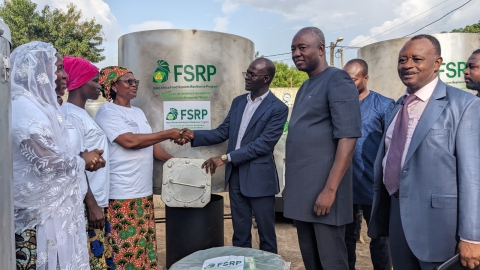
Andrea Akl, Deputy General Manager of ‘Qualiplast’ threw light on some Qualiplast products that support the practice of climate-smart agriculture.

MOFA, through FSRP is driving the dissemination of timely, location-specific agro-meteorological information and advisories; as well as the promotion of technology access and exchange of technologies through the delivery of CSA technologies, nutrition- and gender-sensitive, land, and water management technology packages. The project is also coordinating activities towards the sharing of knowledge regarding post-harvest food handling practices and marketing linkages.

These are being carried out and facilitated through regular field visits, events, demonstrations and farmer field school by Agricultural Extension Agents (AEAs) in strategic locations around the country.

Sierra Leone : Farmers are banking on tomato production to increase national production to 27,000 tonnes by 2026

Published on 4 August 2025

Tomatoes, one of the most consumed vegetables in Sierra Leone, are the focus of the Food Systems Resilience Programme (FSRP), with the country aiming to produce 27,000 tonnes by 2026, up from 25,000 tonnes in 2021.

Driven by growing demand for fresh and processed tomatoes, the sector has grown by 2.8% annually since 2017. However, challenges such as climate change, lack of post-harvest infrastructure and the impact of COVID-19 have slowed progress. Despite this, the Ministry of Agriculture and Food Security (MAFS), with support from the World Bank and GAFSP, is banking on the resilience of smallholder farmers, particularly women and young people, to modernise the tomato value chain.

"The tomato sector is largely driven by women," said Dr Henry Musa Kpaka, Minister of Agriculture. "This alone shows the potential we have to transform agriculture into an activity that empowers families and communities. Through the FSRP, we are committed to modernising this sector to attract investment and achieve food sovereignty."

In 2024, the FSRP gave a significant boost to tomato production by distributing tomato seeds, compost, fertilisers and extension services to farmers. Twenty modern vegetable gardens (MVGs) were created at 17 sites in eight districts, equipped with greenhouses and vegetable storage facilities. This support benefited 4,488 farming households (approximately 26,928 people), 47% of whom are women.

A strategic memorandum of understanding with the United Nations Office for Project Services (UNOPS) also enables the construction of solar-powered boreholes to irrigate the MVGs, ensuring year-round production despite climate change.

One success story is Emma Bangura, a disabled woman who has found a new purpose in life thanks to the FSRP.

"Before, I used to beg on the streets. My children even had to drop out of school because I couldn't pay the school fees," Emma says emotionally. "But when the FSRP reached out to me in 2025, my life changed. Thanks to the greenhouse, seeds and support, I turned my wheelchair into a farming tool. Today, my children are back in school. Farming is not charity, it is a source of independence."

Mary Mani, a commercial tomato producer in Lungi, is another pioneer. Hired by the FSRP to mentor smallholder farmers, she uses her greenhouse as a training centre.

“Tomatoes are very sensitive to climate change,” Mary explains. “Thanks to the FSRP, we started with just one greenhouse, and with the income generated from sales, we were able to add another one.

Farmers now have guaranteed access to inputs and the market. Our future looks brighter than ever.

Although the sector peaked in production in 2022 with 20.2 tonnes, fluctuations remain a major problem preventing the sector from reaching its full potential. However, experts agree that with targeted investments, climate-appropriate infrastructure and strategic partnerships, Sierra Leone is on track to meet or even exceed its tomato demand projections for 2026.

"When government efforts are combined with donor investment and community ownership, we are no longer just growing agricultural products, we are growing the future," said Dr Kpaka.

As the FSRP continues to build resilient food systems across Sierra Leone, the tomato sector stands out as a model of transformation, lifting households out of poverty, promoting inclusive growth and bringing hope with every harvest.

Subscribe to