Togo: 52 young poultry farmers trained to ensure the success of their projects

Published on 26 June 2025

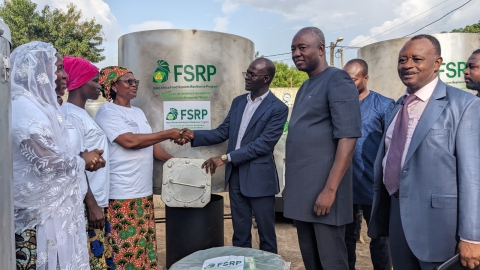
In Togo, 52 young poultry sector promoters have just enhanced their technical skills to better manage their farms and ensure the success of their projects. The training took place from 2 to 6 June 2025 at the Institut de Formation Agricole (INFA) in Tové, with the support  to the West Africa Food System Resilience Programme (FSRP) in partnership with the Centre Régional d'Excellence sur les Sciences Aviaires (CERSA).

Faced with a growing demand for eggs, meat and chicks, poultry farming is emerging as a profitable activity, accessible to young people in both rural and urban areas. But to succeed, farmers must overcome a number of technical and financial difficulties.

This training course was set up to meet these challenges. Over the course of five days, participants were trained in key areas: poultry feed, husbandry, animal health and the formulation of balanced rations.

"I've been rearing broilers for six years, and this course opened my eyes to a lot of aspects I didn't know about. There were about fifty of us, and each of us had our own method, but here we learnt about good practice", confides Kaina Ayéki, a participant from the maritime region.

The poultry feed manufacturers, known as provendiers, also benefited from technical support. They learned about the feed manufacturing process, quality standards and the biosafety measures needed to avoid contamination.

"I thought I had a good grasp of feed production, but I learned a lot. Visiting the INFA's feed mill made me realise the shortcomings of my old practices, especially in terms of biosafety", explains KOYI Pascale, a feed miller.

Led by CERSA experts under the supervision of Professor Kokou TONA, the centre's director, the   strengthened CERSA's position as a key player in the development of the poultry industry in West Africa.

This reinforcement is part of sub-component 3.2 of the FSRP, dedicated to the development of strategic value chains. It benefited 52 young poultry farmers, including 14 women: 31 local poultry farmers, 17 modern poultry farmers and 4 feed producers.

PRESASS 2025 Forum in Bamako: a record-breaking event

Published on 3 June 2025

From 5 to 9 May 2025, the Malian capital of Bamako hosted an exceptional edition of the PRESASS Forum, devoted to seasonal forecasts for West Africa and the Sahel. After 20 years in operation, this edition broke several records in terms of participation, technological innovation, community involvement and dissemination of results. A major milestone for climate resilience in the region, thanks to the support of the West Africa Food System Resilience Programme (FRSP) Component 1 funded by the World Bank.

A historic turnout

Never before in the history of the PRESASS Forum - initiated in the 2000s - has a single event attracted so many participants. With more than 280 participants from the 17 member countries of West Africa and the Sahel, the Bamako event exceeded expectations.

This record attendance is all the more significant in that it reflects a strong regional dynamic of cooperation around climate risk management. Experts from national meteorological and hydrological services, researchers, representatives of regional institutions, farmers' organisations and representatives of civil society, humanitarian actors, journalists and communicators all came together to give substance to a shared vision: anticipate to act more effectively. "This massive turnout reflects a collective awareness that climate information is not a privilege, but a necessity", said Dr Agali Alhassane, Agrometeorological Expert and coordinator of component 1 of the FRSP.

Innovative digital services at the heart of the forum: AI to improve forecasting

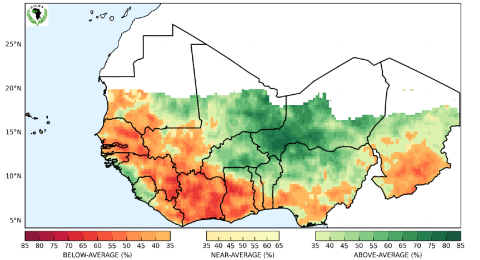
The 2025 edition of the PRESASS Forum in Bamako marked a decisive turning point in the development of seasonal forecasts in West Africa and the Sahel. For the first time, artificial intelligence played a major role in the arsenal of forecasting tools used at the forum. This was made possible by intensive training sessions organised prior to the forum to build the capacity of national experts in a new generation of seasonal forecasts, based on objective approaches, breaking with the traditional consensual approach often marked by expert judgements considered subjective because they cannot be reproduced by third parties.

Thanks to the support of the AICCRA (Accelerating the Impacts of CGIAR Climate Research for Africa) and FSRP (Food System Resilience Program) projects, funded by the World Bank, this transition towards objective forecasts has resulted in the development and implementation of innovative tools such as WASS2S (West-African and Sahel Seasonal to Sub-seasonal), which automate traditional statistical methods while incorporating the potential of artificial intelligence (AI), particularly Deep Learning.

These new tools are used to correct the biases in the output of the global climate centres' forecasting models using learning algorithms, to produce specific forecasts, and to combine traditional approaches with those of artificial intelligence. The process is now automated, traceable and reproducible: any climatologist in any country can apply the same methodology and obtain the same results. Although this approach has not yet been officially launched, the Bamako forum has enabled it to be used on a trial basis by a large number of climatologists. The official launch is planned for the very near future, with the participation of the directors of the national meteorological and hydrological services, to officially mark the institutional adoption of this new generation of seasonal forecasting services.

These innovations now place artificial intelligence at the heart of the seasonal forecasting process in West Africa and the Sahel, paving the way for more reliable, reproducible and transparent climate services tailored to the needs of end users. The PRESASS 2025 Forum thus marks the advent of a new era in which innovative climate services can further strengthen the resilience of the people of the Sahel and West Africa.

Co-production of climate information: users get fully involved

One of the aspects that this edition particularly emphasised was the direct involvement of users in the process of co-production in the interpretation of seasonal forecast products and the drafting of the final communiqué and recommendations. Farmers, livestock breeders, managers of water and hydroelectric power facilities, community development workers and representatives of farmers' organisations, as well as men and women from the media, took an active part in the working groups alongside the scientists. "We finally felt that our voice counted, that the advice was taking our local realities into account", said a Malian farmer who was the first to request climate information from Mali Météo.

This participatory approach has made it possible to enrich forecast information with local perceptions, to adapt messages to realities on the ground, and to co-develop agro-hydro-climatic advice based on both modern science and endogenous knowledge.

Broad dissemination of results: forecasting for the benefit of all

One of the strengths of this year's event was the quality and scope of the communication surrounding the results of the forum. The final communiqué from the seasonal forecasts forum was translated into English, then shared with all the stakeholders via television, radio, the written press and digital platforms (websites, social networks, etc.) at national and regional level, which enabled multiple beneficiaries to be reached.

These results were relayed by a number of partner community radio stations, which translated the information into several national languages. "PRESASS 2025 has made it possible for people to take greater ownership of climate information. In my country, almost everyone now knows the trend for the coming season", said a journalist from Niger.

This inclusive communication strategy, combined with the feedback workshops organised by the countries (see table), encourages the widespread dissemination of climate forecasts, strengthening decision-making at all levels: from national authorities to farm households.

Some examples of countries that have held feedback workshops 
Burkina Faso6 May 2025 
Mali25 April and 7 May 2025 
Niger16 May 2925 
Senegal15 May 2025 

The decisive support of the FSRP: a financial and logistical backbone

If the PRESASS 2025 Forum has reached this level of scale, it is largely thanks to the strategic support of Component 1 of the Food System Resilience Program (C1 FSRP) financed by the World Bank. The FSRP made it possible to: i) pay for the participation and logistics of several national delegations; ii) finance the digital platforms used during the forum; iii) produce technical and communication materials. In addition to funding, the FSRP has also positioned itself as a driving force for multi-stakeholder coordination, facilitating synergy between AGRHYMET CCR-AOS, ACMAD, the National Meteorological and Hydrological Services (NMHSs) of the 17 countries of West Africa and the Sahel, the river basin organisations and the representatives of the user interface platforms (from the agriculture and food security, water resources and disaster risk reduction, and climate security sectors). The strategic link between AICCRA and FSRP, two projects financed by the World Bank, is to be commended, with the former ensuring the promotion and appropriation of innovations in climate services, in order to create a catalyst enabling the latter to boost its investments.

Conclusion

The PRESASS 2025 Forum in Bamako not only broke attendance records, but above all set new standards for climate resilience in West Africa and the Sahel. It demonstrated that: i) technological integration (particularly AI) in climate services is a promising niche; ii) co-production guarantees more relevant and usable forecasts; iii) well-structured financial support, such as that provided by the World Bank (through the FSRP and AICCRA projects) and the AfDB (through the P2RS project), is an important lever for mobilising stakeholders and ensuring the sustainability of the process; iv) appropriate communication, focused on the use of services, is essential for transforming a forecast into anticipatory action.

After the regional forum in Bamako, the countries mobilised to take up the baton by holding national feedback sessions. Bamako 2025 heralds a new era for forecasting in West Africa and the Sahel, maximising on AI and making co-production and co-dissemination the most effective route to impact.

CORAF equips agricultural extension workers to provide more inclusive and gender-sensitive services to rural women

Published on 3 June 2025

From 20 to 22 May, the West and Central African Council for Agricultural Research and Development and the Food and Agriculture Organisation of the United Nations co-organised a regional training workshop in Accra, Ghana, as part of the Food System Resilience Programme (FSRP). The event brought together key players in agricultural extension from eight West African countries to discuss a central but often underestimated issue: integrating gender into rural advisory services. This is an essential lever for building more inclusive, equitable and resilient food systems in the face of climatic and socio-economic challenges. The FSRP is a flagship regional investment programme that aims to strengthen the resilience of the West African food system through a strategic regional approach. CORAF is leading Component 2 on the sustainability and adaptability of the productive base of the food system, with a focus on agro-ecological practices and sustainable land and watershed management. Gender-focused interventions are integrated into this framework to help bridge persistent gender gaps that hamper food security and rural development. Since 2023, FAO has been working with CORAF to provide technical support, including methodologies, tools and capacity building training on gender mainstreaming. This current training on gender-sensitive rural advisory services is the latest in a series of collaborations between CORAF and the FAO under the FSRP.

Women make up around 50 per cent of farmers in West and Central Africa and 60 per cent of those working in the non-agricultural sectors of agri-food systems, but few women farmers than men are reached by rural advisory services designed to support farmers. Most agricultural extension systems continue to cater primarily for men due to a number of systemic issues. Extension service providers do not consider women as clients of rural advisory services, and farmers in their own right, seeing them instead as farm helpers. The services they offer do not take into account the challenges that rural women often face, including the burden of unpaid care and domestic work, limited mobility, low levels of literacy and restrictive social norms.

The training, delivered by Bethel Terefe Gebremedhin, Senior Gender Expert at the FAO Regional Office for Africa in Ghana, focused on identifying structural barriers to women's access to agricultural advisory services and exploring strategies to overcome them. Using tools such as seasonal calendars and daily activity profiles, participants from Benin, Mali, Niger, Togo, Ghana, Chad, Nigeria and Senegal analysed the situation in their countries. A common trend emerged: extension services often target men as household heads and landowners, excluding women from training despite the fact that a significant number of agricultural production activities are carried out by women. The exercises also showed that women worked longer hours on unpaid productive care activities with limited time for rest and leisure than men. The exercise showed participants the lack of time available to women, the importance of tackling the burden of unpaid care work by introducing time- and labour-saving technologies and the need to encourage the redistribution of care work within the household. Above all, it has shown the need to organise extension advisory services that consider the responsibilities of women's unpaid care work.

The workshop focused on the design of gender-sensitive advisory services throughout the agricultural value chain, from inputs to production, processing and marketing. Participants compared traditional value chain analysis with gender-sensitive approaches that take into account women's access to credit, market information, training and decision-making power.

Participants developed action plans to strengthen gender mainstreaming in agricultural extension services in their respective countries and created indicators to monitor progress

7th edition of the International fair for Agriculture and Animal Ressources (SARA): ECOWAS shares the main results of its programmes and projects at this West African agricultural event

Published on 3 June 2025

From 23 May to 1 June 2025, stakeholders and partners in the agroforestry and fisheries sector gathered in Abidjan for the 7th edition of the Abidjan International Agriculture and Animal Resources Show (SARA), which was officially opened by the Prime Minister of Côte d'Ivoire, HEM Beugré Mambé, at the Abidjan Exhibition Centre.

Invited to this agricultural event by the Government of Côte d'Ivoire, the ECOWAS Delegation was led by Mrs Massandjé TOURE-LITSE, Commissioner for Economic Affairs and Agriculture of the ECOWAS Commission. In the "Institutions and Sponsors" section, ECOWAS shared its achievements in the agricultural sector with the public by running a stand and organising eleven side-events. 

Under the theme "What agri-food processing systems for food sovereignty in Africa?", the 7th edition of SARA was a platform for meetings and exchanges of experience between players in the agricultural, animal resources and fisheries sectors in West Africa.

Taking part in SARA for the second time after the 2023 edition, ECOWAS seized the opportunity to raise its profile and raise awareness of ECOWAS policies and initiatives in the field of regional integration, in relation to agriculture, while promoting regional initiatives in relation to agricultural processing systems to improve food and nutritional security.

At SARA, ECOWAS also took stock of the implementation of its Agricultural Policy (ECOWAP) over the last 20 years and highlighted the results of the programmes and projects contributing to the implementation of the said Policy, as underlined by the ECOWAS Commissioner for Economic Affairs and Agriculture: "Our participation in this major event reflects ECOWAS' strong political will to support Member States in the sustainable transformation of their agricultural and food systems. It also illustrates our determination to make agriculture a driving force for economic development and the creation of decent jobs, particularly for young people and women, and an essential lever for food and nutritional security".

"Driving the food sovereignty agenda in West Africa: 20 years of ECOWAP implementation" was the theme of ECOWAS's second participation at SARA. Through exhibitions, high-level panels and side events, ECOWAS, in collaboration with its Regional Agriculture and Food Agency (RAFA), the Regional Animal Health Centre (RAHC) and its technical and financial partners, highlighted the efforts being made to guarantee food and nutritional security, climate resilience and the sustainability of agricultural systems, in line with the continent's ambitions for food sovereignty.

CORAF trains actors involved in implementing the FSRP in assessing the climate intelligence of agricultural technologies and innovations

Published on 3 June 2025

Faced with the climate emergency that is disrupting agricultural systems in West Africa and the Sahel, boosting the resilience of agricultural sectors is no longer an option, but a strategic necessity. Prolonged drought, flooding, seasonal irregularities, soil degradation, food insecurity... these are just some of the challenges that call for concrete responses, based on proven technologies that are adapted to the realities of producers.

CORAF, in collaboration with the International Bioversity Alliance and the International Centre for Tropical Agriculture (CIAT), organised a regional training workshop on the assessment and prioritisation of climate-smart agricultural technologies from 12 to 16 May 2025 in Lomé, Togo. This initiative was part of the Food Systems Resilience Programme and the AICCRA project, with the support of the World Bank.

For five days, experts from the FSRP/PRSA national implementation units and national research institutes in the eight beneficiary countries (Burkina Faso, Chad, Ghana, Mali, Niger, Senegal and Sierra Leone) enhanced their skills in using a robust methodology (multi-criteria analyses) to assess the climate intelligence of existing agricultural T&I before rolling them out to farmers.

Specifically, the work enabled participants to find out whether the technologies currently being deployed in the project's areas of intervention meet the three pillars of climate-smart agriculture, namely productivity, adaptation and carbon mitigation.

The ambition of CORAF and its partners through this regional workshop was to facilitate the appropriate use of technologies and innovations for scaling up climate-smart agriculture (CSA).

The training of experts from national PRSP implementation units and researchers from national research institutes on T&I assessment has further confirmed CORAF's position as a key player in the development and scaling-up of climate-smart agricultural innovations and technologies.

Mali: 235 power tillers handed over to farmers in the Ségou, Sikasso and Koutiala regions

Published on 3 June 2025

At the height of the crop preparation season, agricultural cooperatives in the Ségou, Sikasso and Koutiala regions have just received substantial logistical support under the West African Food System Resilience Programme (PRSA-Mali).

On Wednesday 16 April 2025, the Minister for Agriculture, Daniel Siméon Kelema, presided over a ceremony at which 235 power tillers and their accessories were handed over to farmers in these regions, in the presence of several key figures from the agricultural sector.

The grant, financed by the World Bank, is aimed at improving agricultural productivity in a country where agriculture remains the mainstay of the national economy, employing more than 70% of the working population.

The three beneficiary areas of Ségou, Sikasso and Koutiala represent major agricultural basins for growing rice and maize, two essential commodities in the fight against food insecurity. For Minister Kelema, this allocation marks a significant step forward in the agricultural mechanisation policy: "The motor cultivator represents a compromise between animal traction and the tractor. It is more affordable and easier to handle, making it a tool that is well suited to the family farms that dominate our agricultural landscape.

The Minister pointed out that this gesture was in line with the vision of the President of the Transition, who has made the modernisation of the agricultural sector a central plank of the Agricultural Orientation Law and the Agricultural Development Policy.

The government is banking on mechanisation to boost production, improve yields and reduce the drudgery of agricultural work. FSRP-Mali is a regional programme supported by the World Bank to the tune of $60 million over five years. It aims to strengthen the resilience of food systems in several countries in the West African sub-region, while responding to the growing threats posed by climate shocks and food crises. In addition to the equipment, the PRSA-Mali is rolling out a range of structural initiatives: mechanical restoration of 4,000 hectares of degraded land, development of 1,000 hectares of low-lying areas, creation of 50 hectares of market garden areas, not forgetting the free distribution of 4,360 tonnes of agricultural seed and the subsidised sale of 15,000 tonnes of chemical fertilisers (DAP and NPK), as well as 8,564 tonnes of organic fertilisers. The choice of the power tiller is also explained by its ability to rapidly transform farmers' daily lives. Less expensive than a tractor and easier to manoeuvre in small plots, the power tiller meets the needs of rural Malian farms, which are often small and family-run. It makes working the soil easier, speeds up cultivation operations and improves responsiveness to climatic hazards. The ceremony on 16 April was not just about handing over a batch of equipment. It symbolised a clear desire to break away from subsistence farming and move into an era of sustainable, resilient production that is better integrated into regional economic dynamics.

Niger: Construction of two kilichi meat processing units equipped with solar dryers in Saléwa (Tahoua) and Zinder Commune (Zinder)

Published on 3 June 2025

In Niger, meat is a key export product in the era of the creation of the Continental African Free Trade Area (CAFTA). This represents an opportunity for those involved in the production and sale of Kilichi.

Kiichi is a popular snack in Niger, enjoyed at ceremonies, parties and family gatherings. Appreciated for its spicy taste and tender texture, it is often carefully prepared to offer a variety of spicy flavours to snack lovers.

An extremely popular product both at home and abroad, mainly in the Central and Eastern corridors (Burkina Faso, Côte d'Ivoire, Mali, Benin, Togo, Ghana, Nigeria and Chad), Niger's Kilichi obtained its registration certificate from the OAPI in April 2023. Following the award of this label, the government undertook accompanying measures to guarantee the hygiene and health safety of kilichi, as well as increasing production capacity.

As part of this support, PRSA Niger has financed the construction of two kilichi meat processing units equipped with solar dryers.

These Kilichi meat processing units will help to improve kilichi production through :

  1. improving kilichi drying techniques
  2. the installation of a field of solar dryers;
  3. the development of an innovative, environmentally-friendly kilichi production technology that can be replicated in the sub-region through public and/or private investment;

All this will help to improve the nutritional and hygienic quality of kilichi, increase kilichi production capacity in Niger and boost the incomes of kilichi operators by creating jobs, particularly for young people and women.

According to Mr Moustapha Ismaël, President of the Kilichi cooperative in Salewa, this production unit, financed by PRSA Niger, is operated by more than 300 producers, enabling them to organise themselves into groups for the first time in order to increase their production in hygienic conditions.

This PRSA initiative is part of the drive to increase income for Kilichi operators by creating jobs, particularly for young people and women.

Senegal/Boosting intra-regional trade: cross-border players equipped with the harmonised phytosanitary certificate to promote the free movement of agro-sylvo-pastoral products

Published on 3 June 2025

Faced with the persistent weakness of intra-regional trade in West Africa - which accounts for only around 15% of the value of total trade in the ECOWAS region - regional players are stepping up their efforts to remove the non-tariff barriers that impede the free flow of trade. Against this backdrop, an awareness-raising workshop on the Harmonised Phytosanitary Certificate (HPC) and other Community instruments was organised in Dakar by ECOWAS, with the support of the West African Food System Resilience Programme (FSRP) in Senegal.

The workshop, held from 20 to 23 May and attended by traders, phytosanitary inspectors, border authorities and institutional partners, aimed to popularise the use of the CPH, the cornerstone of the free movement of agricultural products within the EU. It is part of the regional dynamic promoted by the FSRP through its component dedicated to the integration of food markets.

"A number of obstacles stand in the way of intra-regional trade, including complex administrative procedures, redundant inspection requirements and inconsistent regulations. The harmonised phytosanitary certificate aims to simplify and secure this trade", emphasised Mouhamadou Lamine Dia, national coordinator of the FSRP-Senegal.

A strategic tool for regional integration

The harmonised phytosanitary certificate, drawn up in accordance with international standards, meets a dual challenge: protecting consumer health and facilitating the movement of agricultural products through the region's trade corridors. It is a response to the obstacles posed by the lack of mutual recognition of health documents between Member States.

"This certificate, coupled with a regional health inspection guide, will make it possible to unify practices between inspectors, ensure the quality of products and guarantee their free movement", explained Justin Bayili, consultant at the ECOWAS Commission.

In addition to this tool, the FSRP is also supporting the introduction of a regional agricultural trade scoreboard, designed to improve the monitoring of trade flows and guide strategic decisions. The aim is clear: to reduce costs, shorten border crossing times and boost the competitiveness of the agro-sylvo-pastoral sectors.

Stakeholder involvement: a prerequisite for success

The success of this initiative depends on the tools being taken on board by those primarily concerned: traders, transporters, inspectors and border authorities. For Mbaye Chimère Ndiaye, Secretary General of the Dakar Chamber of Commerce, "the harmonisation of health documents is a major competitive lever for economic operators". He called for a collective effort to make the CPH a real catalyst for regional trade.

The FSRP is thus pursuing its mission of strengthening the resilience of food systems through regional integration. By removing barriers to the movement of agricultural products, the programme is helping to increase market access, improve food security and stimulate inclusive economic growth in the ECOWAS region.

Sierra Leone: FSRP supports the Ministry of Trade and Industry to strengthen regional trade

Published on 3 June 2025

The World Bank-funded Food Systems Resilience Programme (FSRP) has helped the Ministry of Trade and Industry to organise a workshop for the Trade Facilitation Committee (NTFC). This committee is made up of key stakeholders from the public and private sectors. The purpose of the workshop was to discuss ongoing trade facilitation initiatives, assess progress in implementing the Trade Facilitation Agreement and the performance of the ECOWAS trade liberalisation programme, and strengthen coordination between institutions involved in cross-border trade.

The two-day event was held on 29 and 30 May at the Country Lodge in Freetown. It aimed to gather the views of stakeholders on improving the national business environment, streamlining procedures and strengthening collaboration under the NTFC. Mr Emmanuel Billy Konjoh, Director General of the Ministry of Trade and Industry, expressed his gratitude to the World Bank and the Ministry of Agriculture and Food Security, through the FSRP, for their support to the NTFC in discussing issues that will benefit cross-border traders. He assured stakeholders that achieving this objective would strengthen the Feed Salone initiative by improving market access and fostering strategic partnerships, which would ultimately ensure better incomes for farmers and enable them to produce more. Dr Kepifri Lakoh, PRSP project manager, confirmed the project's commitment to supporting the MTI in harmonising and promoting regional policies aimed at improving trade efficiency.

This initiative will build the capacity of government officials, bring markets closer to the private sector by enabling them to access relevant trade facilitation information to participate in the Feed Salone programme and improve the ease of doing business in Sierra Leone.

Chad/Abeché: over 2,300 farmers receive agricultural equipment and inputs under FSRP

Published on 3 June 2025

As part of a drive to strengthen the resilience of rural communities in the face of growing food challenges, the town of Abeché was the scene of a major agricultural input distribution operation on Sunday. The initiative is part of the Food System Resilience Programme in West Africa and the Sahel (PRSA-TD), implemented in partnership with the Agence Nationale d'Appui au Développement Rural (ANADER).

A total of 2,380 producers have benefited from this strategic support. Among them, 950 women and 714 young people were specifically targeted, with the aim of encouraging the inclusion and empowerment of groups that are often marginalised in the agricultural sector. In addition, 129 leaders of producers' organisations and seven local cooperatives have also received support, reinforcing the structuring of the agricultural fabric in Ouaddaï province.

Beneficiaries received a range of essential agricultural inputs, including 50kg bags of urea, MPK (nitrogen-phosphorus-potassium) fertilisers and pesticides, all designed to improve the productivity of local food and vegetable crops. These products, which are vital for future agricultural campaigns, are accompanied by complete farming kits. Each kit includes a set of farming tools: shovels, picks, hoes, wheelbarrows, watering cans, rakes, tarpaulins and ropes - basic but essential equipment for manual farm work.

This distribution initiative is part of the ongoing efforts of PRSA-TD, a regional programme aimed at strengthening food security and promoting family farming. At a time when climate change, conflict and market volatility are threatening traditional farming systems, the programme aims to provide producers with the means to increase their yields and secure their income.

For many beneficiaries, this intervention is seen as a real boost. "These inputs will enable us to prepare better for the agricultural season. We had land, but we didn't always have the means to use it properly", says Halima Mahamat, a vegetable grower from Abeché.

Through this type of action, the authorities and their partners aim to give a lasting boost to local production and eventually achieve food self-sufficiency in the areas concerned. The PRSA-TD plans to extend this type of support to other localities in the coming months, thereby consolidating a network of small-scale producers who are more resilient, better equipped and able to cope with economic and climatic hazards.

Subscribe to