Sierra Leone: Training of 30 spray service providers and extension agents on the cassava seed system and the six steps of cassava weed management

Published on 4 August 2025

The training on capacity building for spray service providers and extension agents, organised by the International Institute of Tropical Agriculture (IITA) and the Ministry of Agriculture and Food Security under the Food Systems Resilience Programme (FSRP), was completed on 25 July 2025 at Taiama Resort in Moyamba District. The event highlighted the need to modernise agriculture in Sierra Leone through skills development and inclusive participation.

The opening ceremony, chaired by Dr Isata Kamanda of the Sierra Leone Agricultural Research Institute (SLARI), emphasised the crucial role of agribusiness in transforming rural livelihoods. Dr Abdul R. Conteh, Acting Director General of SLARI, expressed satisfaction with the diversity of participants and said that the training focused on practical skills needed to improve fertiliser application and agronomic practices. He emphasised that the initiative aimed to create jobs for young people as professional spray service providers.

Mr Sahr D. Koroma, representing the Ministry of Agriculture, acknowledged the challenges posed by the lack of trained field operators, which has affected agricultural extension and led to poor yields and soil contamination. Dr. Janatu V. Sesay, from the Sierra Leone Seed Certification Agency (SLeSCA), highlighted the participation of women and the importance of understanding technical measures for effective spraying.

In his keynote address, Dr Alfred O. Dixon, IITA country representative, urged participants to seize this training opportunity, highlighting the modernisation of agriculture, the need for quality seed systems and effective weed and pest management to successfully implement the Feed Salone initiative. Dr Prince E. Norman then highlighted the importance of improving weed management to increase production and productivity.

Nigerian experts Professor Ekeleme Friday and Dr Godwin Atser led the training sessions, which covered various essential topics such as the cassava seed system, the safe use of pesticides and practical demonstrations. The training, which focused on the private sector and extension workers, combined theory and practical knowledge, paving the way for sustainable food systems, youth employment and the modernisation of agriculture in Sierra Leone.

Togo: livestock farming becomes a source of resilience for more than 400 households in the savannah region

Published on 4 August 2025

When animal housing does not meet technical standards, especially biosecurity standards, this leads to high livestock mortality and low animal growth. Housing is therefore the primary factor in successful livestock farming.

In our rural areas, the construction of adequate sheepfolds and chicken coops is struggling to become common practice among farmers, whose activities are limited to family production.

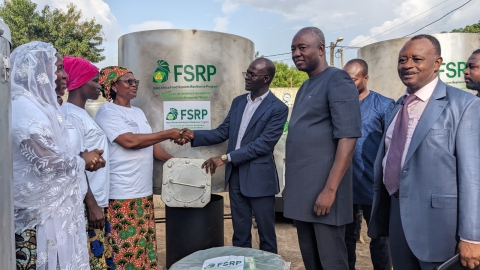
Based on these findings and in view of the difficulties encountered by livestock farmers in rural areas, the West Africa Food System Resilience Programme (FSRP - TOGO) provides support for the construction of infrastructure (BTA/PTA) suitable for animals and support for breeding stock of poultry and small ruminants to livestock farmers in order to improve the level of production of livestock units.

Unlike open-air livestock farming systems, this is an improved traditional system where animals (local chickens and small ruminants) are raised in better-designed habitats built with local materials and adapted to climatic conditions. Traditional improved sheepfolds (BTA) and traditional improved chicken coops (PTA) are the result of endogenous know-how and technical innovations that reduce the risk of disease and predation in livestock farms.

These structures, built with shared costs by the FSRP with a contribution from the beneficiary, combine respect for the environment, animal welfare and economic efficiency, while taking into account the sustainability of the livestock unit.

To date, 400 livestock farming households have been supported through the construction of 176 improved traditional sheep pens (BTA) and 224 improved traditional chicken coops (PTA) in the Savanes region, with a gradual expansion underway to the Kara and Centrale regions, gradually consolidating a more resilient and sustainable livestock farming model.

Additional support in the form of breeding stock. In addition to sheepfolds and chicken coops, breeding stock for poultry and small ruminants are provided to livestock farmers to improve animal performance. A total of 315 breeding stock of guinea fowl have been acquired for 45 guinea fowl farmers in the Savanes region. 179 farmers in the same region received 215 roosters and 1,075 hens. 484 sheep and 220 goats were also purchased for 121 sheep farmers and 55 goat farmers to optimise the animals' growth, fertility and disease resistance.

True success stories: beneficiaries have their say

My name is DINDIOGUE Yalkbir , and I live in the canton of Bonbouaka.
Some time ago, I was fortunate enough to receive support from the FSRP. They gave me four goats (three males and one female) and helped me build my sheepfold in exchange for a small contribution to help with water, sand and construction work.

At the time, I only had three goats of my own. But thanks to the animals I received from the FSRP, my herd is gradually growing: I now have twelve (12) goats, some of which were born to the FSRP goats. In the past, I kept my animals in the family home. But with the support of the project, I now have my own building dedicated to livestock farming. With the support of ICAT agents, I am also able to manage my business better.

Thanks to this, I have been able to sell a few animals to restart my business, pay off my debts and also support my husband a little. This project has really helped me.

"In Tabinmong, poultry farming has changed my life"

I am a poultry farmer and seller in Tabinmong, in the savannah region.

Thanks to the FSRP, I was able to build a modern, well-equipped chicken coop. The FSRP provided me with everything I needed to get started: breeding hens, a rooster, waterers, feeders, and the chicken coop itself, which I helped to build including sand, water and cement for the manufacture of breeze blocks for the construction of the buildingIt's an experience I remember fondly, because it marked a real turning point in my business.

Before that, I was working with the means at my disposal, with no real shelter for the poultry. During the rainy season, water seeped in everywhere, making farming very difficult. Thanks to the FSRP's support, I was able to restart my business and produce up to 300 birds, most of which were sold. At the moment, I am raising more than 100 adult birds and around 150 chicks. Today, I can honestly say that my life has improved significantly. I have been able to start building my house, buy fertiliser for my field and, above all, provide for my family. I really live better than before! he concluded.

Food insecurity financing and risk management mechanisms: ECOWAS actors and partners strengthened their capacities in Lomé

Published on 10 July 2025

More than 50 actors and partners involved in food insecurity risk management gathered in Lomé from 2 to 4 July to strengthen their capacities on the concepts, principles and mechanisms of disaster risk financing (DRF), with a particular focus on agricultural and food risk transfer.

Initiated by ECOWAS, this training session produced several concrete results in terms of experience sharing, technical capacity building and policy dialogue. These results reflect the commitment of countries and regional institutions to structuring a proactive response to growing agricultural, climate and food risks in the ECOWAS region. They also demonstrate collective efforts to improve coordination, data governance and sustainable financing of risk management mechanisms.

Over three days, participants – comprising technical officials and decision-makers from ECOWAS, as well as representatives from partner institutions such as the BIDC and CILSS, not to mention national technicians from the ministries responsible for agriculture and food security in ECOWAS member countries – benefited from exchanges with experts from ECOWAS, the World Bank, Willis Towers Watson/Munich Re, African Risk Capacity and Y-FOCUS. the AES and CILSS – benefited from exchanges with experts from ECOWAS, the World Bank, Willis Towers Watson/Munich Re, African Risk Capacity, Yeleen Assurances and CILSS.

Through inclusive and participatory exchanges between trainers and learners, as well as panel discussions, the main determinants of cyclical food and nutrition insecurity in the West African sub-region were shared. There are many causes: conflict, flooding, price spikes, climate shocks, low availability of inputs, inflation, currency depreciation, post-harvest losses, and limited access to a healthy diet. Population growth exceeds agricultural gains, exacerbating structural deficits.

Faced with this situation, what should be done? This central question was addressed through the sharing of experiences from other regions of Africa and around the world. In an educational style, the trainers presented the principles of disaster risk and food insecurity modelling with examples from the African Risk Capacity (ARC) and Willis Towers Watson.

In risk management, data is crucial and decisive not only for modelling but also for the form and type of response to be provided in the event of a disaster. Our sub-region does not sufficiently document data in this area at the country and regional levels, despite the efforts of CILSS to collect, process and disseminate agrometeorological data.

Risk financing was a very important aspect of this training. The World Bank and the insurance structures present emphasised the fundamental principles and instruments and strategies of disaster risk financing. For them, it is important to prepare financially before a shock occurs, as the costs of repair are often much higher than those of prevention. The DRF is based on four key principles: speed of mobilisation of funds, reliability of mechanisms, reasonable cost and transparency in distribution.

Participants were equipped with tools on financing and risk management mechanisms related to food insecurity. They acquired skills in risk modelling, transfer instruments (insurance, early action, emergency funds), and sustainable and regionalised co-financing approaches. The ultimate goal was to strengthen their capacity to anticipate, finance and effectively manage food and climate shocks, with a view to building structural resilience at the national and regional levels, through the integration of Disaster Risk Financing (DRF) into public policies and the Regional Food Security Reserve.

That is why the Executive Director of the Regional Agency for Agriculture and Food (RAAF), Mr Mohamed Zongo, on behalf of the Commissioner for Economic Affairs and Agriculture, Ms Massandjé Touré-Litsé, during the opening of the proceedings, emphasised that ‘for ECOWAS, this meeting is an opportunity to strengthen the autonomy not only of the Commission but also of Member States in the design, management and mobilisation of innovative financing mechanisms to address food and nutrition insecurity risks in the region’.

During the panel discussions, countries shared existing mechanisms for responding to disasters and, above all, the funding mobilised and secured for this purpose. This capacity-building session also provided a framework for all stakeholders and partners to call on regional and national decision-makers to place agricultural financing and insurance mechanisms at the heart of their agricultural development strategies, which are not yet a reality due to a lack of clear understanding and reliable data.

According to the World Bank, which is supporting this initiative through the FSRP, ‘food insecurity risk management practitioners have consolidated their technical skills to promote effective ownership of risk financing mechanisms to effectively combat food insecurity in West Africa,’ according to its representative, Ms Ruth Samson.

Following this training, the ongoing feasibility study aimed at providing the region with a risk financing mechanism, including agricultural insurance, will enable ECOWAS, through the RAAF, to strengthen its response capacity. It will thus contribute to improving the effectiveness of the Regional Food Security Reserve's actions on the ground, in support of the efforts of States, to better prevent and mitigate the risks of food insecurity in West Africa.

Development of the rice sector: West African stakeholders on a learning visit in South Korea under the initiative of ECOWAS

Published on 5 July 2025

With a view to accelerating the development of the rice sector in West Africa while reducing rice imports, ECOWAS, in collaboration with the World Bank, conducted a learning visit to South Korea from 9 to 13 June 2025. The mission brought together key stakeholders from Ghana, Mali, Niger, Nigeria, Senegal, Sierra Leone and Togo, representatives of ECOWAS (Dr Maty Ba-Diao, Regional Coordinator of the FSRP and Dr Boladale Adebowale, Executive Secretary of the Rice Observatory), the Regional Agrhymet Centre and the World Bank (Dr Ashwini Sebastian, TTL of the FSRP) and Korean institutions. A total of 31 participants took part in the visit, including the Ghanaian Deputy Minister of Agriculture, Mr John Dumelo, and the Togolese Secretary General of the Ministry of Agriculture, Mr Madadozi Téziké.

The participants met the key players in the Korean rice ecosystem. In addition to exchange meetings and panels with senior officials from the host institutions, the delegation made field trips to Jeonju, Gimjae and Naju to visit the Rural Development Administration (RDA) and its technical institutions, the Green and Biological Science and Technology Institute (GBST), the Gimje Agricultural Technology Centre, the Korea Rural Economy Institute (KREI), the Korea Rural Community Corporation (KRC) and the Naju Agricultural Cooperative.

The visit was an opportunity to share knowledge, build capacity and co-develop best practice in rice production and processing in Seoul, Pangyo, Jeonju, Gimjae and Naju.

Rice plays a central role in the diets of West African populations, accounting for almost 40% of total cereal consumption, ahead of maize and wheat. However, the region is heavily dependent on imports, with a volume approaching 12 million metric tonnes a year, and a bill that reached 3.5 billion US dollars in 2021.

Against this worrying backdrop, due in part to low production, ECOWAS, through its Rice Observatory, is committed to reversing the trend. An ambitious roadmap has been drawn up to guide investment and action in the West African rice sector up to 2035. The mission to South Korea was part of this process of structural transformation, based on the experience of South Korea, which is a global benchmark for rice productivity and food security.

Over the course of a week, the ECOWAS/World Bank delegation was able to observe, learn and exchange views on public policies and modern technologies for growing, processing and preserving rice.

At the end of their visit to South Korea, the delegations from the West African countries identified several priorities inspired by the Korean experience to strengthen their rice sector. These can be summarised as follows: (i) integrating Korean best practice into national development strategies for the rice sector, with the emphasis on modernising irrigation, land management and mechanisation; (ii) promoting climate-smart agriculture and modernising processing infrastructure; (iii) developing appropriate support policies, to bring research closer to production and plan interventions on the basis of a precise diagnosis. Access to quality inputs and the adaptation of Korean innovations to local contexts were also deemed essential, as was the development of national strategies inspired by the K-Rice Belt model.

To implement the knowledge acquired in South Korea, the countries have undertaken to organise a virtual meeting to disseminate the conclusions of the mission and to follow up their implementation with the main players in the rice sector in FSRP member and non-member countries. The launch of joint pilot projects and the implementation of capacity-building programmes are also planned by the countries.

ECOWAS has undertaken to monitor the implementation of the actions identified at regional level.

"We are leaving with concrete ideas that can be adapted and implemented in our respective countries. The Korean experience inspires us and shows us that with a strategic vision, targeted investments and effective regional coordination, rice self-sufficiency is within our reach", said Ghana's Deputy Minister of Agriculture at the end of the visit.

This learning mission marks a key step towards building sustainable and resilient rice policies in West Africa. It illustrates ECOWAS' commitment to fostering the emergence of a competitive, profitable and inclusive rice sector, in the interests of food security, import reduction and the socio-economic development of member states.

ECOWAS reaffirms its commitment to rice self-sufficiency at SARA 2025

Published on 5 July 2025

On 29 May 2025 in Abidjan, during the 7th edition of the Salon de l'Agriculture et des Ressources Animales (SARA), ECOWAS, through its Rice Observatory (ERO), organised a side event on the theme: Improving local rice processing to strengthen competitiveness in West Africa, from paddy to market.

The meeting served as a platform to share valuable information on successful models and investment opportunities available under the regional strategy, as it moves towards adoption at national level in each country. The event was attended by stakeholders from across the rice value chain, including key players and partners in the West African rice sector, such as traders, researchers, private sector actors, policy makers and development partners. It served to raise awareness of the provisions of the roadmap and mobilised technical and financial partnerships.

Officially opened by Mrs Massandjé Touré-Litsé, Commissioner for Economic Affairs and Agriculture of the ECOWAS Commission, this session was marked by a panel moderated by Mr Alain Sy Traoré, Director of Agriculture and Rural Development of ECOWAS. 

The panel brought together various experts and stakeholders who shared their practical knowledge and experiences on how to accelerate the competitiveness and self-sufficiency of the rice sector in West Africa. It was moderated by (i) Mr Mory DIABATE, President of the Interprofessional Rice Organisation of Côte d'Ivoire and President of the national ERO ONRiz-CI section, representing the private sector; (ii) Dr Prem Bindraban, Director of Research at AfricaRice, representing academia and research; (iii) Mr Morou MOUSSA of the World Bank, representing the private sector; and (iv) Mr M. M. BADO of the World Bank. Morou MOUSSA of the African Development Bank, representing development partners and donors; (iv) Mr Hugues GOA of EBID, representing financial and investment institutions; and (v) Dr Yacouba Dembélé, Director General of the Côte d'Ivoire Rice Development Agency, representing the public sector.

The panellists stressed the essential role of financing and policy harmonisation in enabling sector-wide growth. Development banks were urged to invest in infrastructure, facilitate access to working capital and support pro-development policies and research. Intermediaries familiar with the banking sector and agriculture were considered essential to fill sectoral gaps. Public-private partnerships, collective financing models and reforms at national level were all highlighted as essential tools for unlocking investment and promoting the sustainable development of value chains.

Discussions focused on the persistent challenges in terms of production and market access, in particular the high cost of local rice compared to imports, due to poor mechanisation and inadequate post-harvest infrastructure. Emphasis has been placed on promoting scalable technologies for smallholders and cooperatives, such as affordable pre-milling units and small-scale milling equipment. Innovation, when local and adapted to scale, was identified as a key driver of long-term transformation.

The session concluded with a call for enhanced regional coordination, pragmatic public policies and private sector engagement to translate the Regional Rice Roadmap into concrete and effective results in all ECOWAS Member States.

Thanks to the high visibility and mobilising power of SARA, this side event facilitated alignment between public and private stakeholders and gave new impetus to the implementation process of the ECOWAS Rice Observatory Roadmap.

The side event ended with a public rice tasting, during which the different varieties produced in the different West African countries were presented and tasted by the participants, who were able to appreciate their quality, freshness and unique flavour (parboiled, brown, broken and white rice).

Niger: FSRP provides strong support for rice development

Published on 5 July 2025

In Niger, rice is the third most important cereal crop after millet and sorghum, in terms of both surface area and production. It plays an important role in the country's economy. Local rice covers around 30% of the country's needs, and many families make their living directly from its production.

Despite sustained efforts to improve the sector's performance, it must be said that there is still a gap between strong demand (7%/year) and production (3%).

To meet these challenges, the State of Niger, in collaboration with its development partners and the main players in the rice sector, has drawn up a National Rice Development Strategy (SNDR).

As part of its support for the implementation of this strategy's action plan, the Food System Resilience Programme (FSRP) has financed several activities, including the process of setting up the national section of the Niger Rice Observatory.

Once set up, the National Rice Observatory of Niger (ONAR-Niger) is a platform that will provide a voice and a space for dialogue for national stakeholders in the sector, with a view to increasing the local impact in terms of sustainability and competitiveness in the rice sector.

To date, the following activities have been carried out as part of this process:

  • Setting up a taskforce made up of stakeholders and responsible for operationalising the process of setting up Niger's national Chapter of the Rice Observatory;
  • Carrying out a study on the mapping of stakeholders in the Niger rice sector;
  • Validation of the results of the study at a national workshop attended by all the stakeholders (players from the various links in the chain, institutional players, projects and programmes);
  • Niger's participation in an exchange visit to South Korea organised under the aegis of the World Bank, the Republic of South Korea and other regional institutions (ERO, ARAA). The aim of the visit was to learn from Korea's experience in developing the rice sector and to identify opportunities for collaboration with West Africa. It provided an opportunity to discuss the development of the rice sector with researchers, developers, extension workers and producers.
  • The PRSA Niger financed an exchange trip to Ouagadougou to discuss Burkina Faso's experience in setting up a national rice observatory for the permanent secretariat of the SNDR.

FSRP Niger plans to finance an Organisation of a retreat workshop to update the NRDS action plan; the organisation of regional workshops and the organisation of a national workshop to elect the members of the Governing Board and the technical working committee of the rice observatory in Niger.

Sierra Leone: FSRP builds the foundation for rice self-sufficiency in the country

Published on 5 July 2025

Sierra Leone relies heavily on agriculture to combat poverty and hunger. However, although rice is the country's staple food, most citizens still prefer imported rice because of the high cost of locally produced rice, which puts a strain on the country's finances of around 240 million dollars a year . This burden was compounded when the COVID-19 pandemic struck, forcing many citizens to survive on less than a dollar a day. Small-scale farmers were the hardest hit: essential inputs such as seed rice, fertiliser and labour became unaffordable, forcing many of them to give up growing rice. In the absence of a food security crisis preparedness plan, the government has struggled to mobilise emergency resources to assist farmers.

It was against this backdrop that, as the West African Food System Resilience Programme (FSRP) was being launched, the government called on the World Bank to fund Sierra Leone's first-ever food security crisis preparedness plan. "We knew we couldn't afford another shock that would cripple our food systems," said Dr Henry Musa Kpaka, Minister of Agriculture and Food Security. "So we reached out and the World Bank listened.

Once the crisis plan was in place, the FSRP activated its emergency support for rice production. Small-scale farmers received free rice seed, fertiliser and mechanisation services, from ploughing to harvesting. "The idea was simple," said Dr Kepifri Lakoh, PRSP project manager. "To help farmers bounce back, ensure food security for their families, earn an income and build their resilience to continue farming.

Some farmers have seized this opportunity to rewrite the history of rice in Sierra Leone. In the community of Banekeh, in the Kambia district, more than 200 farmers have benefited from PRSF support in the form of inputs and machinery. Thanks to the income from rice, these farmers have built the community's very first clinic. "Before the FSRP, I only farmed two plots to feed my family. I never dreamt of turning farming into a business," explains Abu Bakarr Bangura, a farmer from Banekeh. "But thanks to the FSRP's seeds, fertilisers and tractors, not only are we feeding ourselves, but we have also built a health centre and obtained seeds for the next season.

Similar transformations are taking place elsewhere. In the community of Kufuru, farmers have used rice sales to build a warehouse and drying floor, and have even launched a village savings and loan scheme to boost off-season trade, boosting household incomes and food security beyond the harvest period.

To make rice a sustainable activity, the FSRP does more than just supply inputs. It is also putting in place vital infrastructure and agricultural technology systems. The University of Njala, with support from the FSRP, has developed Sierra Leone's first comprehensive soil profile to guide farmers to the best ecologies for rice - click here to explore the Sierra Leone Soil Information System https://nasis.mafs.gov.sl/ . "We have found that the Inland Valley Swamps (IVS) can double yields and allow year-round cultivation," said the Minister. The FSRP has teamed up with the FAO to develop these IVS for small-scale farmers, thereby mitigating climate risks and ensuring long-term productivity.

In addition, the FSRP has supported climate-smart agriculture by equipping the Sierra Leone Meteorological Agency with fifteen (15) modern meteorological stations and supporting the National Water Resources Management Agency with a state-of-the-art water quality and research laboratory.

This will ensure that irrigation water remains safe, optimal and resistant to contamination. The project has also signed a Memorandum of Understanding with Africa Rice to provide improved rice seed varieties and with the National Disaster Management Agency to provide early warning systems - helping farmers to make informed, climate-smart decisions https://www.fsrp-sl.org/early-warning .

"The FSRP's investments fit in perfectly with our Feed Salone programme," the Minister stressed. "We are giving priority to smallholders and the development of IVS in order to boost rice production sustainably and achieve food sovereignty.

As the project enters its third year, it is essential to maintain these gains. Under its market systems component, the PRSF has helped the Ministry of Trade and Industry to harmonise trade policies, facilitating free and secure cross-border trade within ECOWAS. It has also financed WASH facilities for border communities to protect health and agri-food trade.

Above all, the project has strengthened local markets by enabling the World Food Programme and the Sierra Leone Produce Marketing Company to purchase local rice. With government policy now mandating the use of local rice in school feeding, hospitals, prisons and the military, the impact has been considerable. "The PRSP is a truly fundamental initiative," said Yvonne Forsen, WFP Country Director in Sierra Leone. "It addresses the main drivers of food insecurity and malnutrition, builds resilience and secures human capital. Thanks to the PRSF, farmers now have cereal reserves of more than 9,000 bags, which enables us to provide a buffer in the event of a crisis.

As the mid-term review of the PRSP approaches, stakeholders will assess progress and fine-tune interventions. This year, the project has already helped more than 15,000 farmers by providing inputs and mechanisation services for rice cultivation. After the harvest, farmers plan to save 30% for seed, sell 30% to generate income and keep 40% for food, thereby strengthening food security at household and national level. The project has also invested in rice processors to add value, further motivating farmers to increase production.

By 2025, Sierra Leone will be 72% self-sufficient in rice, reducing the annual rice import bill to $160 million. The PRSF has directly affected more than 500,000 lives. "It's not just about growing rice," says Sierra Leone WA FSRP TTL Dr. Adetunji Oredipe . "It's about building a resilient food system that feeds our people, fuels our economy and preserves our future".

Togo: the rice value chain is on the road to development with support from the FRSP

Published on 5 July 2025

In Togo, rice plays an increasingly important role in people's diets and is a strategic issue for national food security. Despite favourable agro-ecological potential and strong local demand, rice yields remain low overall. This situation is largely due to two major constraints: insufficient control over land management, particularly in lowland areas and irrigated perimeters, and the difficulty of access to quality inputs (certified seeds and fertilizers). These factors considerably limit the productivity of producers, reduce the profitability of farms and hinder the emergence of this value chain. Faced with these challenges, rethinking agricultural development policies and strengthening mechanisms for distributing climate-smart agricultural inputs appear to be essential levers for sustainably boosting the rice sector in Togo.

To reverse this trend, the FSRP Togo has not only acquired and distributed inputs (improved seeds and fertilisers) but has also strengthened the capacity of rice growers in lowland management techniques and equipped them with intelligent ploughing equipment (power tillers).

By combining investment in equipment with institutional support, FSRP Togo is helping to make the rice sector a genuine lever for rural growth. Thanks to the distribution to date of 342.54 tonnes of certified rice seed and 2,569.05 tonnes of fertiliser (NPK 15 15 15 and urea) in the form of input credit, repayable in kind, to 34,254 rice growers, including 21,717 women (63.40%), the positive effects are beginning to be felt. The main results are an increase in average yields of between 5% and 8% per hectare and a 16% improvement in farmers' incomes. These encouraging results are the fruit of mechanisms put in place not only to improve farmers' access to agricultural inputs, but also to facilitate production monitoring, the collection of paddy rice at harvest and the marketing of surplus production by farmers. With this in mind, partnership agreements have been signed with several rice mills in Togo, such as the Tône rice mill in the Savanes region, which, thanks to this agreement, has increased its stock from 800 tonnes in 2020 to 2,000 tonnes in 2024, with the number of aggregated producers rising from 1,700 to 16,800 thanks to support from the FSRP.

In order to professionalise farming practices and promote sustainable land management (SLM) approaches, 640 rice farmers, including 59 women, have been trained in Smart Valleys, a low-cost, participatory approach aimed at improving rainwater retention and management to increase yields and crop resilience in the face of climate change. To facilitate the work of the trained farmers, the FSRP provided them with work kits for drawing up the plans and laying out the plots.

Decisive support from the FSRP for the establishment of Togo's National Rice Observatory (ONR-T)

Togo took another decisive step forward with the establishment of the National Section of the National Rice Observatory in December 2024. This initiative is part of a regional initiative supported by ECOWAS, aimed at improving governance, coordination and management of the rice sector in the country.

Thanks to the active collaboration of partner organisations and players in the value chain, the creation of this national body marks a turning point in the structuring of the sector.

The Togo National Rice Observatory (ONR-T) aims to coordinate investment in the rice sector, inform political decisions, collect regular data and communicate on the development of the rice value chain. Its objectives are to monitor and evaluate the production, processing and marketing of rice in Togo to improve performance; to facilitate coordination between public and private players and non-governmental organisations in order to develop partnerships and joint strategies to structure the sector; and to promote innovation and modern technologies to improve the productivity of rice farms, among other things. As for the outlook, it remains the operationalisation of the national section and the mobilisation of resources for the implementation of activities, the development and execution of the action plan and the resource mobilisation plan, the development and implementation of major projects for the structural transformation of the sector in line with regional prescriptions.

Togo: the rise of rice industry players

Published on 5 July 2025

Rice growers play a fundamental role at the base of the sector. Thanks to increasing technical support, training in good farming practices and the introduction of high-yield certified seed, these producers are seeing a marked improvement in their performance, as this beneficiary can testify: "I am SOWARE Amina. I benefited from the FSRP project, a bag and a half of fertiliser and 10 kg of rice seed that I grew on 0.25 hectares. Personally, I used to harvest no more than 5 bags of paddy rice from 0.25 hectares. But with the seeds that the project gave me, this year I harvested 9 bags of 100 kilos from the same area. Thanks to this good harvest, I sold the surplus to support the family financially and resume my tontine and my business, which I had left for lack of funds. I also have a stock at home for the family's consumption".

The Tône rice mill, before the arrival of the FSRP, had groups that delivered paddy for annual processing. Since 2020, with the increase in demand for local rice on the national market, the mill has been unable to meet demand with its stock, estimated at 800 tonnes of paddy per year. Other difficulties were linked to the limited stock, including difficulties in obtaining credit from banks. Today, with the support of the FSRP, our area of intervention, which was limited to Barkoissi, covers the entire savannah region and extends as far as Kanté in the Kara region. We have gone from 1,700 producers to 16,800 aggregate producers, an increase that has had a considerable impact on the quantity of raw materials to be mobilised, which has risen from 800 tonnes to 2,000 tonnes of paddy. In addition to these impacts, thanks to the FSRP we have discovered areas with high paddy rice production, whose producers will be included in the list of Tone Rice producers", she confided. In terms of jobs created, the rice mill has gone from 32 to 73 people. In processing, the number of jobs has risen from 12 to 23, and the number of women sorters from 20 to 50," she concludes.

By acting on several links in the value chain, from the development of agricultural land to access to quality inputs and capacity building for stakeholders, the FSRP is playing an active role in the modernisation and competitiveness of the Togolese rice industry.

Togo: Effective trade structuring for the benefit of rice growers

Published on 5 July 2025

The development of commercial partnerships with processors and distributors has enabled producers to enhance the value of their production. By structuring relations between producers and rice mills within a transparent and equitable framework, it becomes possible to ensure a better distribution of margins, access more stable and remunerative distribution channels and boost the local economy. On the marketing front, in addition to the Tone rice mill, three other rice mills have benefited from PRSP support for product marketing. These are the Binah, Notsè and Sotouboua rice mills. Market contracts have been signed with producers to guarantee the sale of their products. Thanks to this support, a total of 24,178 producers have been able to market their produce to date.

In addition to contractualization, which secures sales to producers, players in the rice value chain have received various forms of support to improve their marketing in value chains, including capacity building on market access under the FTAA, training for women and young traders on cross-border trade, customs procedures and other regulatory requirements of the Abidjan-Lagos Corridor. These players have also been supported in their participation in various markets, at the Lomé International Agriculture and Food Fair (SIALO), and at various fairs promoting local products to promote trade in their products.

Several other initiatives have been supported by the FSRP in partnership with the Ministry of Trade and the High Authority for Quality and the Environment (HAUQE). These included the development of a certification programme for priority Togolese agri-food products, including rice, for the HAUQE, to help companies become more competitive and have easier access to markets. The programme has also supported the compilation of Togo's foreign trade statistics on products targeted by the WAEMU, ECOWAS and FTAA markets, as well as the compilation of a directory of exporters and potential exporters of agri-food products to put them in touch with buyers in the ECOWAS region.

Subscribe to