Senegal: Towards a vast project to develop 4,700 ha of village irrigated areas with masonry canals in the river valley

Published on 24 April 2025

As part of the implementation of sub-component 2.2 of the West Africa Food System Resilience Program (FSRP) on strengthening regional food security through integrated landscape management (GIP), the FSRP, in partnership with the Société d'Aménagement et d'Exploitation des Terres du Delta du Fleuve Sénégal et des Vallées du Sénégal et de la Falémé (SAED), is undertaking a vast project to develop 4,700 hectares of village irrigated areas (PIV) with masonry canals in the Senegal River valley. 
Against a backdrop of climate change marked by recurrent flooding and often dilapidated irrigation infrastructure, this programme to develop 4,700 ha of PIV by the FSRP in Saint Louis and Matam aims to improve food security, in particular through the increased development of rice growing and horticultural production thanks to sustainable and more efficient irrigation infrastructure.
The sustainability of these developments lies in the modernisation of irrigation and drainage systems. Until now, the PIVs were fed by earthen canals, which were often fragile and prone to flooding. The irrigation solution put forward by the FSRP is based on the construction of reinforced concrete masonry canals (invert, posts and stiffeners) for greater durability and efficiency.

Masonry channels, a solution for the durability of PIVs 
The choice of masonry canals as the irrigation solution stems from the major problem of the need to maintain the structures in the valley's village irrigation schemes. The FSRP Sénégal has opted for an irrigation system that is both economical and sustainable.
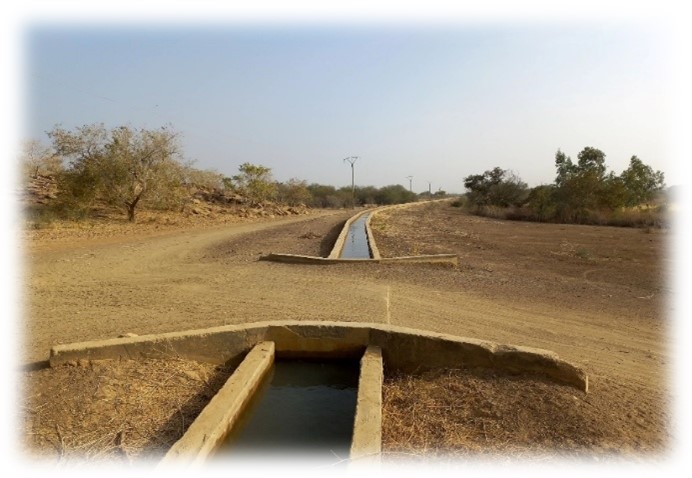
These channels are made up of masonry blocks (walls) and structural reinforcement elements in reinforced concrete, such as: the base slab (raft); the top wall ties; the intermediate columns and the stiffeners installed at defined intervals. Not to mention the expansion joints to prevent the risk of the structure cracking in the event of differential settlement along the route of the canals. 
At the PIV level, this solution enables beneficiaries to reduce irrigation time and water losses through infiltration, and to increase the flow rate to guarantee water requirements, thereby combating the water stress that can lead to low yields. 
From an economic point of view, with masonry canals, upkeep and maintenance costs are lower due to the consistency of the initial investment, making it easier for beneficiaries to maintain the works. This innovation, which has a lifespan of at least fifteen (15) years, will also reduce pumping costs.

In addition to improving the irrigation networks, the FSRP plans to make the areas safer from flooding by reinforcing the dykes and installing appropriate protection. The renewal and modernisation of hydraulic equipment is also at the heart of the project, with the installation of new motor-driven pumps (GMP).
With these 4,700 hectares, the feasibility study for which is currently underway, the Senegal River Valley is poised to become a model of integrated water resource management, serving food security and rural development.

Togo: 120 women processors received training on the challenges and opportunities of the FTAA at the 2nd edition of the fair for the promotion of local products

Published on 24 April 2025

In Togo, women play an essential role in agricultural production. However, their involvement in processing, trading and entrepreneurial activities remains marginalised. This under-representation is the result of several obstacles, including social and cultural norms and structural barriers to access to finance and economic opportunities. 
With a view to strengthening the economic empowerment of women, the FSRP Togo supported from 12 to 15 March 2025, through the Coordination Togolaise des Organisations Paysannes (CTOP) and other women from sister organisations such as the Fédération des Promotrices d'Agro-industrie du Togo (FEPROMAT) and the Réseau National des Femmes Agricultrices du Togo (RENAFAT), the organisation of the 2nd edition of the fair to promote local products and trade opportunities in the African Continental Free Trade Area (AfCFTA). The aim of this event is to support women by promoting local products and developing new business opportunities linked to the AfCFTA. 
The opening ceremony was marked by three speeches, including that of the President of CTOP, who thanked the Head of State and all the partner organisations of CTOP, the FSRP, which had supported the organisation of the fair. He invited and encouraged the population to buy and consume the products on display, the quality of which is no longer in doubt: "Yesterday there were doubts about the quality. But today, with the support and assistance of various projects, the women at are putting good quality products on the market, as you can see. I invite you to try them! They are 100% produced by Togolese women". He said.
The representative of the PRSF Deputy Coordinator and the representative of the Minister of Agriculture, Village Hydraulics and Rural Development welcomed the massive attendance of women at this training course. They invited and encouraged the women to seize the opportunity to find out more about market access opportunities under the FTAA and to obtain the necessary documentation to prepare to export their products to countries in the sub-region. 
Mrs Edou Adjovi Dodji made no secret of her delight at receiving the training: "Before, we used to cross borders without any papers; without an identity card, a CFE card or an economic operator's card, unaware of our rights and duties. Thanks to this training, we've learned a lot. How to formalise our businesses, our cooperatives or processing units so that we can cross the border easily with our products, processed locally in Togo.  We also learned about all the documents we need to formalise, and the files we need to provide to customs to be able to cross borders easily. After this training, we plan to set up a WhatsApp group through which we can relay the training, keep up to date with the latest news from the Ministry of Trade, and ask for ongoing support from the expert so that we can export more easily to the FTAA zones".
It should be noted that the training benefited 120 women processors and producers of agricultural products, who exhibited their products at the fair organised to mark International Women's Rights Day, celebrated every 8 March.

ECOWAS and its partners promote the 2025-2035 rice roadmap for greater investment in rice self-sufficiency in West Africa

Published on 14 February 2025

ECOWAS organised a side event on "Increasing Investment for Rice Self-Sufficiency in West Africa: Opportunities and Challenges" on 3 September, in partnership with the AfDB, JICA, AGRA and the World Bank at the 2024 Forum on Food Systems in Africa held from 2 to 6 September 2024.

More than 300 people including ministers, governors, researchers, rice producers and processors, students and technical and development partners took part in the event, which fostered the formation of strategic partnerships essential to the development and implementation of the comprehensive investment packages in the rice sector identified in the roadmap.

The various presentations helped to identify and remove barriers to investment by understanding these challenges and formulating workable solutions to overcome them.

The side event was organised around two high-level panels: ECOWAS Policy Frameworks and Sustainable Solutions and Financing Sustainable Rice Innovations, to promote dialogue and collaboration between policy-makers, researchers and practitioners to improve policy implementation and impact.

During the first panel, the Minister of Agriculture and Food Security of Sierra Leone, Dr Henri Musa Kpaka; the Governor of Jigawa State in Nigeria, HE. Malam Umar A. Mamadi and representatives from the Ministries of Agriculture of Ghana, Benin and Senegal shared their experiences in developing the rice sector. The panellists shared best practices, identified opportunities to enhance sustainability, and recommended solutions to policy gaps and innovative approaches.

The second panel focused on "Financing sustainable rice-growing innovations" in order to unlock investment for a resilient rice-growing sector.  It brought together financiers, private sector players and development partners. Representatives from the AfDB, JICA, AFEX and the World Bank, moderated by Alain Sy Traore, ECOWAS Director of Agriculture and Rural Development, explored potential interventions and sustainable innovations to improve access to finance for farmers and millers to stimulate the development of the rice value chain, and mechanisms to reduce the risks of investments in the rice value chain. The panellists encouraged the introduction of innovative risk reduction schemes to encourage private sector investment and lending by financial institutions.

Participants gained practical knowledge and proven strategies on successful investment models that can be replicated and adapted in different regions.

The organisation of the side event by ECOWAS and its partners at the Forum on Food Systems in Africa (AFS) 2024, provided a key platform to advance agricultural innovation. The forum brought together world leaders, investors and stakeholders to discuss ways to transform food systems across Africa. The event fostered partnerships, shared practical ideas and made concrete recommendations for achieving rice self-sufficiency in West Africa.

By participating in the AFS 2024 Forum, ECOWAS and its partners have amplified their efforts to transform the rice sector and increased the visibility of the ECOWAS Rice Observatory. 

West Africa Food System Resilience Program (FSRP): progress status on the Program

Published on 11 March 2025

ECOWAS's agricultural policy (ECOWAP) is implemented around five key themes, including the strengthening of food and nutritional resilience, security and sovereignty. Through this theme, ECOWAS aims to ensure sustainable and competitive agriculture to guarantee food sovereignty in West Africa.

To achieve this objective, several initiatives are being implemented for the benefit of the populations of the Sahel and West Africa, including the West Africa Food System Resilience Programme (FSRP/PRSA).

Supported by the World Bank and officially launched in June 2022, FSRP implements activities relating to digital advisory services for the prevention of food crises, the sustainability and adaptation of the productive base and the facilitation of intra-regional trade in West Africa. These activities are coordinated respectively by CILSS, the West and Central African Council for Agricultural Research and Development (CORAF) and ECOWAS, which is responsible for the overall coordination of the programme with eight beneficiary countries: Burkina Faso, Chad, Ghana, Mali, Niger, Senegal, Sierra Leone and Togo.

For all these countries, the region is aiming for a 25% reduction in the number of food-insecure people in the areas targeted by the PRSF, with a total of more than 5.5 million beneficiaries, 40% of whom are women.

Despite a difficult context for implementing activities in the field as a result of socio-political and security challenges, significant achievements have been noted. In 2024, a total of 2,344,411 direct beneficiaries, 35% of whom were women, were reached by PRSF activities implemented in 7 countries: Burkina Faso, Ghana, Mali, Niger, Sierra Leone, Chad and Togo.  A reduction in the number of people living with food insecurity of almost 22.2% compared to the base year of 2022 has also been observed in the intervention zones of Burkina Faso, Mali, Niger and Togo.

With regard to access to agrometeorological services, all countries in the Sahelian and Sudano-Sahelian zones have had access to CILSS information on seasonal agricultural forecasts and risk management.

With 221 technologies and innovations disseminated, the actions coordinated by CORAF will enable countries to set up sustainable production and productivity systems to increase producers' incomes.

Under the coordination of ECOWAS, an agricultural trade and markets scorecard (EATM-Scorecard) has been developed and put into operation in five countries (Ghana, Niger, Sierra Leone, Chad and Togo), with the aim of extending it to all countries by 2025.

The various evaluations, both in individual countries and at regional level, have helped to capitalise on good practice and encourage better integration of innovative approaches aimed at improving food security, the resilience of agricultural systems and access to markets.

These developments show that FSRP making progress towards its objectives and making a lasting contribution to food resilience in West Africa and the Sahel.

Regional Trade Facilitation in West Africa: the Regional Committee held its 4th meeting in Abuja, Nigeria

Published on 10 February 2025

The 4th meeting of the Regional Trade Facilitation Committee examined the implementation of trade facilitation reforms under the WTO Trade Facilitation Agreement (TFA) and the African Continental Free Trade Area (AfCFTA). More than 20 participants from 11 ECOWAS countries took part from 20 to 22 November 2023 in Abuja, Nigeria.

In three days of intense work, the status of implementation of existing trade facilitation instruments (WTO EFA, AfCFTA, etc.) was updated.The terms of reference of the sub-committees of the Regional Trade Facilitation Committee were validated. Issues relating to non-tariff barriers (NTBs) in the region and those relating to the free movement of goods in the region were also examined. The meeting also put forward proposals to strengthen collaboration between the national trade committees and the transport and transit committees.

The recommendations resulting from this meeting will be implemented in order to improve the free movement of products in the West African region, in line with the efforts of the ECOWAS Commission. Indeed, the ECOWAS Commission has been working on the design of regional instruments, tools and institutional bodies, as well as capacity building for stakeholders, with the aim of promoting coordinated and effective implementation of trade facilitation reforms in Member States, following commitments made under the WTO Free Trade Agreement, the African Free Trade Agreement and regional protocols.

The creation of the Regional Trade Facilitation Committee, the launch of the ECOWAS Trade Barriers Alert Mechanism, the development of regional trade and transport facilitation strategies, and the elimination of non-tariff barriers are just some of the results of the actions undertaken by ECOWAS.

During its 4th meeting, the Regional Trade Facilitation Committee discussed at length the regional trade and transport facilitation strategy developed by the ECOWAS Commission to promote coordinated implementation of regional trade and transport in the 15 Member States. In line with international best practice, the Regional Trade Facilitation Committee seeks to promote collaboration between the National Trade Facilitation Committees and the National Transport Facilitation Committees in the Member States, in order to create a synergy of action between these two committees and optimise both the human and financial resources required for their smooth operation. 

Agricultural trade and markets in West Africa and the Sahel: validation of data collected by national stakeholders in Ghana, Niger, Sierra Leone, Chad and Togo

Published on 10 March 2025

As part of the implementation of the Agricultural Trade and Markets Scorecard for West Africa and the Sahel (EATM-SCORECARD) in Ghana, Niger, Sierra Leone, Chad and Togo, under the coordination of ECOWAS, national stakeholders met to exchange and validate the data collected with a view to integrating them into the platform.

These national sessions, organised from 20 to 27 March 2025 with the support of ECOWAS and AKADEMIYA2063, were part of the process of making SCORECARD operational at both national and regional levels, with the aim of facilitating trade in agricultural products within and between the countries of West Africa and the Sahel.

After the data collected in 2024 had been analysed and reconciled at a regional meeting held in February 2025 in Lomé, national stakeholders made up of traders, agricultural producers, customs officers, forwarding agents, transporters and processors met to validate the data from surveys carried out at targeted border points in each country.

During the various workshops, the heads of components 3 of the West Africa Food System Resilience Programme (FSRP) and technical experts from the SCORECARD national teams presented the methodology and operation of the regional mechanism, with particular emphasis on the national process, including the collection of primary and secondary data.

Through group work and plenary sessions, participants were able to examine and validate the values generated for each of the 19 country profile indicators. In addition, the main communication actions to be undertaken around SCORECARD and country performance were discussed.

In all the countries concerned, the plenary adopted the consolidated data to produce the Scoreboard indicators. They also agreed on innovative and sustainable mechanisms to ensure regular production of the information needed to monitor performance in implementing regional policies and regulations. This approach is an essential lever for increasing the volume of intra-regional trade in West Africa and the Sahel.

Finally, in each country, ECOWAS and AKADEMIYA2063 experts took an active part in the work, reaffirming their commitment to supporting the Member States in the success of this process, which will contribute to strengthening trade of agricultural products to improve food security in the region.

CORAF and RESCAR-AOC strengthen agricultural extension to ensure widespread adoption of innovations

Published on 9 March 2025

As part of the activities relating to the sustainability and adaptation of the productive base of the West Africa Food System Resilience Programme (FSRP), coordinated by the West and Central African Council for Agricultural Research and Development (CORAF), a workshop to present the results of a study was held on 20 and 21 March 2025 in Ouagadougou, Burkina Faso.

This event was an opportunity to share the results of a mapping exercise of modern and innovative agricultural extension tools and approaches in West and Central Africa, in collaboration with the Rural Advisory Services Network in West and Central Africa (RESCAR-AOC).

Agricultural extension services play a central role in disseminating innovations and good farming practices. However, these services are often ineffective, limited in their geographical coverage and poorly adapted to the specific needs of farmers. In the face of growing climatic and economic challenges, the adoption of new technologies and farming practices is crucial to strengthening the resilience of farms. This study has helped to fill these gaps by identifying and disseminating the best extension approaches.

For two days, heads of extension services from FSRP member countries, researchers and experts in agricultural innovation, representatives of NGOs and civil society organisations and private sector players involved in the provision of agricultural services discussed the directory of tried and tested agricultural advisory tools and approaches: a detailed mapping of initiatives that have demonstrated a significant impact in different agro-ecological contexts.

The work enabled successful cases to be identified and best practices to be shared, with a view to highlighting successful experiences and encouraging their replicability.

Together, the stakeholders and partners have drawn up a roadmap for the modernisation of extension services, which will now have to incorporate digital tools and participatory approaches for more effective and accessible extension.

By encouraging dialogue and pooling expertise, this meeting laid the foundations for structuring a new dynamic in farm advisory services, based on modern methods and adapted to the realities of producers.

The initiative supported by CORAF and RESCAR-AOC should lead to a significant transformation of agricultural extension services. The integration of digital technologies, the training of extension agents in new approaches and the increased involvement of the private sector are all levers for guaranteeing wider and fairer access to agricultural advisory services.

ECOWAS Rice Observatory: West African rice stakeholders call for the establishment of an "ECOWAS women's platform in the rice sector"

Published on 8 March 2025

The ECOWAS Commission, through its rice sector coordination mechanism and its multi-stakeholder platform of actors and partners, the ECOWAS Rice Observatory (ERO), in collaboration with GIZ-MOVE, organized a two-day consultative meeting on gender equity for rice sector development on 18 and 19 March 2025 in Abuja. The meeting brought together over 90 participants from stakeholders in ECOWAS Member States and representatives of ERO country chapters, women's groups and youth organisations, National Rice Development Strategy focal points, policy makers, NGOs and private sector actors across the rice value chain.

For the ECOWAS Commission and its partners, understanding the level of inclusion of women and young people in the rice sector is crucial. To this end, a gender equity review was carried out, revealing that various projects, programmes and policies took gender equity into account, as well as promoting the inclusion of women and young people in agriculture.

The review found that there are no specific strategies and actions to address women's issues in the rice sector. In addition, gender inequality persists, with significantly low representation of women across the value chain, and their strong potential remains untapped. This is due to systemic barriers and challenges such as limited access to land, inputs, credit and technology for those involved in rice production and processing.

At the end of the two days of discussions, the key results achieved included: the successful validation of the gender equity review report with clear recommendations for action; the identification of key elements for the gender equity strategy in the rice sector through a participatory approach during the working sessions; the development of an action plan with concrete activities to promote gender equity in the rice sector and finally the commitment of stakeholders to support the implementation of the proposed activities.

The main recommendations of the meeting were the joint call to develop a gender equity strategy for the rice sector and to establish the ECOWAS Women's Platform in the Rice Sector (PFRC), which will focus on strengthening women's participation along the rice value chain and advocate for policies/programmes that strictly support women's inclusion through a single voice. By boosting women's participation, the PFRC aims to stimulate economic growth and contribute to food security throughout the region. This platform will be replicated at national level and will operate within the framework of the ECOWAS Rice Observatory, rather than as a stand-alone entity.

The discussions and enthusiasm of the stakeholders demonstrated that when women have equal access to resources, agricultural production will increase, benefiting the whole community.

Subscribe to