Fruitful exchanges between a joint mission from the World Bank and Dutch Cooperation and FSRP beneficiaries in Togo
On 7 May 2025, a joint mission from the World Bank and Dutch Cooperation, major financial partners of the Food System Resilience Programme in West Africa (FSRP), made a field visit to the Central and Plateaux regions in Togo. Three cooperatives that have benefited from FSRP support, in the form of training and equipment donations, were visited in Yaloumbè (Central region), Nyamassila (Plateaux-Est region) and Kpélé Tutu.
In Yaloumbè, a 13-member cooperative specialised in rice production has been trained in Smart Valleys technology, developed by AfricaRice and promoted by the FSRP in Togo. After a year of experimentation, the farmers highlighted the advantages of this approach, including optimised water management thanks to the development of basins in the lowlands, a significant reduction in the number of seed used (1 kg/ha compared with 3 kg/ha previously) and a tripling of yields, from 1.5 tonnes to 5 tonnes per hectare. However, the discussions highlighted several constraints, including the lack of permanent access to water due to the absence of an irrigation system.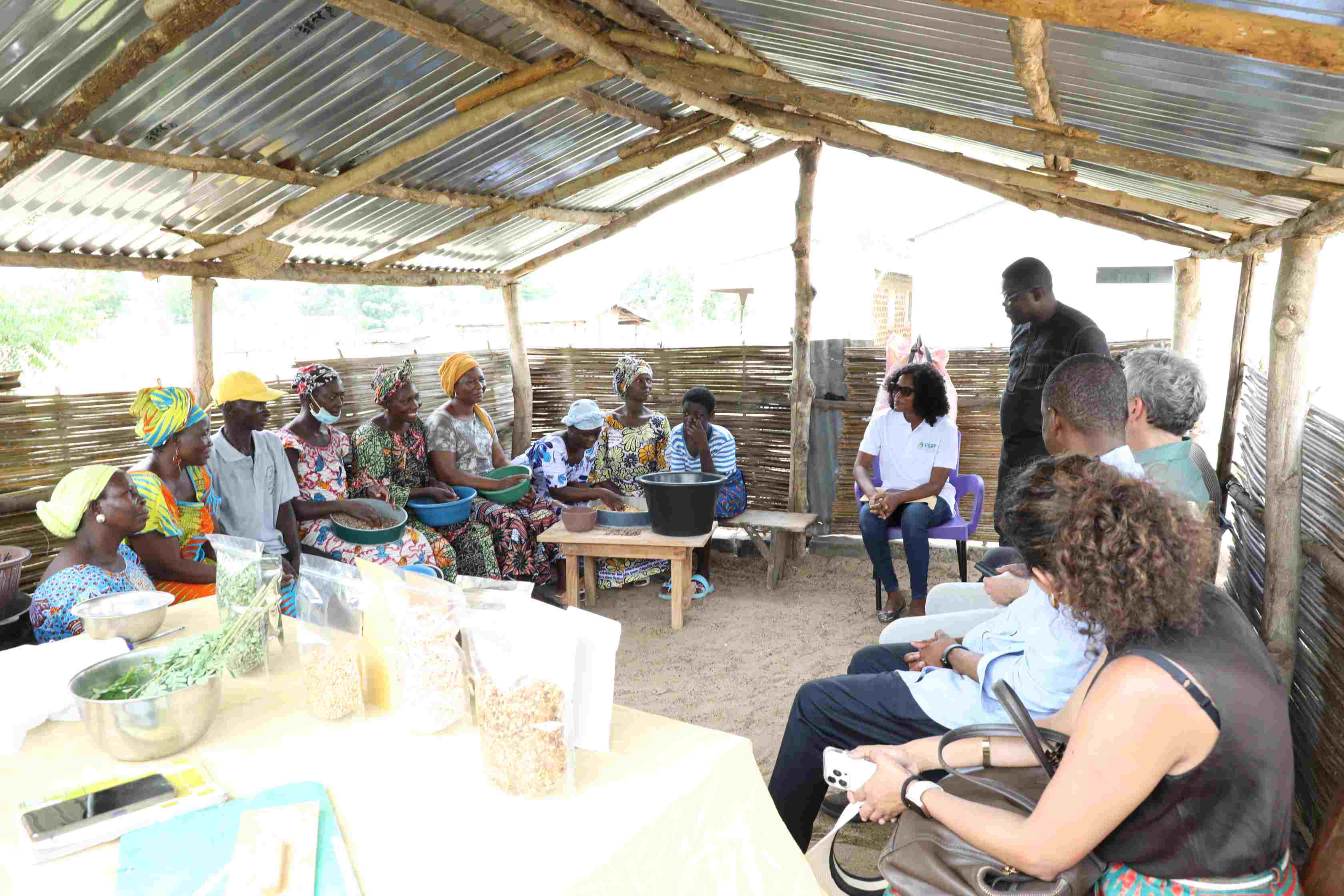 In Nyamassila, the women's cooperative specialised in the processing of enriched flours made from moringa and néré benefited from training organised by the FSRP in 2023 on techniques for processing local flours. Thanks to this support, the members of the cooperative have begun to improve their living conditions by becoming real entrepreneurs, now supplying these enriched products to the local hospital and to the elderly.
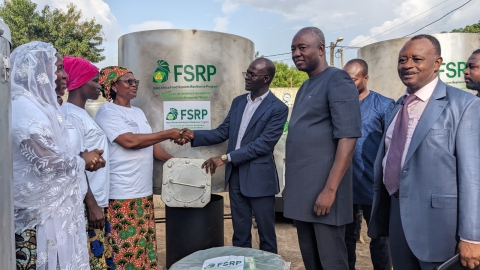
The 85-member Kpélé Tutu cooperative is dedicated to producing compost and biopesticides, and is actively helping to boost agricultural productivity in the Planned Agricultural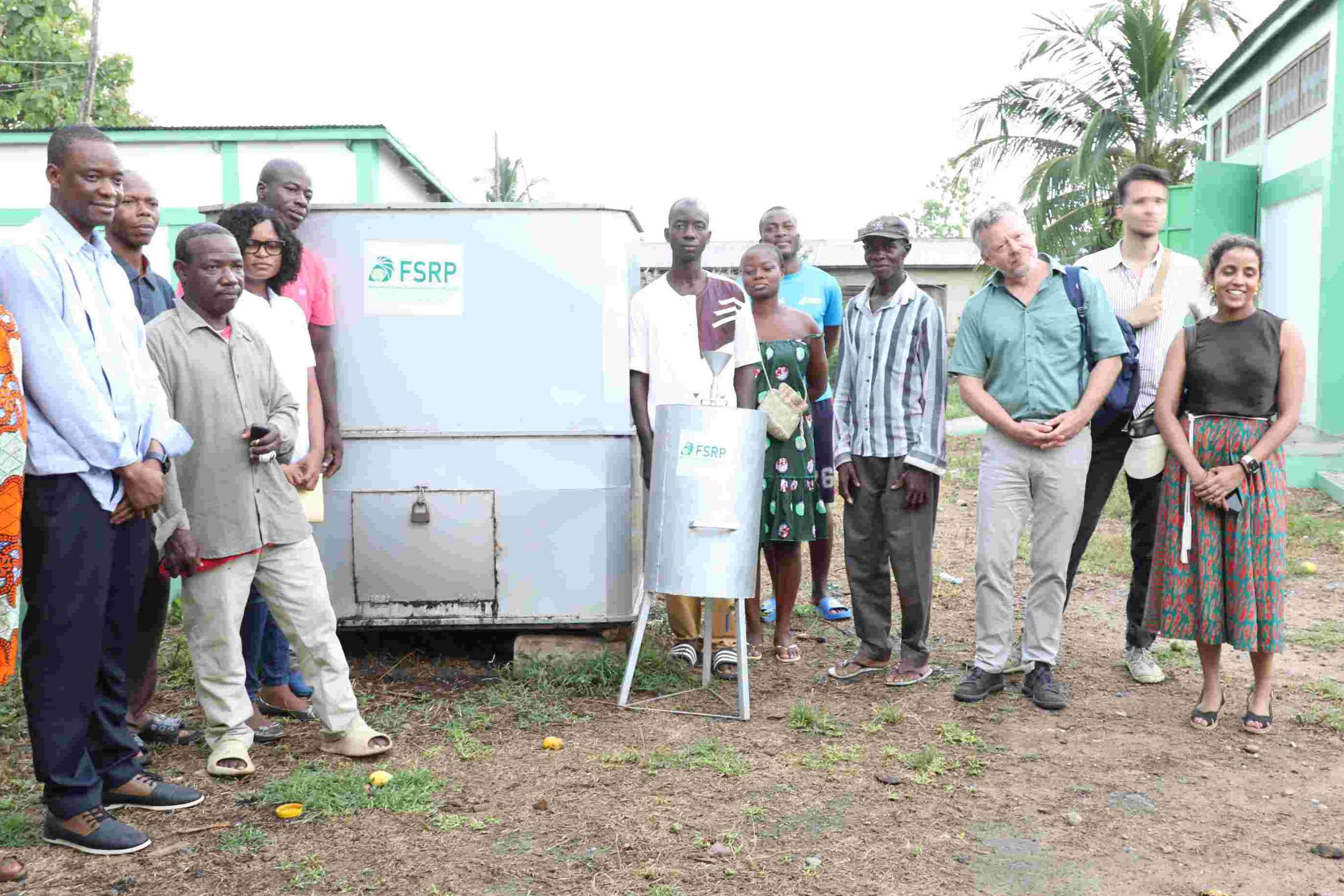 Development Zone (ZAAP) in the Plateaux-Est region. The cooperators, trained in the manufacture of these biological inputs, use a large-capacity composter to transform organic waste (plant leaves, peelings, garden waste, etc.) into compost, a natural fertiliser that is particularly beneficial for market garden crops and maize.
Discussions between members of the World Bank mission, comprising Ms Ashwini Sebastian, Regional FSRP Task Team Leader, and Mr Nouhoun Traoré, FSRP Co-TTL at the World Bank Office in Togo, and the Dutch cooperation team, comprising Mr Jeroen Rijniers and Mr Dominic van Asseldonk, and beneficiaries revealed the initial positive impact of the programme's interventions on the living conditions of the target populations. However, the discussions also highlighted additional needs, particularly in terms of irrigation, agri-food processing and storage.
This joint mission was part of the activities to monitor and review the results of the FSRP, financed by the World Bank's International Development Association (IDA), with additional financial support from the Netherlands Cooperation through the Global Agriculture and Food Security Programme (GAFSP).
Discussions continued on 8 May 2025 in Lomé with representatives of the FSRP coordination regional institutions within ECOWAS, CILSS and CORAF.
 These channels are made up of masonry blocks (walls) and structural reinforcement elements in reinforced concrete, such as: the base slab (raft); the top wall ties; the intermediate columns and the stiffeners installed at defined intervals. Not to mention the expansion joints to prevent the risk of the structure cracking in the event of differential settlement along the route of the canals.
  These difficulties have been compounded by climatic conditions that make market gardening costly and unpredictable. During the COVID-19 pandemic, the situation worsened considerably. With the price of onions rising from 17 to 40 dollars per 50 kg, the government suffered considerable losses, spending over 20 million dollars a year to import onions. This crisis highlighted the urgent need to invest in local agriculture in order to stabilise the food supply and protect consumers.